The short answer: for most children in Italy, a live one-to-one Quran class of 30 minutes, two or three times a week, at a fixed time in Italian time works best. Children on *tempo normale* who are home by lunchtime usually do well with a mid-afternoon class. Children on *tempo pieno*, at school until about 4:30pm, do better around 5:30 or 6pm. Above all, do not stop for the summer: the Italian school holiday lasts about three months, and it is the single biggest reason children forget what they learned.
This guide is for Muslim parents in Milan, Brescia, Bergamo, Bologna, Rome, Turin, Treviso, Florence, Naples and smaller towns across Italy, whether there is a weekend class at a local centre or no regular children's class nearby at all.
Two kinds of school day, two kinds of timetable
In Italian *scuola primaria*, families usually have a choice. With *tempo normale*, most days end around lunchtime, sometimes with one or two longer afternoons (*rientri*). With *tempo pieno*, children stay for lunch and lessons until around 4:30pm, five days a week. At *scuola media*, many children finish at lunchtime, and some schools still run lessons on Saturday mornings.
That means the right slot depends on your child's actual week. Pick it once, then keep it at the same clock time so it becomes part of the day rather than a decision.
Slots that suit most families in Italy
| Child | Classes a week | Suggested time (Italian time) |
|---|---|---|
| Age 5 or 6, starting the Qaida, on tempo normale | 2 | Mid-afternoon, around 3 or 3:30pm, after lunch and a rest |
| Age 6 to 10, on tempo pieno until 4:30pm | 2 or 3 | Around 5:30 or 6pm, after a snack |
| Age 11 to 14, at scuola media | 3 | Afternoons on days without sport, or early evening after homework |
| Two or three siblings | 2 or 3 each | Back to back on the same afternoons |
If your child has school on Saturday mornings, do not put the only class of the week on Saturday. Keep at least one class on a weekday.
The long summer: the biggest risk and the biggest chance
Italian schools usually close in the second week of June and reopen in mid-September, with exact dates set by each region. Three months is a long time for a young reader. A child who stops in June often returns in September having lost much of the last term's Qaida or Quran reading, and the first weeks back are spent catching up.
- Keep the classes running. Without homework, summer is often the easiest time to keep going. Two short classes a week is enough to hold what your child has learned.
- Add a class if you can. Summer is a good time to finish a stage of the Noorani Qaida, move on to the Quran itself or memorise a few short surahs.
- Take the class with you. Many families spend part of the summer with relatives in Pakistan, Bangladesh, Morocco or elsewhere. An online class can usually continue from there. Tell the teacher the local time in advance so the slot can be checked.
Time zones and the clock change
Italy runs on Central European Time, and the clocks change on the last Sunday in March and the last Sunday in October. If an academy sets lessons in the teacher's time zone, your child's class can jump by an hour twice a year, which is one of the most common reasons lessons are missed.
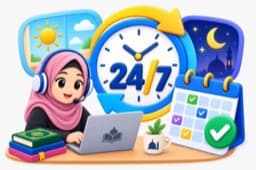
At Online Quran Lessons, classes run 24 hours a day, 7 days a week, and you choose the slot in Italian time. A class at 5:30pm in Milan stays at 5:30pm before and after the clocks change.
The language question
This is the first thing to check. Your child reads the Quran in Arabic sounds, but the teacher explains and corrects in another language.
Our teachers teach in English, with Urdu on request. We do not teach in Italian, and we say so before you book. That works well for families who speak Urdu or English at home, which includes many Pakistani families in Italy, and for children at international schools. In the early Qaida stage much of the lesson is the teacher saying a sound and the child repeating it, so simple English is often enough.
If your child speaks only Italian, sit with them for the free trial classes and see how they get on before you pay anything. For language, time zones and school days across the whole of Europe, read our parent's guide to online Quran classes in Europe.
Online classes and the local centre
Where a mosque or cultural centre runs a weekend class, it is worth keeping. It gives children friends, community and the feeling that learning the Quran is normal. What a weekend group rarely gives is enough reading time: in a room of fifteen children, each child may read to the teacher for only a few minutes.
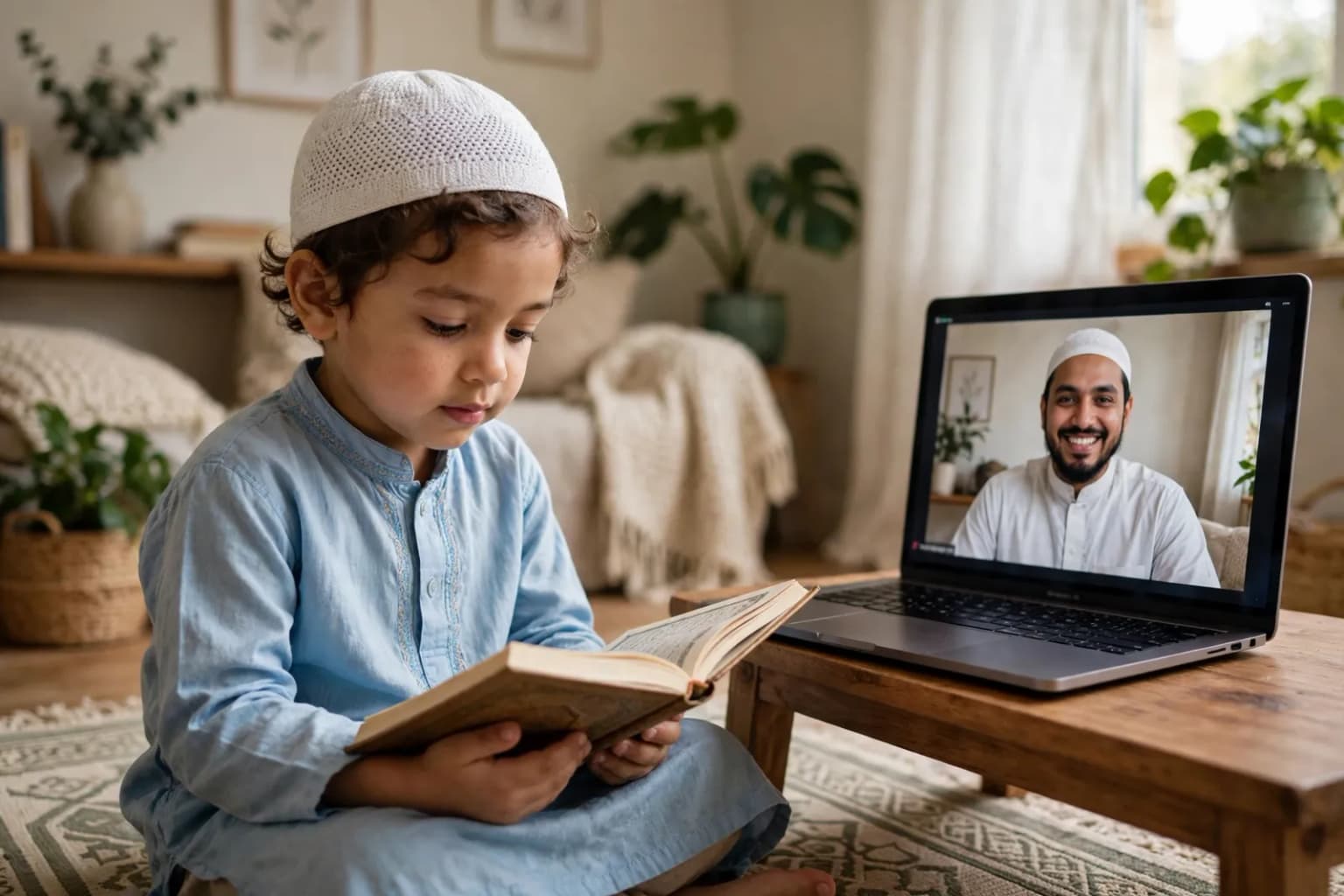
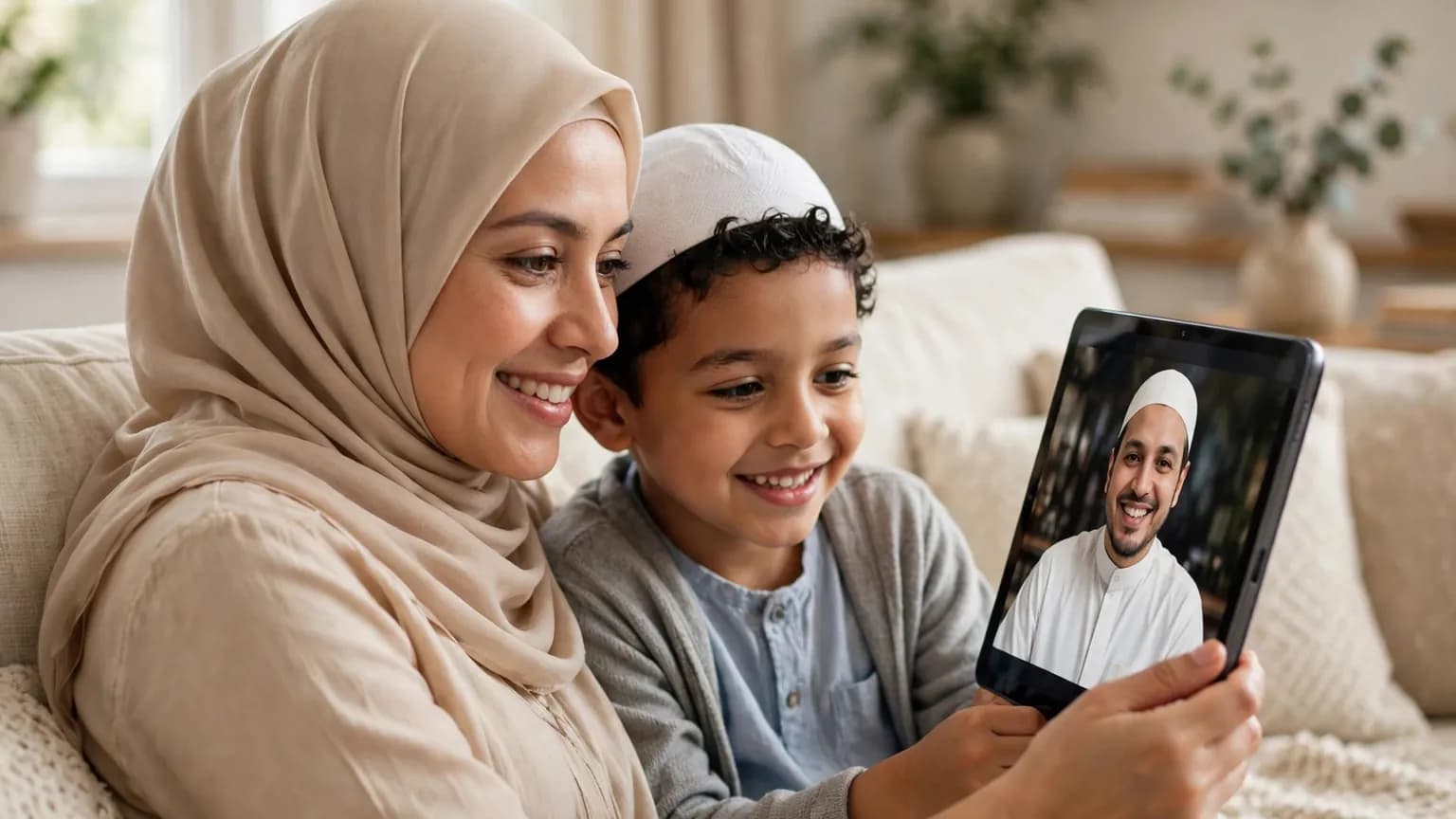
A one-to-one online class fills that gap. Your child reads for most of the 30 minutes, and every mistake is corrected straight away. Many families keep both: the centre at the weekend, and two short online classes during the week.
Ramadan in the Italian winter
For the next few years Ramadan falls in late winter in Italy, with an early iftar. Evenings fill up quickly with iftar, family and taraweeh, so a class straight after school often works better than an evening slot during Ramadan. Ask the teacher about a small Ramadan goal, such as one short surah to memorise. Our Ramadan Quran plan for kids has goals by age.
Fees in euro
Plans are one-to-one, 30 minutes a class, paid monthly: €28 for 1 class a week, €36 for 2, €45 for 3, €50 for 4 and €55 for 5 a month. There is no registration fee, siblings get a 10% family discount, and you can pay by card, PayPal, Wise or bank transfer. The pricing page always shows the current fees.
Getting started

Choose a slot that matches your child's school day, protect it from sport, and keep it going through the summer. See how online Quran classes in Italy work, and when you are ready, book 3 free trial classes. No card is needed, and you can sit in on every one.