

Hafs is the most widespread transmission of Quranic recitation in the world today, the version you almost certainly hear in most mosques and recordings. It is one of several canonical modes of recitation, called Qiraat, all authentically transmitted from the Prophet Muhammad, peace be upon him, through unbroken chains. The differences between them are matters of pronunciation, elongation, and occasional word variants that were all taught by the Prophet himself, not later alterations.
Where the Qiraat come from
The Prophet taught the Quran to his companions in slightly varying modes, an allowance that accommodated the different dialects of Arab tribes. A well-known hadith records that the Quran was revealed in several modes of recitation. As Islam spread, master reciters in cities like Madinah, Makkah, Kufa, and Basra became reference points, each preserving the recitation as they had received it through the companions. Scholars later verified and documented these transmissions with extraordinary care, accepting only those with authentic, mass-transmitted chains and conformity to the written text of the Uthmanic copies.
The ten canonical Qiraat, briefly

Classical scholarship settled on ten canonical Qiraat, each named after a master reciter and carried forward by two primary transmitters. You do not need the full list to appreciate the picture, but a few names are worth knowing.
- Asim of Kufa, whose student Hafs transmitted the recitation most of the world uses today
- Nafi of Madinah, whose transmitters Warsh and Qalun are widely recited in North and West Africa
- Abu Amr of Basra, whose transmission through al-Duri has a long history in Sudan and parts of West Africa
So when people say the Hafs recitation, the full phrase is Hafs from Asim: the transmitter Hafs reporting the recitation of his teacher Asim.
What actually differs between them
The differences are real but bounded, and they never corrupt the message.
- Pronunciation details, such as how certain vowels are sounded or softened
- Lengths of elongation, with some transmissions stretching certain madd longer than others
- Occasional word variants, both divinely revealed, that enrich meaning rather than contradict it
- Differences in some dots and vowels on the same consonantal skeleton of the Uthmanic text
Scholars emphasize that where variants exist, the readings complement one another, sometimes highlighting two facets of one meaning.
Why Hafs became so widespread
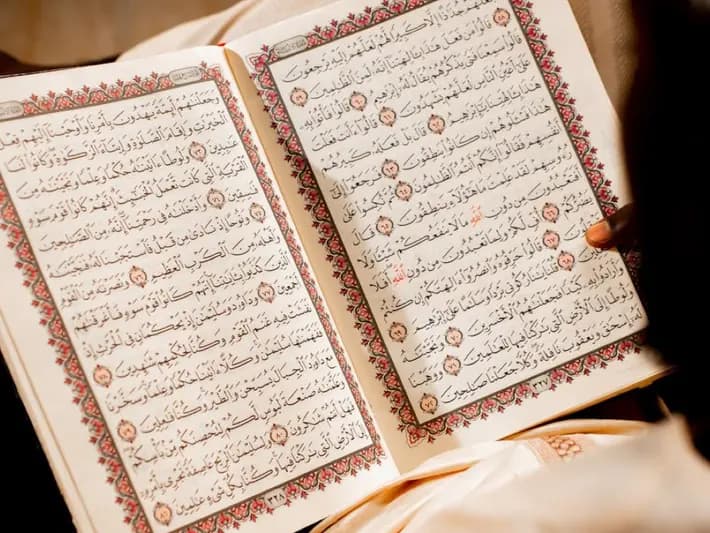
The dominance of Hafs from Asim is largely historical. It was favored in the eastern Islamic lands and later carried by the Ottoman state, and the widely distributed printed mushaf of the twentieth century, produced in Egypt in 1924, followed Hafs. Print standardization, then audio recordings, cemented its reach. Warsh and Qalun remained standard in much of Africa, which is why a visitor to Morocco or Libya may notice recitation that sounds subtly different from what they grew up hearing.
What this means for you as a learner
For almost every student, the practical answer is simple: learn Hafs, because it is what your teachers, mushaf, and community use. Awareness of the other Qiraat matters mainly so that differences you encounter do not confuse you; they are a preserved richness, not a discrepancy. Advanced students who master Hafs with excellence can later study other transmissions, a path that leads toward the scholarly study of the ten Qiraat.
If this glimpse into the depth of Quranic transmission sparks your curiosity, the best next step is strengthening your own recitation. Online Quran Lessons teaches the Hafs transmission with qualified teachers, and a free trial class is an easy way to find your starting level.