Beginner · Ages 4–12
Raise a Child Who Knows and Loves Their Deen
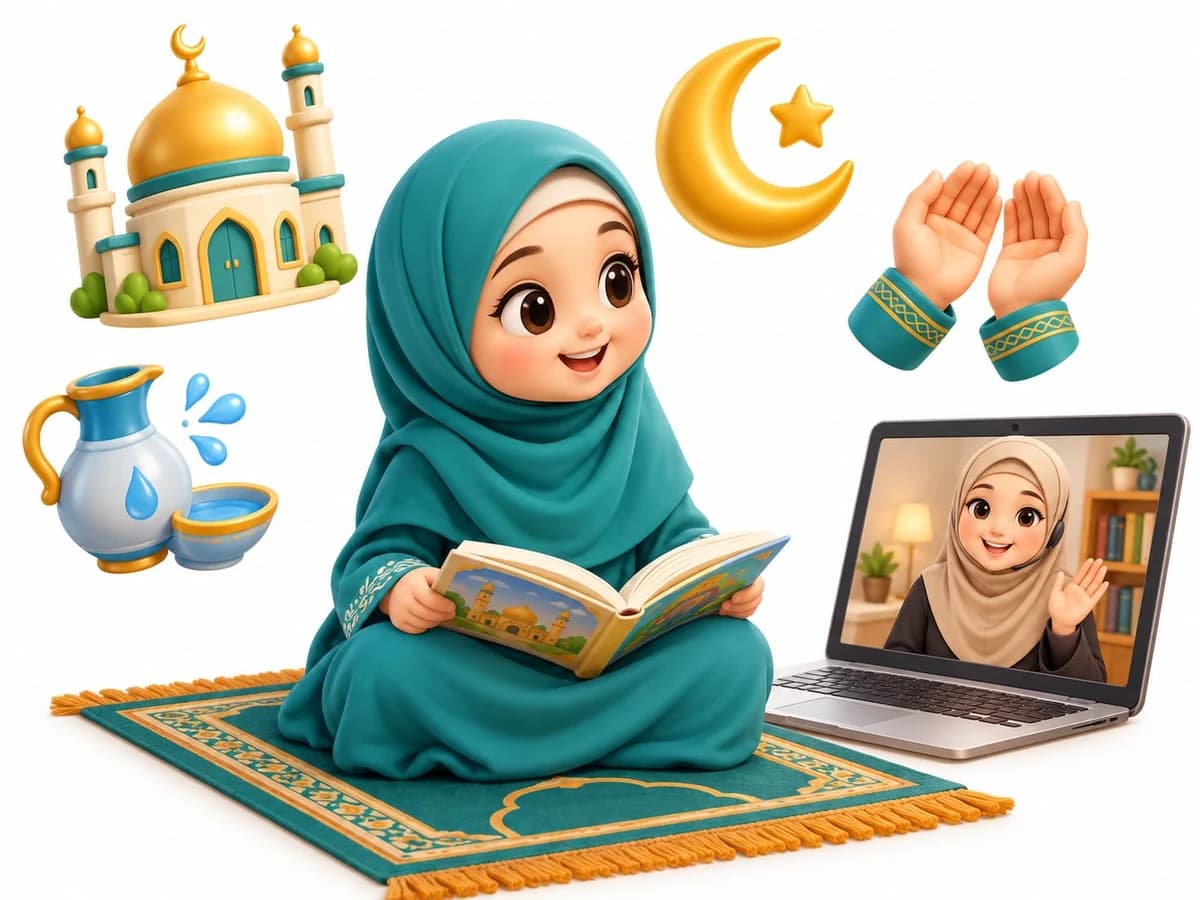
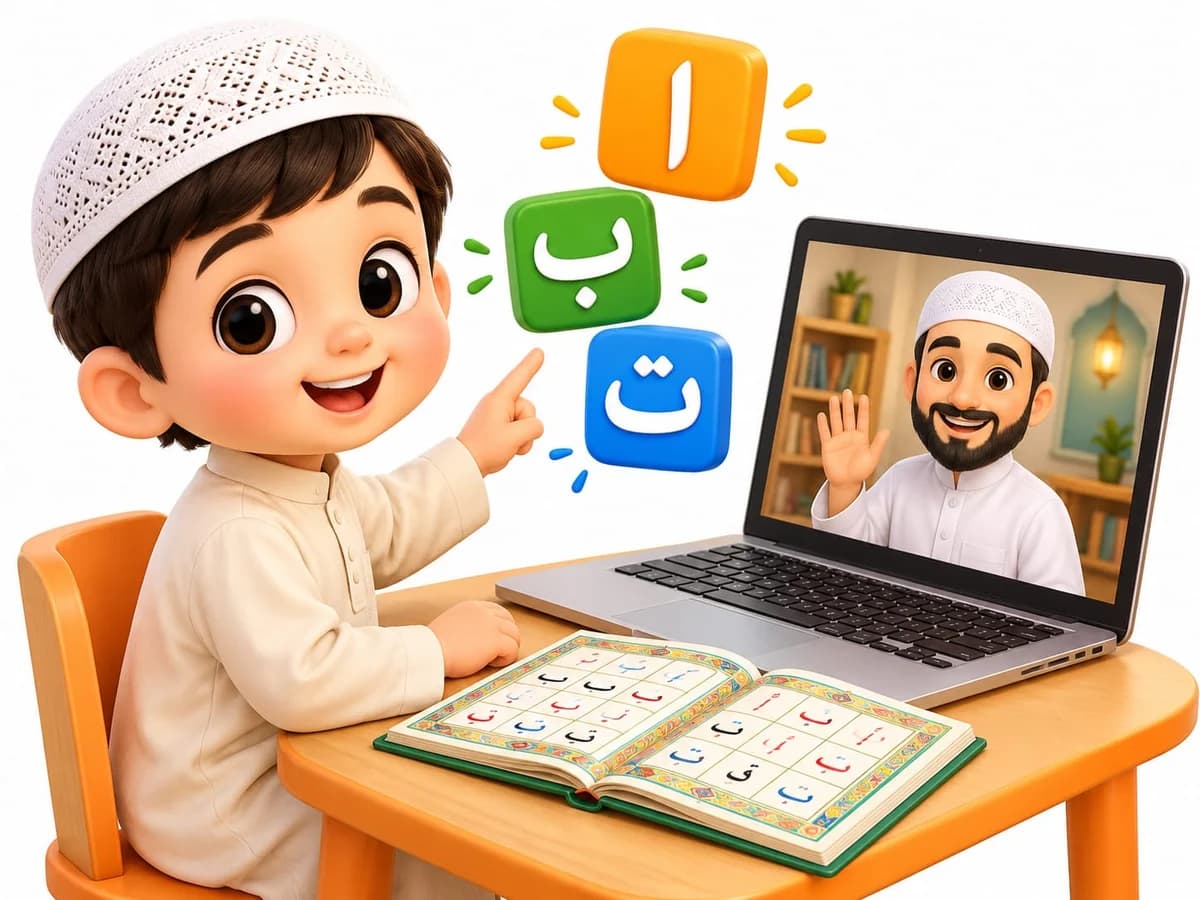
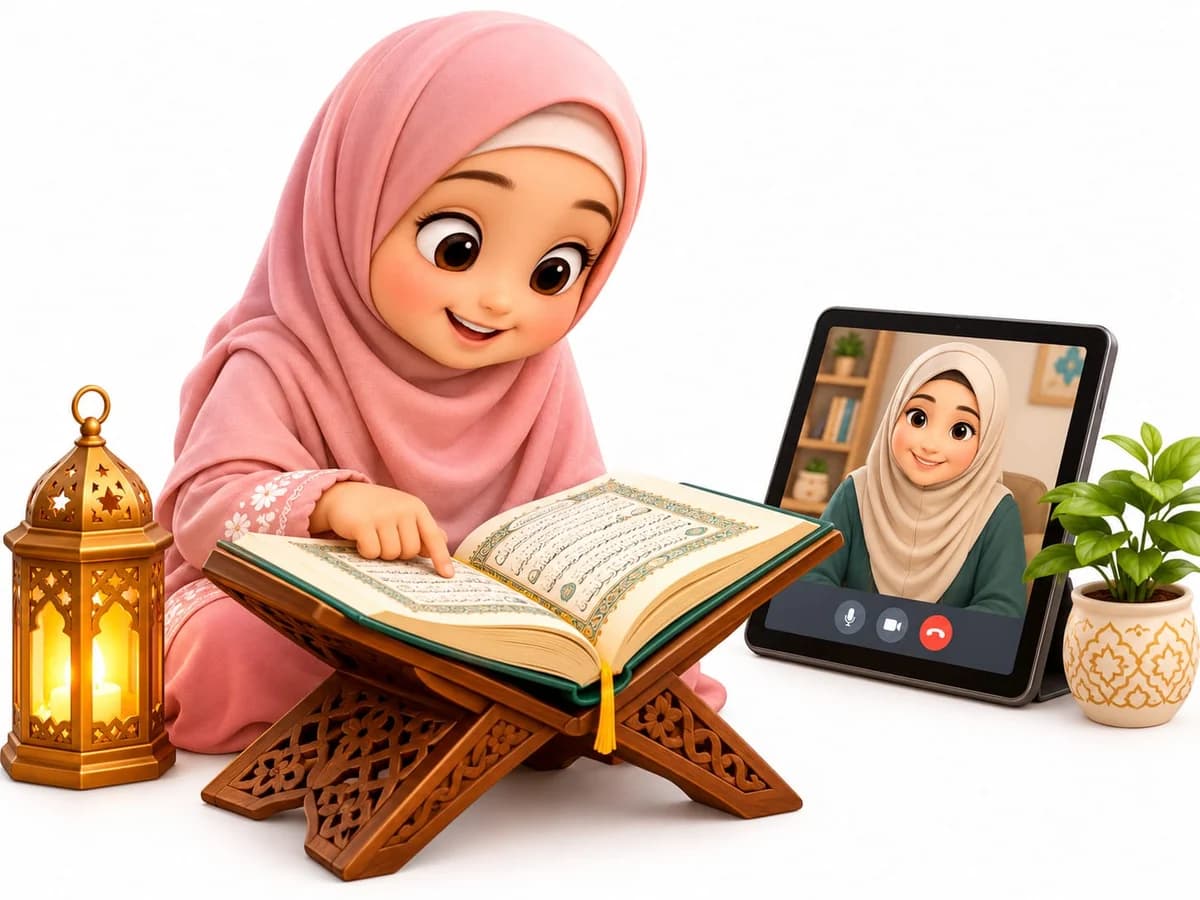
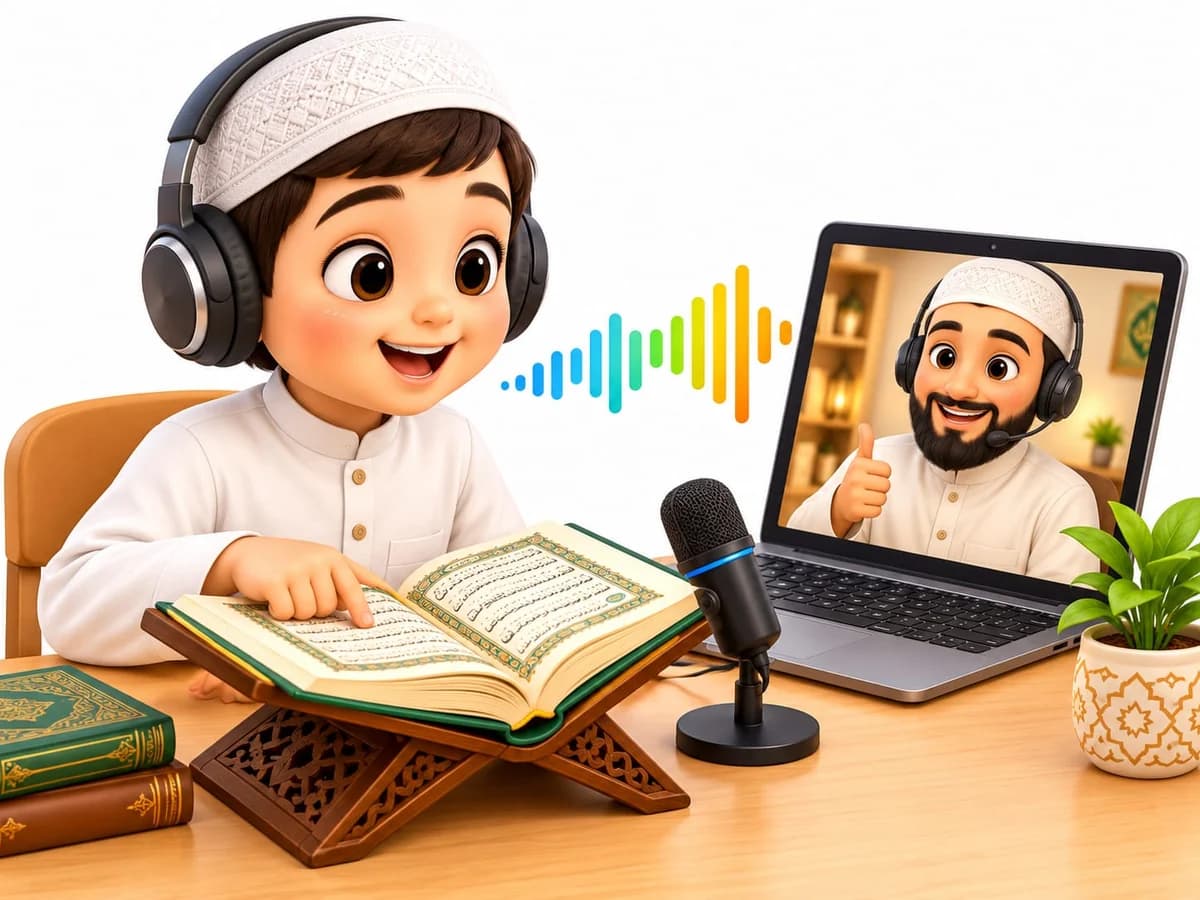
Friendly, age-appropriate classes that teach children the essentials of faith, worship, and character through stories, questions, and gentle practice.
- Format
- Live 1-to-1
- Class length
- 30 min
- Duration
- Ongoing, 2–3 classes per week
- Fees
- From $39/mo
Live 1-to-1 classes
Never group lessons
Male & female teachers
You choose, same price
3 free trial classes
No card required
Flexible scheduling
Evenings & weekends, your time zone
About this course
Islamic Studies for Kids is a live online program that teaches children the essentials of their faith: basic beliefs (aqeedah), daily duas and dhikr, stories from the life of the Prophet (seerah), good manners (adab), and the five pillars of Islam. Lessons are short, interactive, and matched to the child's age, so a six-year-old and a twelve-year-old each learn the same essentials in ways that fit them.
Teachers use storytelling, questions, and simple real-life scenarios rather than lecture-style instruction. A lesson on honesty might begin with a story from the seerah, move into a what-would-you-do discussion, and end with a dua the child practises during the week. Memorisation is kept purposeful: children memorise the duas, kalimahs, and short texts they will actually use every day.
Parents receive a summary after each class describing what was covered and one small habit to encourage at home, such as saying the dua before eating. Over the levels, children build a connected picture of their religion: who Allah is, who His Messenger was, how a Muslim worships, and how a Muslim treats people.
Who this course is for
- Children aged four to twelve beginning their Islamic education
- Families without access to a local masjid school or weekend madrasa
- Parents who want a structured syllabus instead of scattered videos
- Children in non-Muslim-majority schools who need grounding in their identity
- Siblings who learn together and need age-adjusted teaching in one program
Curriculum
What you'll study, level by level
Level 1
Level 1: My Creator and My Prophet
Children learn who Allah is, who the Prophet Muhammad was, and the words a young Muslim says every day.
- Allah as the One Creator: simple aqeedah for young minds
- The kalimahs and what they mean
- Short daily duas: waking, eating, sleeping, and leaving home
- Gentle first stories from the seerah
- Saying bismillah, alhamdulillah, and insha'Allah in daily life
Level 2
Level 2: How a Muslim Worships
Children learn the five pillars and the everyday practices of worship step by step.
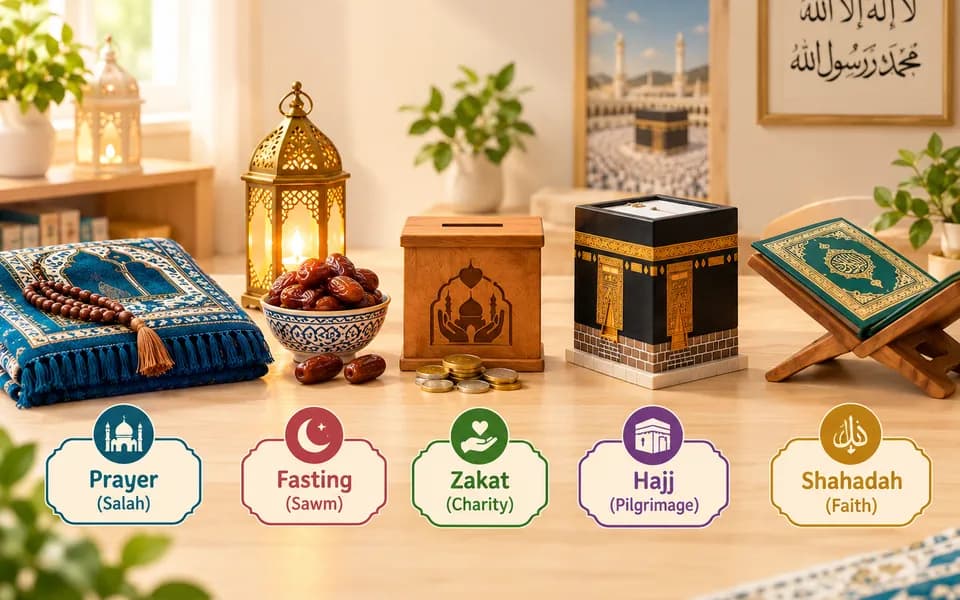
- The five pillars of Islam explained simply
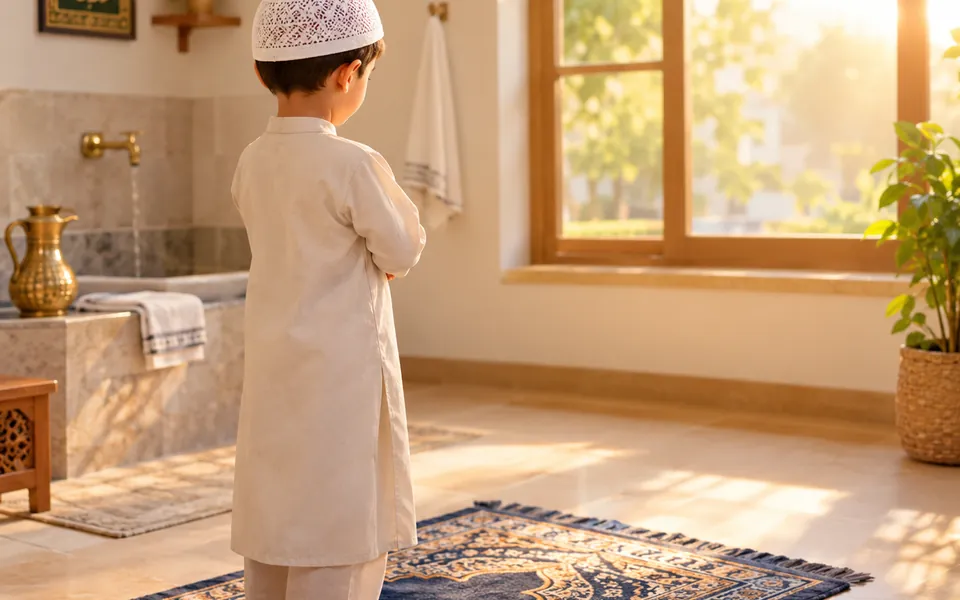
- Wudu step by step with practice at home
- How to pray: positions, words, and meanings
- Ramadan, fasting, and the joy of Eid
- The six articles of faith in child-friendly language
- More duas and short surahs used in prayer
Level 3
Level 3: Character and Community
Children study the Prophet's life in fuller detail and learn the manners of a good Muslim.
- Key events of the seerah from birth to Madinah
- Stories of the companions and what they teach us
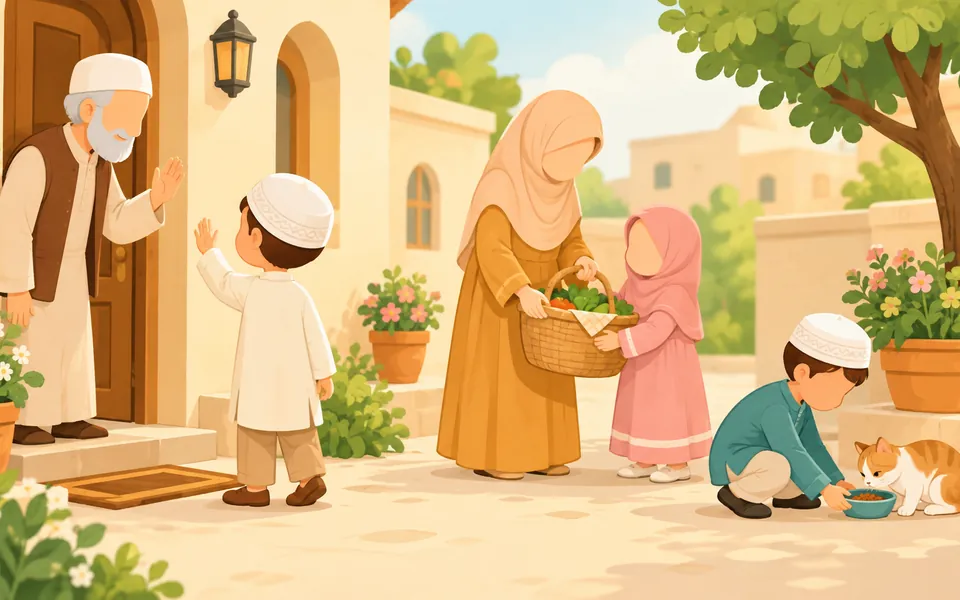
- Adab: honesty, kindness, respect for parents and elders
- Halal and haram in everyday choices
- Caring for neighbours, animals, and the environment
By the end, the student will be able to…
- Recite the kalimahs and at least fifteen daily duas from memory with meaning
- Name and explain the five pillars of Islam and six articles of faith
- Perform wudu and the daily prayer correctly for their age
- Retell key stories from the seerah in their own words
- Demonstrate core manners such as greeting, truthfulness, and respect in role-play
- Pass a friendly end-of-level review covering beliefs, worship, and character
Course FAQs
What age should my child start Islamic studies?
Around age four or five is a good starting point for gentle, story-based lessons, and any age up to twelve fits comfortably in the program. Teachers adjust vocabulary, pace, and activities to the child, so older beginners are never made to feel behind.
Can this course run alongside Quran reading classes?
Yes, and this pairing is our most popular arrangement for children. Many families schedule Quran reading on some days and Islamic studies on others, often with coordinated teachers. The two courses reinforce each other, since children begin recognising duas and surahs across both classes.
How do you keep young children engaged in an online class?
Classes are short, one-on-one, and built around interaction: stories with questions, drawing and matching activities, role-play scenarios, and small weekly missions like teaching a dua to a sibling. Because the teacher's attention is never divided, children stay involved far more than in large group settings.
Which school of thought or curriculum does the course follow?
The course teaches the essentials agreed upon across mainstream Sunni scholarship: core beliefs, the pillars of worship, authentic duas, and the seerah. Where practices vary between schools of jurisprudence, teachers follow the family's preference for practical matters such as prayer details, so learning at home stays consistent.
Free trial
Try Islamic Studies with a free class
Tell us the student's age and what you'd like to learn. We'll confirm times on WhatsApp and match you with a suitable male or female teacher. 3 free trial classes, no card, no obligation.
- A real one-to-one class, not a sales call
- Level assessment and a recommended starting point
- Meet the teacher before you decide anything
Other courses you may be considering
Noorani Qaida
A gentle, step-by-step foundation course that takes complete beginners from recognising the alphabet to reading joined Arabic words with confidence.
Quran Reading
Move from slow, hesitant reading to smooth recitation, with a teacher who applies tajweed corrections in real time as you read.
Advanced Tajweed
A complete, structured study of tajweed theory and application, from articulation points to the etiquette of stopping and starting.
3 free trial classes · No card required
Start with free trial classes
Meet a qualified teacher in a live one-to-one class, see how lessons run, and decide afterwards. No payment details, no obligation.