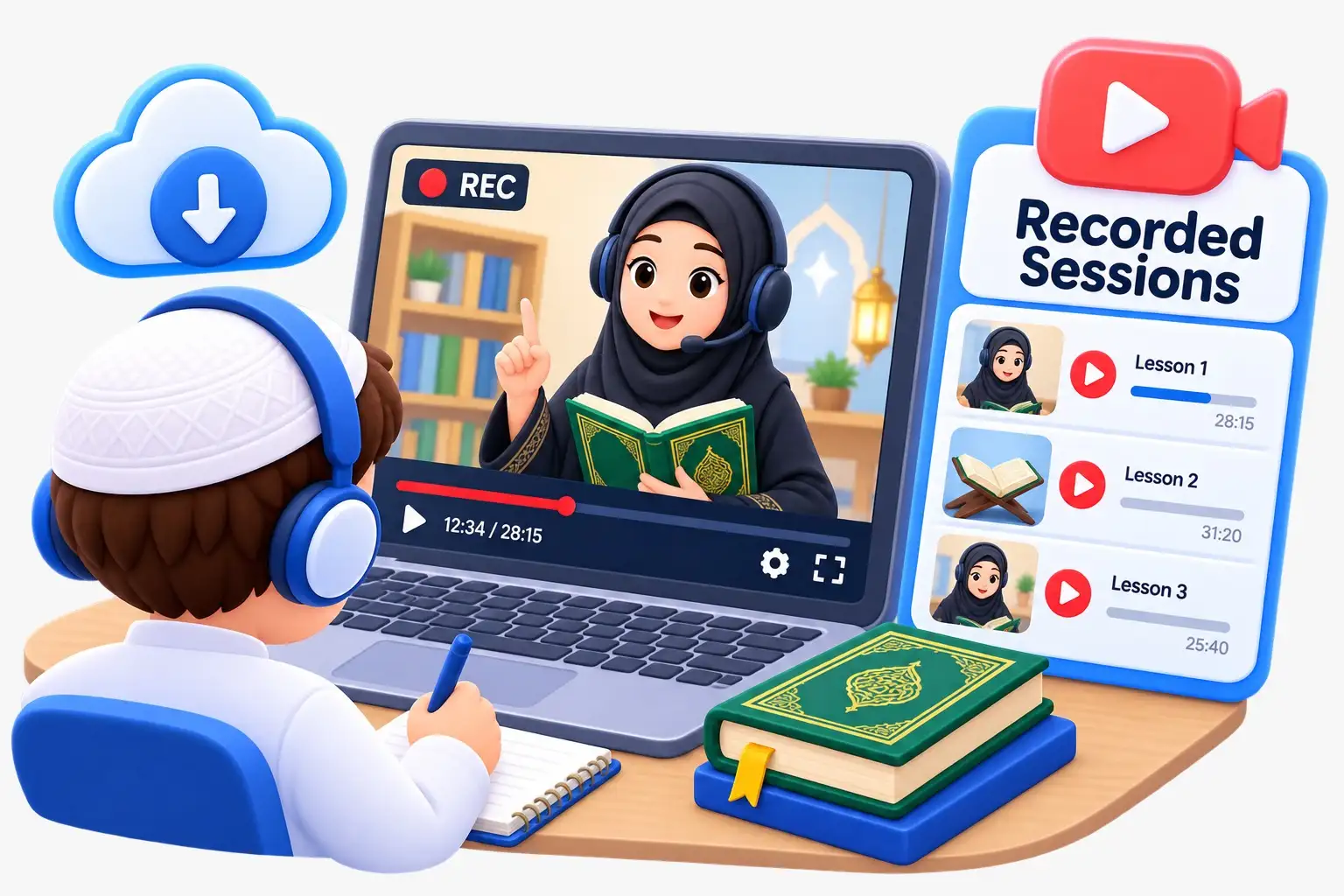
The short answer: weekend Islamic school is good for community, friendships and a broad Islamic education, but one long session a week in a group rarely gives a child enough individual reading time to make steady Quran progress. Weekday online one-to-one classes are better for reading, Tajweed and Hifz, because the teacher hears your child recite every class. Many families get the best of both: weekend school for community and Islamic Studies, short online classes in the week for the Quran.
What a weekend Islamic school usually offers
Weekend schools vary a lot. Some are run by a local mosque, some by community volunteers, some by independent organisations. A typical one meets on Saturday or Sunday for two to four hours, in classes grouped by age or level, and covers some mix of Quran reading, Islamic Studies, duas, Salah and sometimes Arabic or Urdu.
Their great strength is belonging. Children see other Muslim children, make friends, take part in Eid events and feel part of a wider community. For families in areas with few Muslims, that matters enormously. Our comparison of online Quran classes and the mosque madrasa looks at this in more depth.
Where weekend schools find it harder
None of this is a criticism of the teachers, who are often volunteers giving up their own weekends. It is simply the maths of a group class.
- Reading time per child. In a class of 12 to 20 children, each child may only read aloud to the teacher for a few minutes.
- One day a week. Six days between lessons is a long time for a young child to remember a new letter or rule.
- Mixed levels. One group may include a child who is just starting and one who is already reading fluently.
- Missed weekends. Family events, sport and holidays fall on weekends too, and a missed session means two weeks between lessons.
- Travel. The drive there and back can add an hour or more to the day.
What weekday online one-to-one classes offer
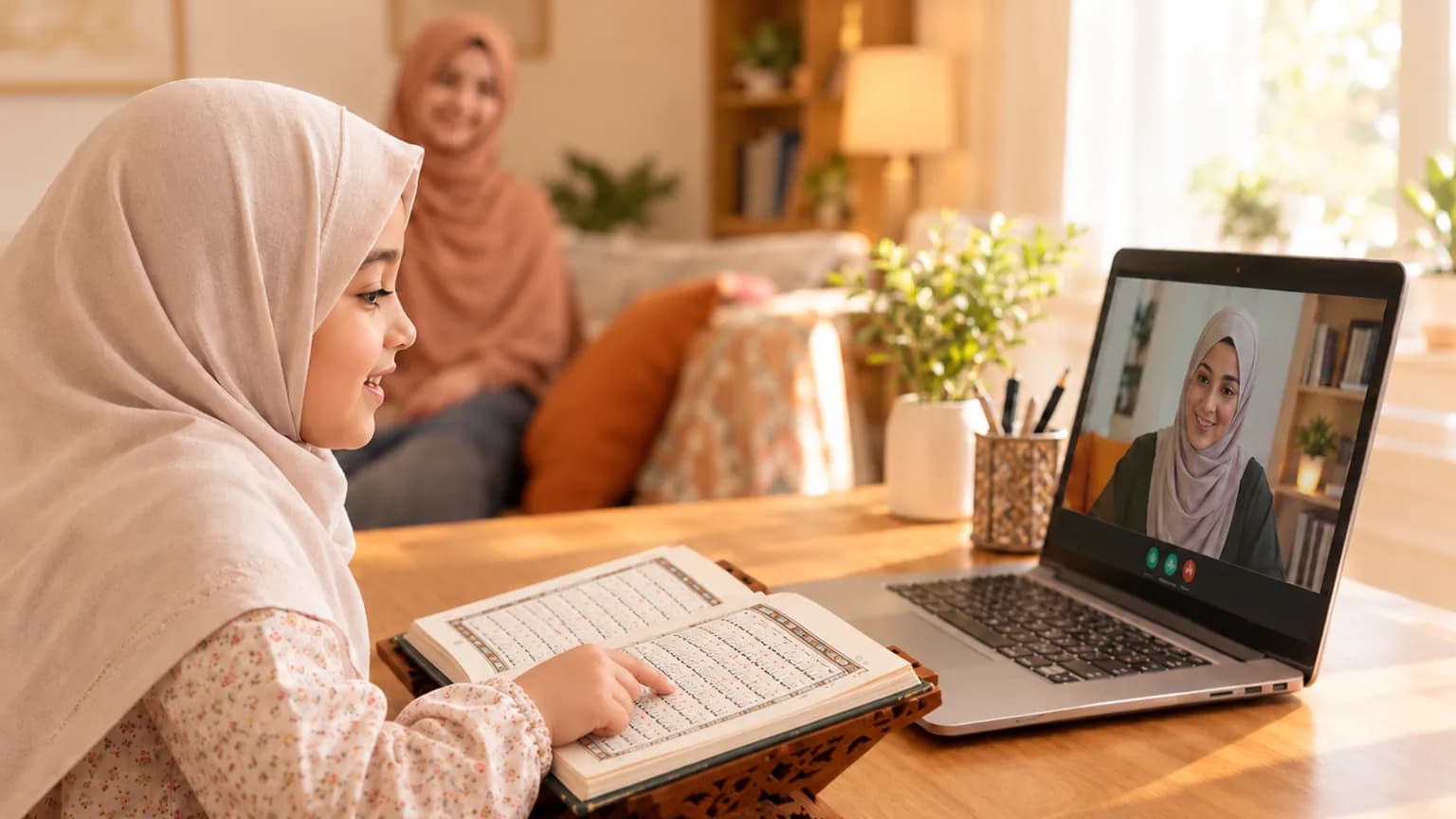
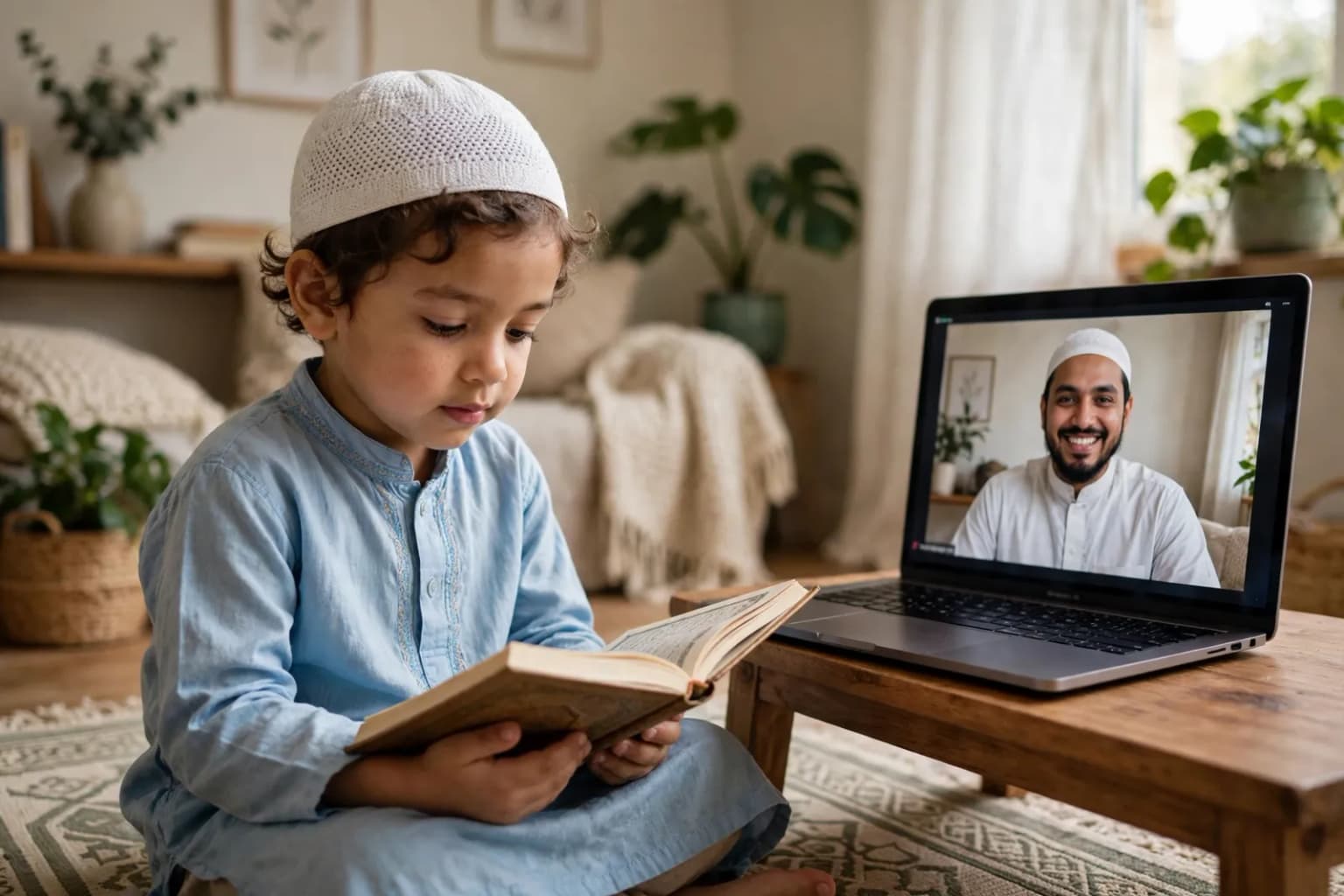
With a one-to-one online class, your child is the only student. In a 30-minute class, they recite for most of it, and every mistake is heard and corrected. Short, frequent classes through the week also suit how children learn: a little, often, with quick revision.
- Steady progress in Noorani Qaida, reading, Tajweed and Hifz.
- Their own pace. No waiting for a group, and no being rushed.
- Flexible timing around school, clubs and prayer times.
- No travel, which makes several short classes a week realistic.
- You can watch. Parents see exactly what is being taught.
The honest downside is that online classes do not give your child Muslim friends or a community. A screen cannot replace that, and we would never pretend it does. Our article on one-to-one versus group Quran classes goes further into the trade-offs.
Side-by-side comparison
| Weekend Islamic school | Weekday online one-to-one | |
|---|---|---|
| Class format | Group, usually by age or level | One teacher, one child |
| Frequency | Once a week, often 2–4 hours | Short classes, 1 or more times a week |
| Reading time per child | A few minutes per session | Most of each class |
| Pace | Set by the group | Set by your child |
| Community and friends | Strong | Not provided |
| Broad Islamic Studies | Often included | Available as a separate course |
| Travel | Usually needed | None |
| Parent can watch | Depends on the school | Yes, any class |
| Missed sessions | Hard to make up | Can often be rescheduled |
Combining both: a sample week
Many families find a combination works best. Here is one example for a child aged 7 to 10:
- Monday: 30-minute online Quran class
- Wednesday: 30-minute online Quran class
- Friday: 5 minutes of revision at home
- Saturday or Sunday: weekend Islamic school for community, Islamic Studies and friends
This gives the child steady one-to-one Quran progress during the week and a sense of belonging at the weekend. For more ideas on building a balanced routine, see our weekly Islamic learning plan for kids and our guide to how many Quran classes a week suit different ages.
Which is right for your family?

- Choose weekend school alone if your main goal is community and a general Islamic education, and your child already reads Quran well.
- Choose online one-to-one alone if there is no good weekend school nearby, your weekends are busy, or your child needs focused help with reading or Hifz.
- Combine both if you want steady Quran progress and community, and your weekday evenings have room for a short class or two.
If you only have weekends free, online classes can run at the weekend too; see our weekend Quran classes page.
How online classes work with us
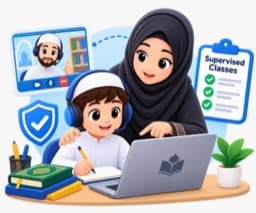
At Online Quran Lessons every class is live and one-to-one with a male or female teacher, your choice at the same fee. Classes are 30 minutes and run 24 hours a day, 7 days a week, in English or Urdu. A female supervisor checks every class, and you can watch any lesson. Plans start from $30 a month for one class a week, with a 10% discount from the second child.
Try a weekday class alongside weekend school
You do not have to give up weekend school to try online classes. Book 3 free trial classes on weekday evenings, no card needed, and see how the two fit together.