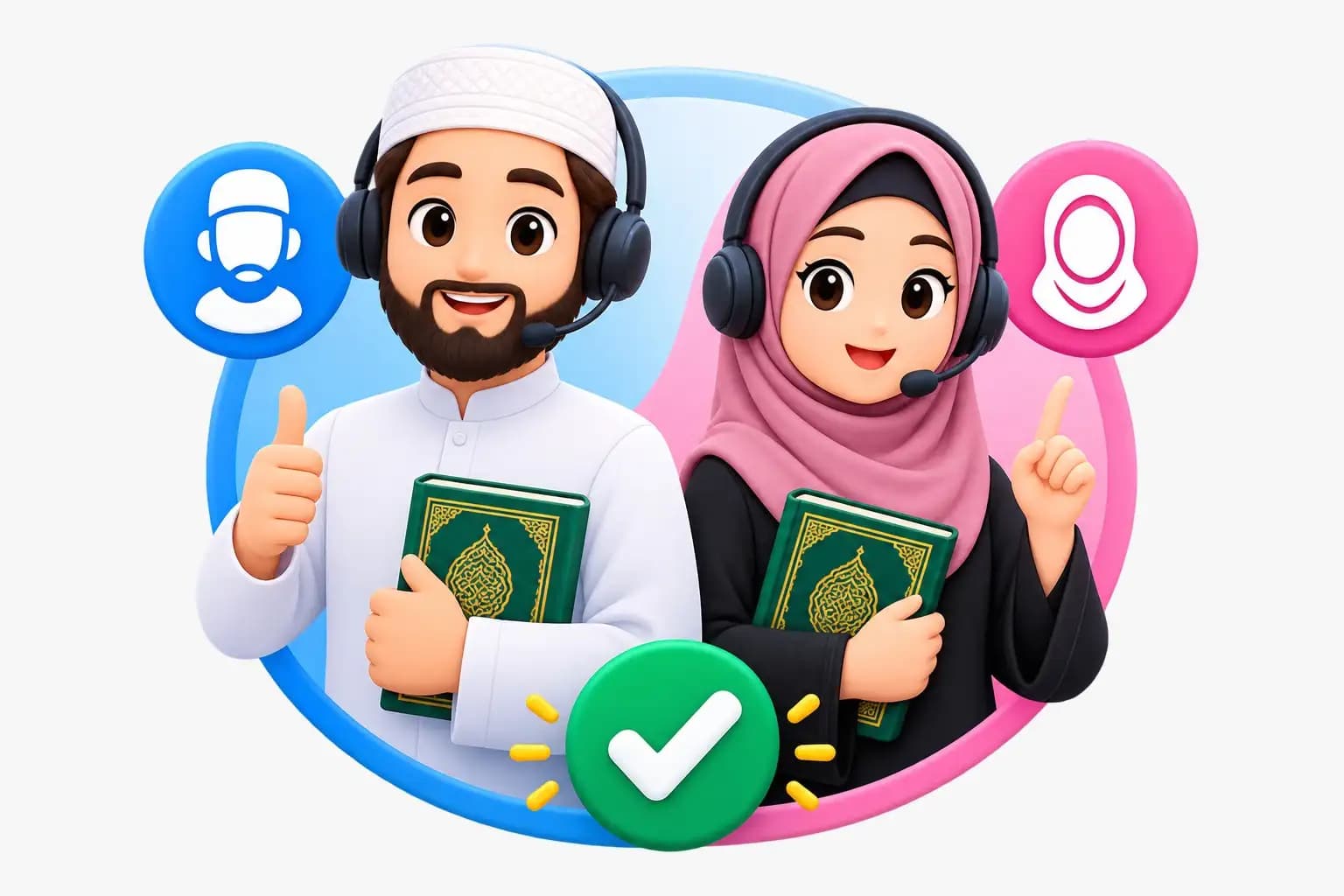
The best online Quran teacher for your child is someone who combines solid recitation credentials with real experience teaching children, and whose classes your child actually looks forward to. Qualifications matter, but so do patience, structure, and the ability to keep a seven-year-old engaged through a screen. This guide walks you through what to check, what to ask, and what to watch for during a trial class.
Start with qualifications, but do not stop there
A teacher's certificates tell you what they know. They do not tell you how well they teach. Look for both.
- Formal Tajweed training, ideally with an Ijazah or a recognized certification in recitation
- Experience teaching children specifically, not just adults
- Comfortable, clear communication in a language your child understands well
- A structured curriculum, such as Noorani Qaida for beginners moving into Quran reading
If a teacher cannot explain how they would take your child from recognizing letters to reading fluently, that is a sign they teach by habit rather than by plan.
Watch a trial class carefully
Almost every reputable academy offers a free trial lesson. Treat it as an interview. Sit nearby, off camera if you like, and pay attention to a few specific things.
- Does the teacher greet your child warmly and learn their name and level before diving in?
- Do they correct mistakes gently and let the child try again, or do they simply repeat the right answer?
- Is the pace matched to your child, or is the teacher rushing through a script?
- Does your child speak and recite for most of the lesson, or mostly listen?
A good children's teacher gets the student doing the work. If the teacher talks for twenty-five minutes out of thirty, the class will not build fluency.
Ask about structure and progress reporting
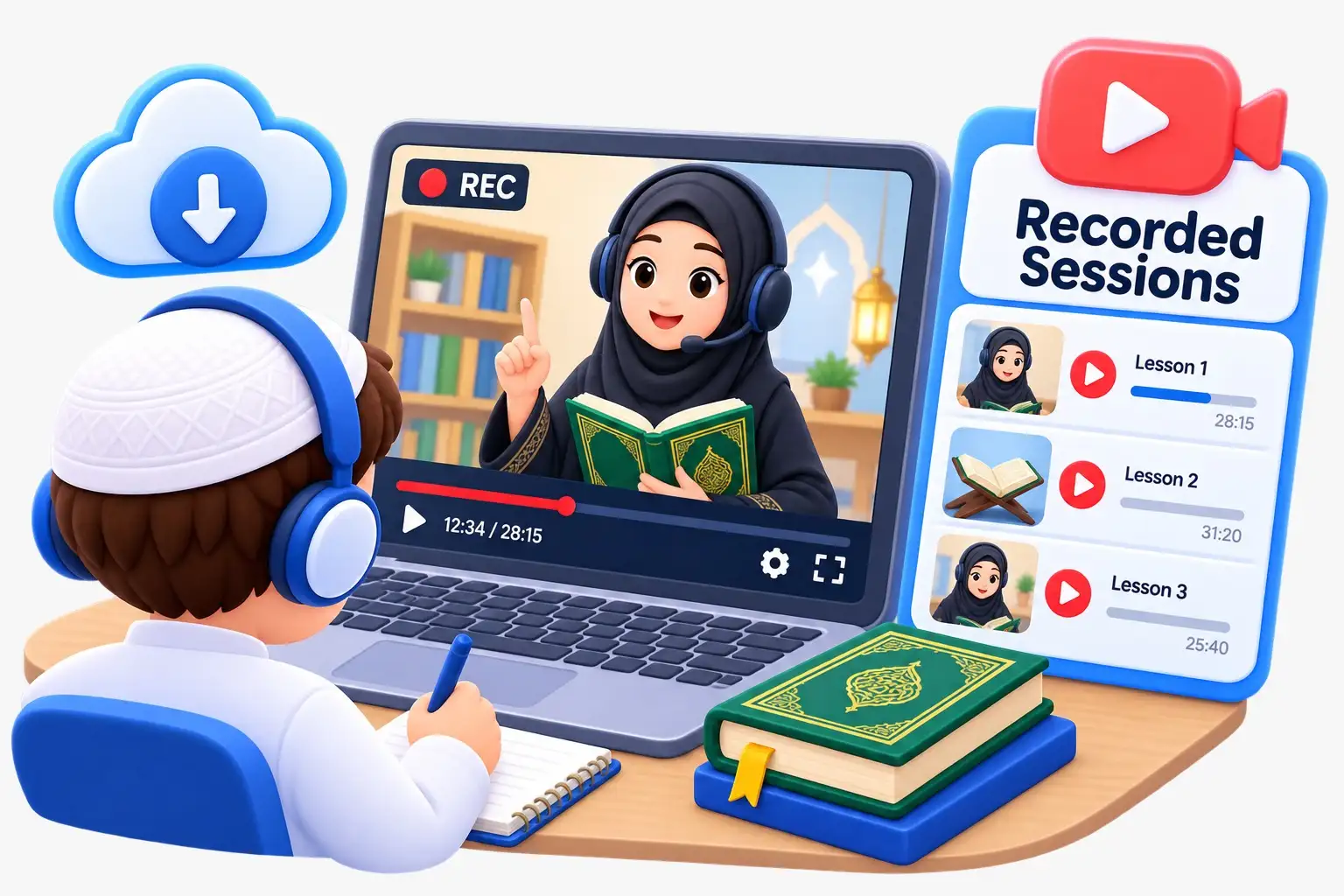
Consistency is what makes Quran learning stick, so ask how the academy handles the practical side. Useful questions include how lessons are scheduled and rescheduled, whether your child keeps the same teacher every week, how homework is assigned, and how progress is reported to parents. Monthly progress notes, even short ones, make a real difference because they let you follow along and encourage practice between classes.
Take online safety seriously
Online classes are convenient, but the same common-sense rules apply as with any online activity for children.
- Classes should run on a proper platform, with the parent able to join or observe at any time
- The academy should have a clear policy on teacher conduct and communication outside class
- All contact should go through the academy, not through a teacher's personal accounts
- Keep the class in a shared space at home rather than behind a closed door
A professional academy will welcome these questions. Hesitation or vagueness is itself an answer.
Red flags worth walking away from
Some warning signs are worth acting on early. Harsh correction or ridicule, even mild, kills a child's love of the Quran faster than anything else. Constantly changing teachers disrupts progress. Vague answers about curriculum, pressure to pay for long periods upfront, and no willingness to offer a trial are all signs to keep looking. Trust your child's reaction too: reluctance after every single class usually means the fit is wrong, not that your child is lazy.
Related guides: if you are weighing who should teach your child, read male or female Quran teacher: which is better for my child?. For budgeting, see how much online Quran classes cost, and to get the most out of a trial, what to expect from an online Quran academy free trial.
Choosing well at the start saves months of frustration later. Our online Quran classes for kids start with 3 free trial classes, so you can watch a lesson, meet the teacher, and see how your child responds before making any commitment. You can also ask for a female Quran teacher from the first class.