The short answer: qalqalah is a slight bouncing or echoing sound given to five letters when they have a sukun: ق ط ب ج د, remembered with the phrase قُطْبُ جَدٍّ. Without it, these letters would sound swallowed, because their sound is fully blocked when they are still.
When does qalqalah happen?
Only when one of the five letters has a sukun, either written in the mushaf or because you stop on it. A qalqalah letter with a vowel (fathah, kasrah or dammah) is read normally.
Minor and major qalqalah

| Level | When | Strength | Examples |
|---|---|---|---|
| Minor (sughra) | The letter has a sukun in the middle of a word or phrase | A light, short bounce | يَقْطَعُونَ · يَجْعَلُونَ · أَبْوَابَ |
| Major (kubra) | You stop on the letter at the end of a word | A clearer, stronger bounce | الْفَلَقْ · أَحَدْ · مُحِيطْ |
The bounce is strongest of all when the stopped letter also has a shaddah, as in الْحَقّ when stopping.
How to say it
Close the letter fully, then release it quickly so a small echo is heard. The echo should follow the letter's own sound, not become a vowel. The bounce is a little fuller for the heavy letters ق and ط.
Common mistakes
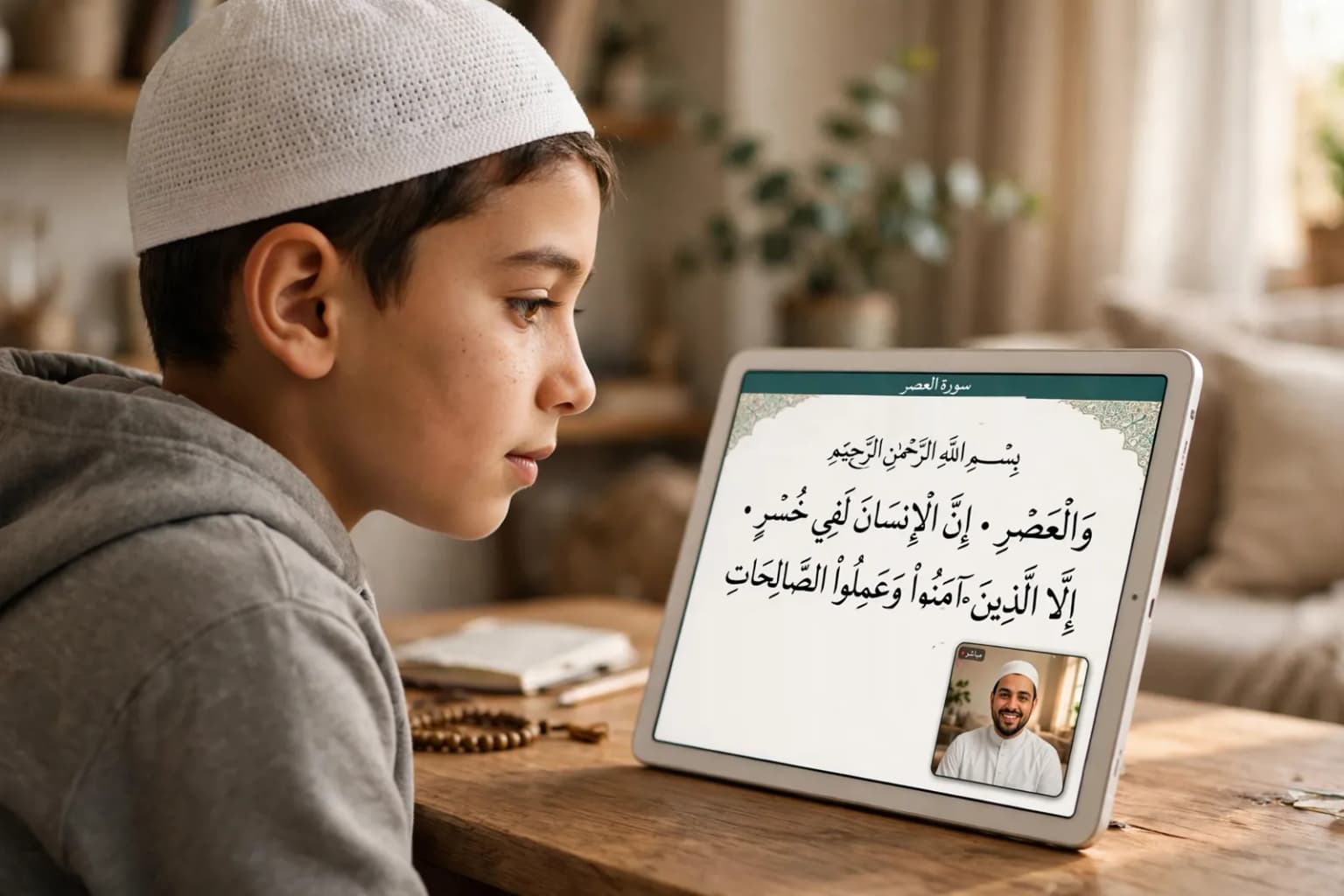
- Adding a vowel: saying *ahada* instead of *ahad* at the end of Surah Al-Ikhlas. The echo must not turn into a fathah or kasrah.
- No bounce at all: swallowing the letter, so أَحَدْ sounds like *aha*.
- Bouncing other letters: only these five letters take qalqalah.
Easy surahs to practise
Surah Al-Ikhlas (أَحَدْ، الصَّمَدْ، يُولَدْ، أَحَدْ when stopping) and Surah Al-Falaq (الْفَلَقْ، خَلَقْ، وَقَبْ) are full of qalqalah at the verse ends, which is why teachers use them. See short surahs for kids to memorise first.
Related: makharij chart and Tajweed rules for kids. To practise with a teacher, book 3 free trial classes. See how our online Tajweed course works.