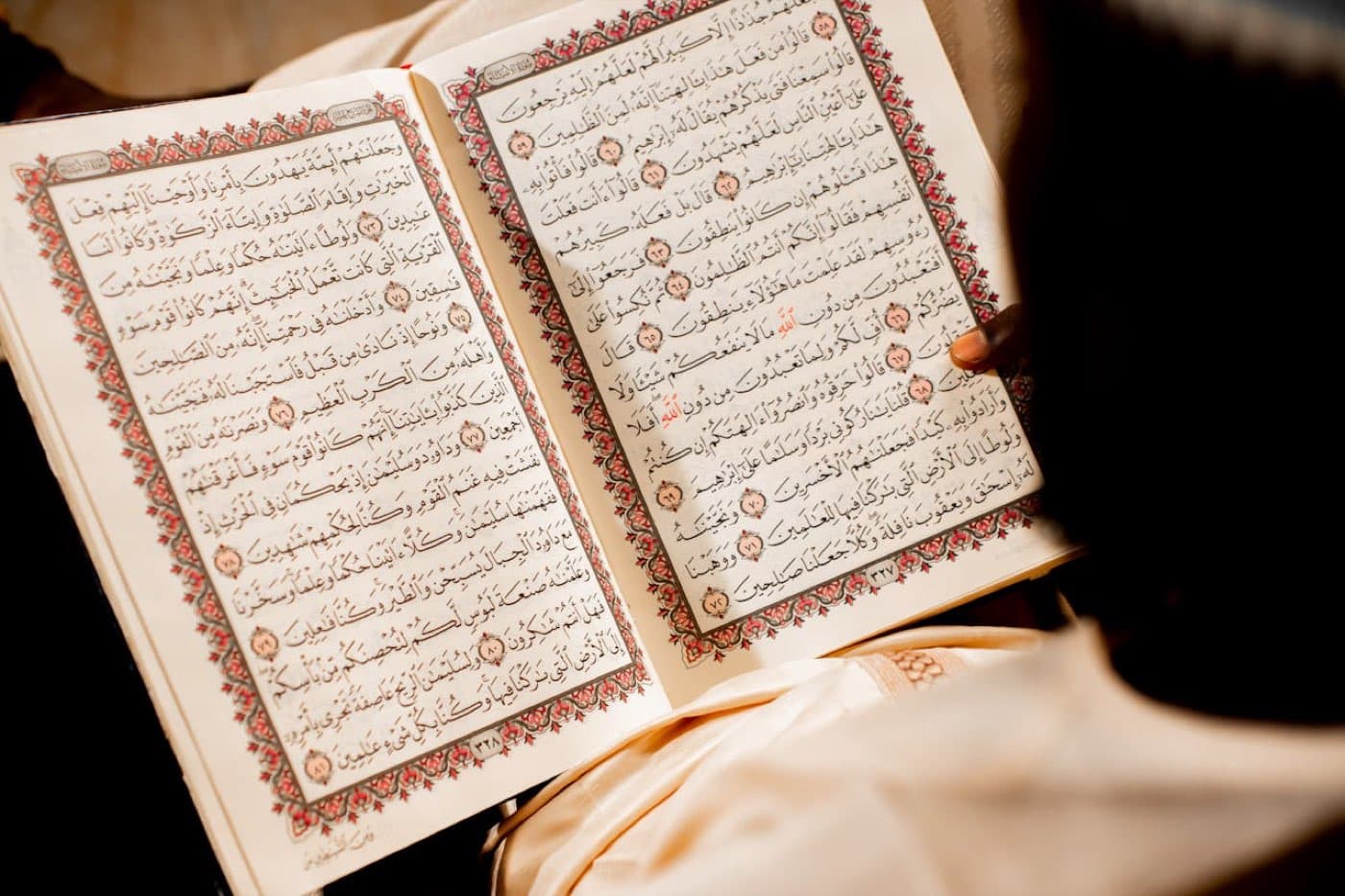
The short answer: waqf signs are the small symbols printed above the words of the Quran that tell the reader where to stop for breath and where to keep reading. The most important ones are مـ (you must stop), لا (do not stop here), ج (stopping or continuing are both fine), قلى (stopping is better), صلى (continuing is better) and the pair of three dots ∴ ∴ (stop at one of the two places, not both). They exist so that you never stop in a place that changes or breaks the meaning of a verse.
This guide explains each sign in plain language, shows the extra signs found in IndoPak (South Asian) mushafs, and covers what to do with the last letter of a word when you stop.
Why stopping in the right place matters
Arabic sentences in the Quran often run across several clauses. If you stop for breath in the wrong place, a sentence can sound as if it says something it does not. Classical scholars of recitation studied every verse and marked the places where stopping is required, recommended, allowed or best avoided. Those decisions are what the small signs record.
A well-known example is in Surah Al-An'am (6:36). The verse means that only those who listen will respond, and then, as a new sentence, that Allah will raise the dead. A مـ sign after the first part tells you to stop there, so the two statements are not run together into one.
The main waqf signs (Madani mushaf)
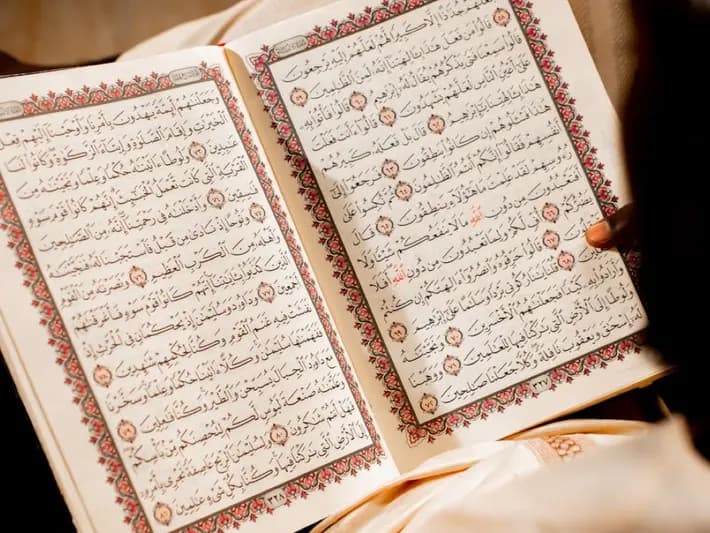
These signs are used in the widely printed Madani mushaf and in most modern prints.
| Sign | Name | What it means |
|---|---|---|
| (verse-end circle) | End of an ayah | A natural place to stop. Stopping at the end of each verse is a recommended practice. |
| مـ | Waqf lazim | Stop here. Joining on to the next words could change the meaning. |
| لا | La (no) | Do not stop here. If you run out of breath, go back a word or two and read on. |
| ج | Jaiz | Stopping and continuing are equally fine. |
| قلى | Al-waqf awla | You may continue, but stopping is better. |
| صلى | Al-wasl awla | You may stop, but continuing is better. |
| ∴ ∴ | Mu'anaqah (embracing) | Stop at one of the two marks, not at both. |
The paired dots are easy to miss. A famous example is at the start of Surah Al-Baqarah (2:2), where the dots sit on either side of the word *fīh*. You can stop after *lā rayba* or after *fīh*, and the meaning works either way, but stopping at both would cut the phrase awkwardly.
Extra signs in IndoPak mushafs
Mushafs printed in Pakistan, India and Bangladesh, and the copies many families in the UK, USA and Canada grew up with, use some additional signs. If your child's mushaf looks different from the one in an app, this is often why.
| Sign | What it means |
|---|---|
| ط | Waqf mutlaq: a full stop; stop here. |
| ز | Stopping is allowed, but continuing is better. |
| ص | Continue, but you may stop if you are out of breath. |
| ق | Some scholars said stop here; most readers continue. |
| ك | Kadhalik: follow the same rule as the previous sign. |
| وقفة | Pause a little longer, without taking a breath. |
| سكتة or a small س | Saktah: a very short pause, without taking a breath. |
The four saktah places in Hafs
A saktah is a tiny silent pause, shorter than a stop, with no new breath. In the Hafs recitation, which most of the world uses, it is read in four well-known places:
- Surah Al-Kahf (18:1-2), after the word *ʿiwajā*
- Surah Ya-Sin (36:52), after *marqadinā*
- Surah Al-Qiyamah (75:27), after *man*
- Surah Al-Mutaffifin (83:14), after *bal*
Children usually learn these by listening to their teacher, so do not worry if they sound unusual at first.
What happens to the last letter when you stop

Knowing where to stop is half of the skill. The other half is how to stop. A few simple rules cover most cases:
- Most words: the last letter is read with a sukun (no vowel). For example, *al-'ālamīna* becomes *al-'ālamīn*.
- Tanween with a fathah (a double fathah, ًا): it turns into a long *ā*. For example, *'alīman* becomes *'alīmā*.
- Ta marbuta (ة): it is read as a soft *h*. For example, *rahmatun* becomes *rahmah*.
- Starting again: after a stop, start from a word that makes sense on its own. If you stopped somewhere you should not have, go back and begin from a sensible place.
How to practise this with your child
- Start with short surahs. Juz 'Amma has plenty of verse-end stops and only a few other signs, so it is an easy place to begin.
- Point before reading. Before your child reads a line, ask them to spot any signs and say what they mean.
- Listen to a reciter. Play a slow recitation and follow along, noticing where the reciter stops and breathes.
- Ask the teacher. A good Quran teacher corrects stops as part of every lesson. Stopping well is one of the first things a Tajweed course covers after the letters and their sounds.
For the wider picture, read our guides on what Tajweed is and why it matters and simple Tajweed rules for kids. If you would like a teacher to check your child's reading, including their stops, you can book 3 free trial classes with Online Quran Lessons.