
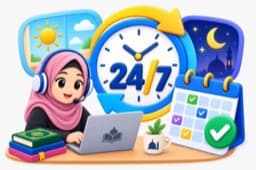
The short answer: most Irish families find that two or three short Quran classes a week, booked at a fixed time in Irish time, work best. For younger primary children, the gap between the early school finish and dinner is usually the easiest slot. For secondary students, a class just after homework or before school is often easier to protect. Keep the same slot through midterms where you can, and only adjust around big exams.
This guide is for Muslim parents across Ireland, whether you live in Dublin, Cork, Galway, Limerick or a small town where the nearest masjid is a long drive away.
Why the Irish school week suits online Quran classes
Many parents are surprised by how early Irish primary schools finish. Junior and senior infants are usually home by around half one, and older primary children by around half two. That leaves a long afternoon, which is a real advantage. A 30-minute Quran class fits easily before activities, before dinner, or before it gets dark.
Secondary school days run later, usually until around half three or four, and many schools have one shorter day in the week. Homework, sport and study take up more of the evening, so the timing needs a bit more thought.
The other thing Irish families have going for them is that children already learn a second language at school. A child who is used to Gaeilge, with its own spellings and accents on letters, often takes to the idea that Arabic letters change sound with small marks above and below. That is exactly what Noorani Qaida teaches, step by step.
Suggested class times by age

These are starting points, not rules. Every child is different, and the right time is the one your child can keep week after week.
| Age group | School usually ends | Slots that often work |
|---|---|---|
| Junior and senior infants (4–6) | Around 1:30pm | Early afternoon after lunch and a rest, or before dinner |
| 1st to 6th class (7–12) | Around 2:30pm | 3:30pm to 5:30pm, before activities or dinner |
| Secondary (12–18) | Around 3:30–4pm | Early evening after homework, the shorter school day, or before school |
If your child has a shorter day once a week, that afternoon is a natural home for one of their classes. For more ideas by age, see our guide to the best time for a child's Quran class.
Working around GAA, dancing and swimming
Irish children are busy. GAA training, hurling and camogie, Irish dancing, swimming lessons and matches can fill several evenings and most of Saturday morning. The trick is not to fight the timetable but to plan around it.
- Write out the week first. Put school, training, matches and family commitments on one page. Then look for two or three calm gaps of at least 45 minutes.
- Avoid squeezing a class straight after training. A tired, hungry child does not read well. A class before training, or on a free evening, usually goes better.
- Use Sunday if Saturday is full. Many families find a Sunday morning or afternoon class easier than a Saturday one, once matches are over.
- Keep the slot fixed. The habit matters more than the exact day. A child who knows "Quran is Monday and Thursday at 4" rarely argues about it.
Dark winter evenings
In December, the sun can set in Ireland around four o'clock. Many children feel tired and less keen to sit at a screen once it is dark outside, especially after a long day. For younger children, an earlier afternoon class soon after they get home and have a snack often works better through the winter than a late one.
Pinning the class to a fixed clock time, rather than to a prayer time, also helps. Maghrib in Ireland moves by several hours between December and June, so a class tied to it keeps shifting. A fixed time stays put all year. When the clocks change in spring and autumn, a class booked in your own local time does not move either. Our guide to keeping class times right when the clocks change explains how.
Midterms, Christmas, Easter and the long summer
Irish schools have a midterm break in late October and in February, plus holidays at Christmas and Easter. Primary children usually have July and August off, and secondary students often finish in late May or early June, which makes for a very long summer.
Online classes do not have to stop when school does. Many families keep the same slot through short breaks, because it keeps the routine going and nothing has to be restarted afterwards. Over the summer, some children add a class or two, while others keep the usual number and simply move to a morning slot. If you are travelling to visit family abroad, tell the teacher the local time where you will be staying. Our guide to Quran classes in the school holidays covers the options in more detail.
Junior Cycle and Leaving Cert years
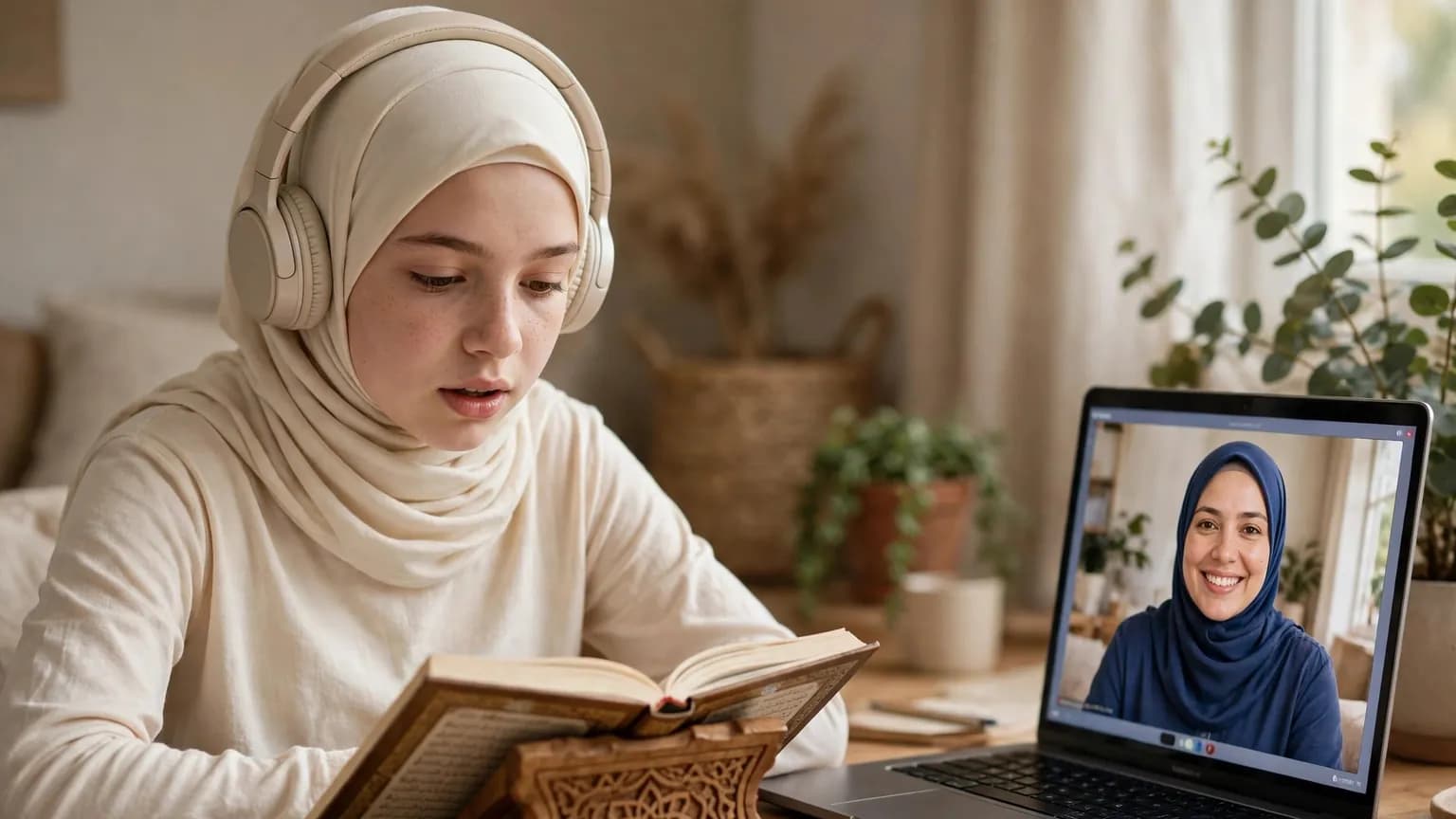
Exam years bring real pressure, especially the weeks before the Junior Cycle and Leaving Cert exams in June. Stopping Quran completely for months often leads to a lot of forgetting. A middle path usually works better: reduce to two classes a week during the busiest weeks, keep them short and focused on revision, and pick the pace back up once exams are over. Some teenagers find a calm 30 minutes of recitation is a welcome break from study.
Ramadan in Ireland
For the next few years Ramadan falls in winter or early spring, so the fasting days in Ireland are shorter than they were during the summer Ramadans. Iftar comes early in the evening, which can clash with a usual after-school class. Many families move the class a little earlier for the month, or to after Taraweeh for older children on weekends. Let the teacher know your plan a week or two before Ramadan begins.
How it works at Online Quran Lessons
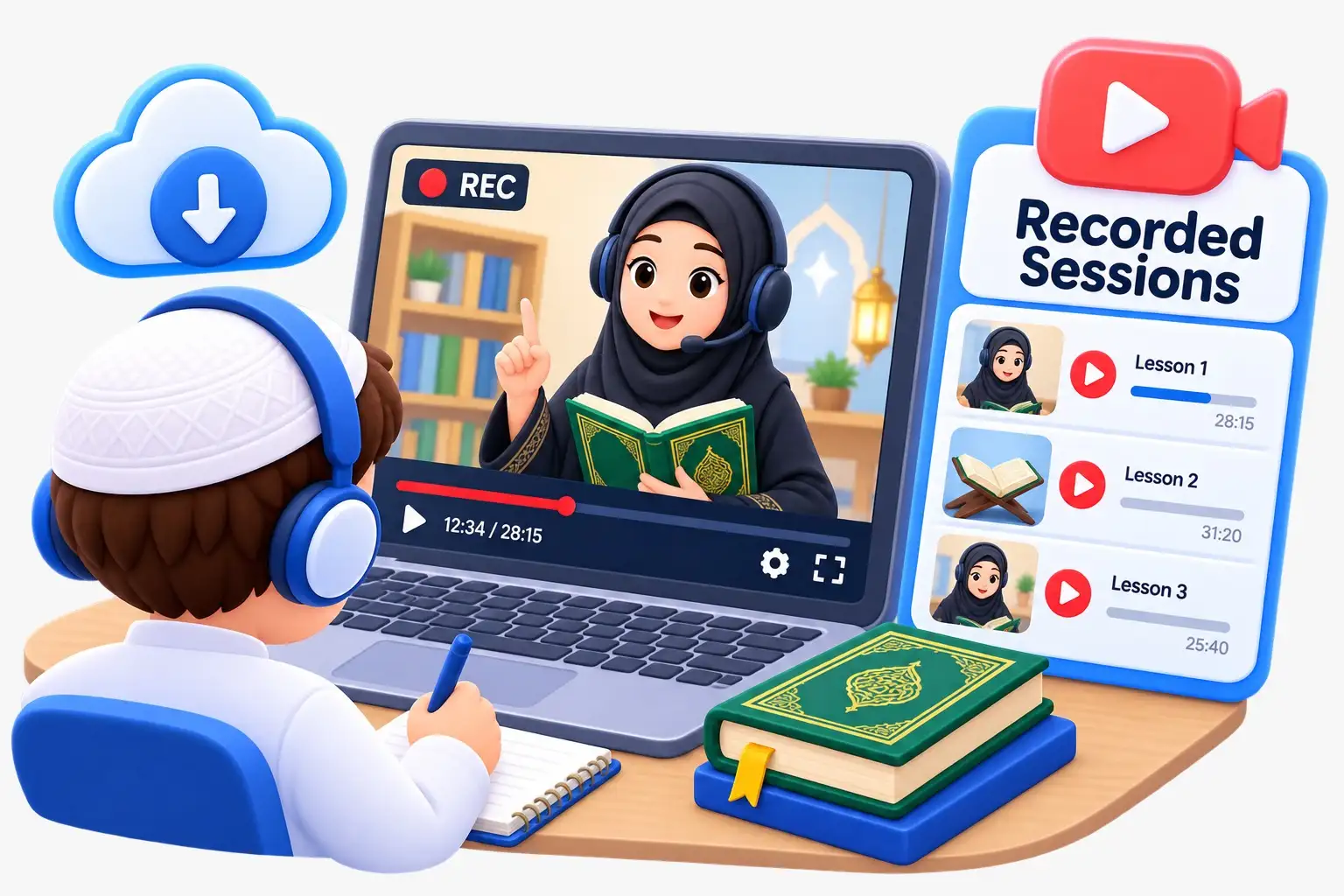
Classes run 24 hours a day, 7 days a week, and you choose your slot in Irish time. Every class is live, one-to-one and 30 minutes long, with the same teacher every week. You can choose a male or female teacher at the same fee, sit in on any class, and ask for lessons to be recorded. Classes are supervised for teaching quality, and beginners usually start with Noorani Qaida before moving on to reading the Quran with Tajweed.
Plans are paid monthly in euro. In Ireland, 2 classes a week cost €36 a month, 3 classes €45, 4 classes €50 and 5 classes €55. The pricing page always shows the current fees in your own currency. You can read more about classes for Irish families on our online Quran classes in Ireland page.
Getting started
Write out your family's week, find two or three calm slots, and keep them fixed. That simple step does more for a child's progress than almost anything else. See how our online Quran classes for kids work, and when you are ready, book 3 free trial classes. No card is needed, and you choose the time in Irish time from the very first class.
Frequently asked questions
What is the best time for Quran classes for children in Ireland?
How many Quran classes a week should my child do?
Are classes in Irish time?
How much do online Quran classes cost in Ireland?
Should my child stop Quran classes during the Leaving Cert?
Can my daughter have a female teacher?
Keep reading
- For ParentsQuran Classes for Kids in Italy: Tempo Pieno, Saturday School and the Long Summer Break
- For ParentsQuran Classes for Kids in the Netherlands: Wednesday Afternoons, Moskee Classes and Holidays
 For ParentsWho Teaches Your Child? Our Quran Teachers, Their Qualifications and the Checks Behind Them