The short answer: the five pillars of Islam are Shahadah (declaring faith), Salah (prayer), Zakat (giving charity), Sawm (fasting in Ramadan) and Hajj (pilgrimage to Makkah). They are called pillars because, like the pillars of a building, the whole of a Muslim's practice rests on them.
Where the five pillars come from
In Sahih al-Bukhari and Sahih Muslim, Abdullah ibn Umar reported that the Prophet ﷺ said: "Islam is built on five: testifying that there is no god but Allah and that Muhammad is the Messenger of Allah, establishing the prayer, giving zakat, Hajj to the House, and fasting in Ramadan."
The five pillars at a glance
| Pillar | What it means | For children |
|---|---|---|
| Shahadah | Believing and saying that there is no god but Allah, and Muhammad ﷺ is His Messenger | Learn the words and their meaning; it is the first kalima |
| Salah | Praying five times a day: Fajr, Dhuhr, Asr, Maghrib and Isha | Start joining prayers early; encouraged to pray regularly from age 7 |
| Zakat | Giving 2.5% of savings above a set amount (the nisab) each year to people in need | Learn the idea of sharing; give from pocket money as sadaqah |
| Sawm | Fasting from dawn to sunset in the month of Ramadan | Practise half-day or weekend fasts; obligatory from puberty |
| Hajj | The pilgrimage to Makkah, once in a lifetime, for those who are able | Learn the story of Ibrahim and Ismail, and the steps of Hajj |
1. Shahadah
*Ash-hadu an la ilaha illallah, wa ash-hadu anna Muhammadan rasulullah.* "I bear witness that there is no god but Allah, and I bear witness that Muhammad is the Messenger of Allah." It is the first of the six kalimas, and the doorway into Islam.
2. Salah
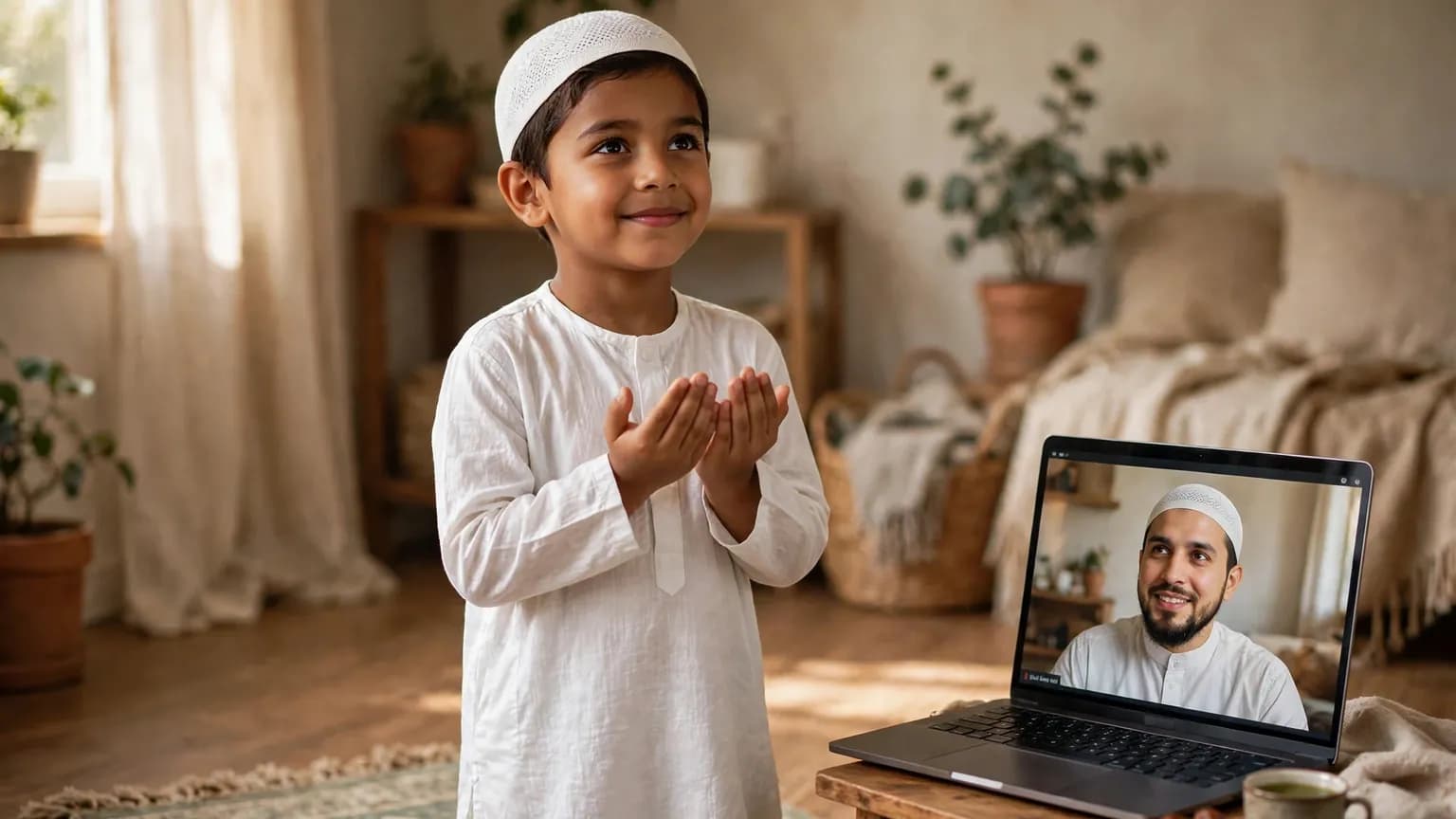
Five prayers a day keep a Muslim connected to Allah from morning to night. Abu Dawud records the Prophet ﷺ telling parents to teach children to pray at seven. Children love praying beside a parent long before then. See teaching kids salah step by step.
3. Zakat
Zakat purifies wealth and looks after the poor. It is due once a year on savings above the nisab, at 2.5%. Children usually don't pay zakat themselves, but they can learn the idea through *sadaqah*: giving a little of their own pocket money and choosing who it goes to.
4. Sawm
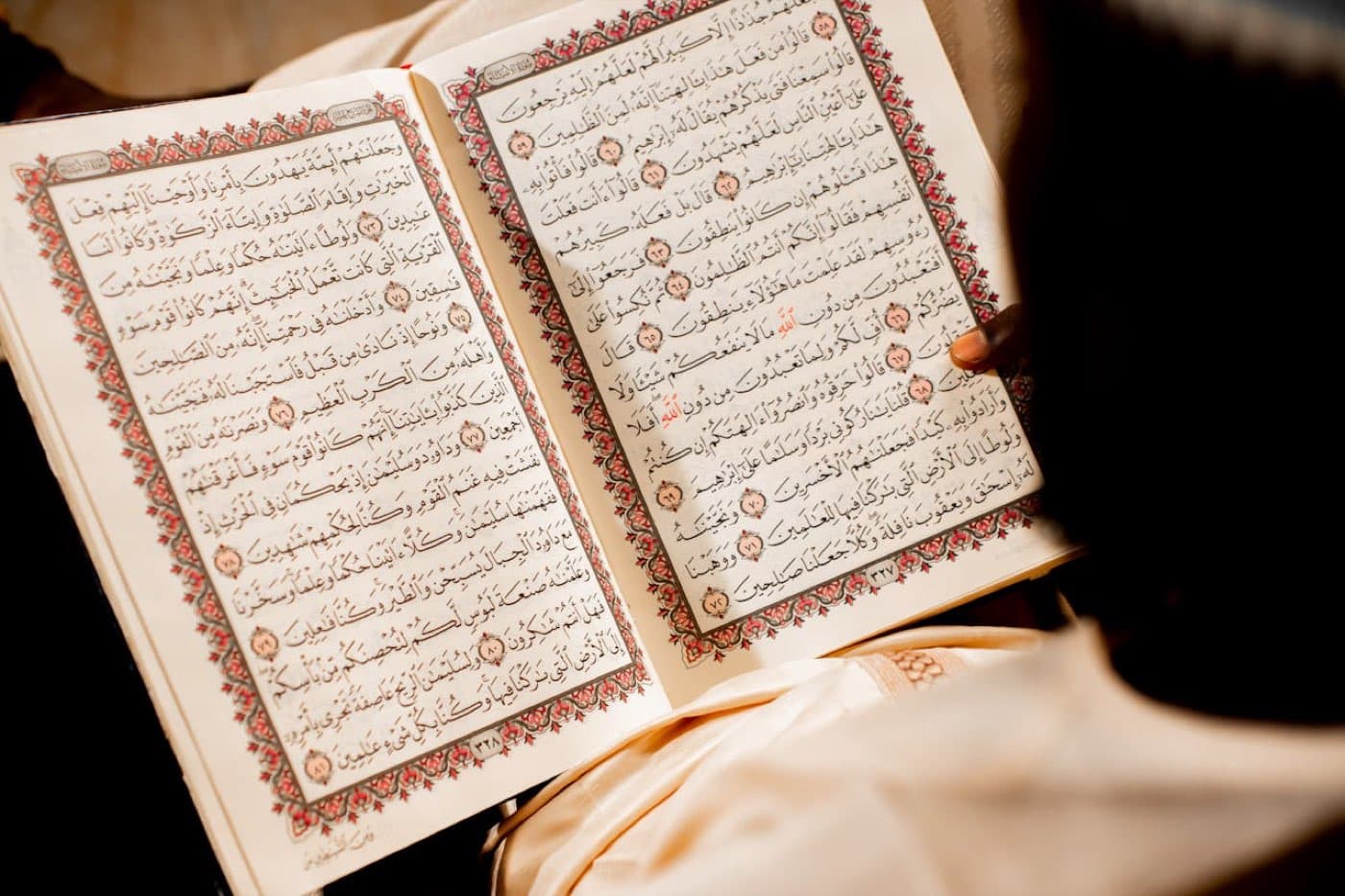
During Ramadan, adult Muslims fast from Fajr to Maghrib: no food or drink. Fasting becomes obligatory at puberty, but many children love trying a few hours, or a full day at the weekend. Our Ramadan Quran plan for kids has more ideas.
5. Hajj
Hajj takes place in the month of Dhul-Hijjah. It is obligatory once in a lifetime for every adult Muslim who is healthy and can afford it. It remembers the story of Prophet Ibrahim, his wife Hajar and their son Ismail.
Activities to teach the five pillars
- Five-pillar hand: trace your child's hand and write one pillar on each finger.
- Build a model: five cardboard tubes holding up a paper roof. Remove one and see what happens.
- A sadaqah jar: let your child put a coin in every Friday and choose a charity at the end of the month.
- Prayer chart: a sticker for every prayer prayed on time.
Our Islamic Studies classes for kids cover the pillars, the articles of faith and the stories of the prophets in a gentle, age-appropriate way. You can book 3 free trial classes.