
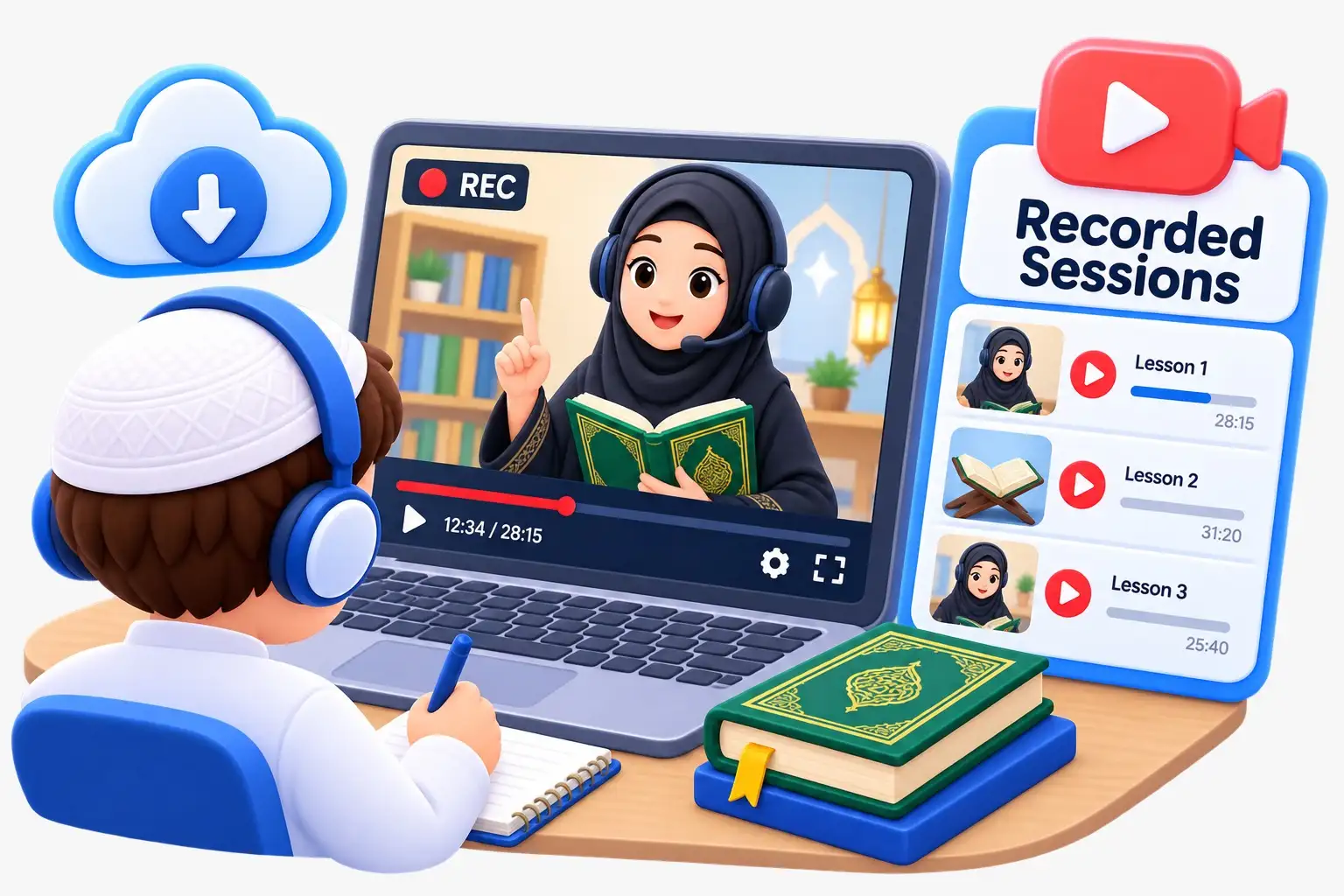
The short answer: most children are ready for short one-to-one online Quran classes from about age 4 or 5, if they can sit and focus with an adult for 10 to 15 minutes, are comfortable seeing and hearing someone on a screen, and can repeat sounds after the teacher. They do not need to know any Arabic letters first. A parent sitting nearby in the first few weeks makes the biggest difference.
Readiness is not just about age
Two children of the same age can be at very different stages. One five-year-old will happily chat to a teacher on a laptop; another will hide under the table. Neither is behind. They just need a slightly different start.
It helps to think about three things rather than age alone: attention span, comfort with a screen, and willingness to copy sounds. For a broader look at timing, see our guide to the best age to start Quran classes.
Signs your child is ready

- They can sit with an adult for 10 to 15 minutes on one activity, such as a story or a puzzle.
- They have video-called a relative and talked back, even a little.
- They enjoy copying sounds, songs or rhymes.
- They can follow a simple instruction like "point to this one".
- They show some curiosity, for example asking about the Quran or wanting to pray with you.
If three or four of these are true, your child is very likely ready to try.
Readiness by age
| Age | Typical attention for a lesson | What a class looks like | Parent's role |
|---|---|---|---|
| 3–4 | Short bursts, a few minutes at a time | Letter sounds, repeating, lots of praise | Sit beside them every class |
| 5–6 | 10–15 minutes of focus | Noorani Qaida letters and short surahs | Sit nearby; help them settle |
| 7–9 | Most of a 30-minute class | Qaida, then Quran reading and Tajweed basics | Check in at the start and end |
| 10–13 | A full class, with some independence | Quran reading, Tajweed, Hifz | Watch some lessons; ask about progress |
| Teens | A full class and home practice | Tajweed, Hifz, meaning | Give space; stay involved |
These are rough guides, not rules. Teachers adjust each 30-minute class to the child in front of them. With younger children, that often means switching activity every few minutes. If you have a very young learner, our page on Quran classes for 4-year-olds explains what to expect.
Letter recognition is not required
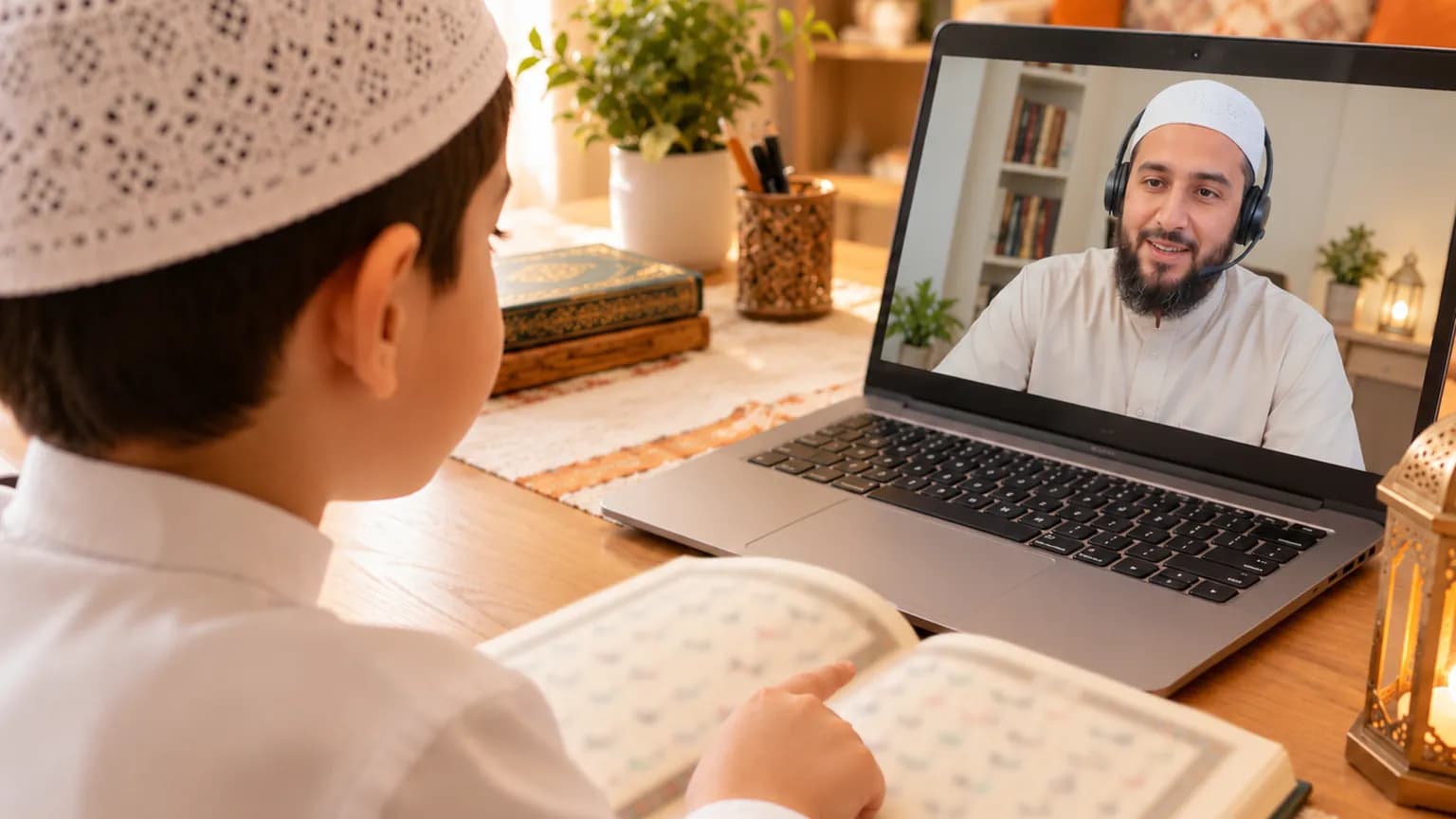
Many parents think their child should learn the Arabic alphabet before starting. There is no need. Teachers start complete beginners with the first page of Noorani Qaida, letter by letter. Our teachers prefer Noorani Qaida for beginners, and most children take 6 to 12 months to complete it.
If you would like to do something at home first, a little listening goes further than flashcards. Playing a short surah your child can hum along to is a lovely start. Our guide to the Arabic alphabet for kids has gentle ideas if your child is keen.
Getting the setup right
A good setup removes half the problems before they start.
- Device: a laptop or tablet on a stand is better than a phone held in a hand.
- Place: a quiet table, away from the TV and siblings, with light in front of your child rather than behind.
- Sound: headphones help in a busy home, though younger children may find them distracting.
- Time: pick a time when your child is fed, rested and not desperate to play. Straight after school suits some children; after a snack and a break suits most.
- Routine: the same days and time each week, so class becomes normal.
Classes run on Zoom, Google Meet or Skype, 24 hours a day and 7 days a week, so you can choose the time your child is at their best.
How parents help in the first few weeks

- Sit in at first. At Online Quran Lessons you can join and watch any class at any time, no notice needed.
- Praise effort, not perfection. "You tried so hard with that letter" works better than "that was wrong".
- Keep it short at home. Five minutes of repeating the lesson is plenty.
- Talk to the teacher. Tell them what your child loves, what upsets them, and if they are shy.
- Step back slowly. Move from beside your child, to across the room, to checking in at the end.
If your child finds it hard to stay still, our tips on keeping kids engaged in online Quran classes can help. For a child who is nervous with new people, read our guide to a shy child in Quran class.
When to wait a little
If your child cries through every attempt, will not look at the screen at all, or is going through a big change such as a new baby or a house move, it is fine to wait a few weeks. Try again with a shorter, playful first class. Readiness often arrives suddenly.
The easiest way to find out

You will learn more from one gentle class than from any checklist. Book 3 free trial classes with a male or female teacher, sit beside your child, and see how they get on. No card is needed.