
The short answer: the Arabic alphabet has 28 letters, read from right to left. Most of them have an easy English match (ب is b, م is m), a few have no English sound at all (ع, ح, ق), and several look the same apart from their dots (ب ت ث). Children learn them best in small groups, a few letters at a time, out loud, with someone who can hear and correct their pronunciation. Once the letters are secure, the Noorani Qaida takes them from single letters to reading the Quran.
Before you start: three things that surprise parents
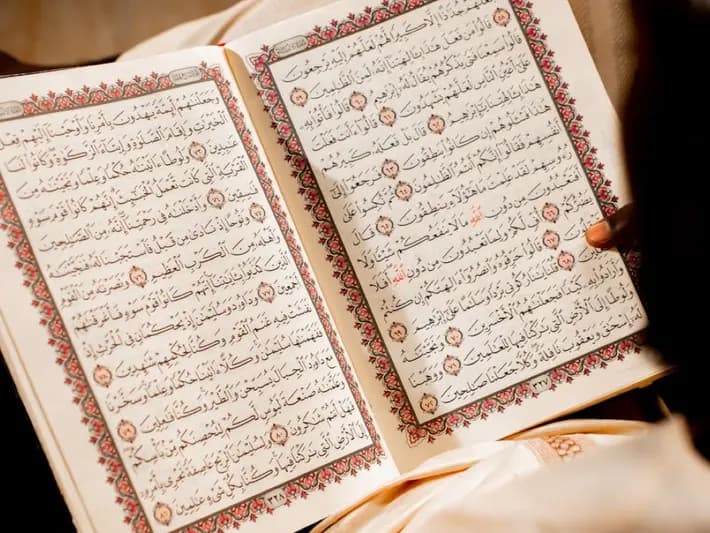
- Arabic is read right to left. Your child's book opens from what looks like the back.
- Letters change shape when they join. Most letters have a slightly different form at the start, middle and end of a word. Children learn the stand-alone shapes first; the joined forms come later in the Qaida.
- Short vowels are small marks, not letters. The sounds a, i and u are written as little marks above or below the letter (fatha, kasra and damma). At the alphabet stage, children only need the letter names and their basic sounds.
All 28 letters, with their sounds
The sounds below are close English matches. Where there is no English equivalent, we say so, because those are the letters that need a teacher's ear.
- ا Alif: no sound of its own; carries a long "aa" or a short vowel.
- ب Ba: b, as in bat.
- ت Ta: t, as in tap (softer than English t).
- ث Tha: th, as in think.
- ج Jim: j, as in jam.
- ح Ḥa: a breathy h from the middle of the throat. No English match.
- خ Kha: like ch in the Scottish word loch.
- د Dal: d, as in dog (softer than English d).
- ذ Dhal: th, as in this.
- ر Ra: a lightly rolled r.
- ز Zay: z, as in zoo.
- س Sin: s, as in sun.
- ش Shin: sh, as in ship.
- ص Ṣad: a heavy, full-mouthed s. No English match.
- ض Ḍad: a heavy d made with the side of the tongue. No English match.
- ط Ṭa: a heavy t. No English match.
- ظ Ẓa: a heavy th, as in this, said with a full mouth.
- ع ʿAyn: a tight sound from the middle of the throat. No English match.
- غ Ghayn: a soft gargling sound, close to the French r.
- ف Fa: f, as in fish.
- ق Qaf: a deep k from the very back of the throat.
- ك Kaf: k, as in kite.
- ل Lam: l, as in lamp.
- م Mim: m, as in moon.
- ن Nun: n, as in nose.
- ه Ha: a light h, as in hat.
- و Waw: w, as in water (also a long "oo").
- ي Ya: y, as in yes (also a long "ee").
You will also see the hamza (ء), a small mark for a short catch in the voice, like the break in "uh-oh". Some books count it as a letter; the Noorani Qaida introduces it early.
The letters children find hardest
Most children pick up two-thirds of the alphabet quickly. The rest fall into three groups, and it helps to know them in advance:
- Throat letters (ع ح خ غ ه ء). English uses the throat for very few sounds, so children swap ح for ه, or skip ع entirely.
- Heavy letters (ص ض ط ظ ق). They are said with a fuller, deeper mouth. Children often say them like their light partners: ص like س, ط like ت.
- Look-alikes that differ by dots (ب ت ث, ج ح خ, د ذ, ر ز, س ش). These cause most early reading slips. We cover them in detail in Arabic letters children mix up most.
None of these can be fixed from a chart. A child needs someone to hear them, show them where the sound comes from, and correct them gently until it sticks.
A simple order for teaching the letters at home
Teaching the alphabet in the printed order works, but grouping by shape is usually faster, because a child learns one body and then just counts the dots.
- Week 1: ا ب ت ث. One shape, three dot patterns.
- Week 2: ج ح خ, then د ذ.
- Week 3: ر ز, then س ش.
- Week 4: ص ض, then ط ظ.
- Week 5: ع غ, then ف ق.
- Week 6: ك ل م ن ه و ي.
Keep each session to ten minutes. Revise the old letters before adding new ones, and stop while your child is still enjoying it.
Games that make the letters stick
- Letter hunt: write five letters on sticky notes around the room and call one out. Your child runs to find it and says its name.
- Dot detective: show ب, ت and ث one at a time and ask how many dots, and where.
- Trace and say: trace a letter in the air, on a tray of sand or on a steamy window, saying the sound each time.
- Teach the teacher: let your child "teach" you a letter. Explaining it is one of the best ways to remember it.
Do you need to know Arabic to help?
No. You can run the games, keep the routine and listen for confidence without reading Arabic yourself. What you cannot easily do is correct pronunciation, especially for the throat and heavy letters. That is the part a teacher should handle, because a sound learned wrongly at this stage is hard to unlearn later.
From the alphabet to reading the Quran
Knowing the letters is step one. The Noorani Qaida then teaches joined letters, the short vowel marks, long vowels, sukun and shaddah, step by step, until your child can read words and then whole lines of the Quran. Read what the Noorani Qaida is and how it works for the full picture.
How our classes teach the alphabet

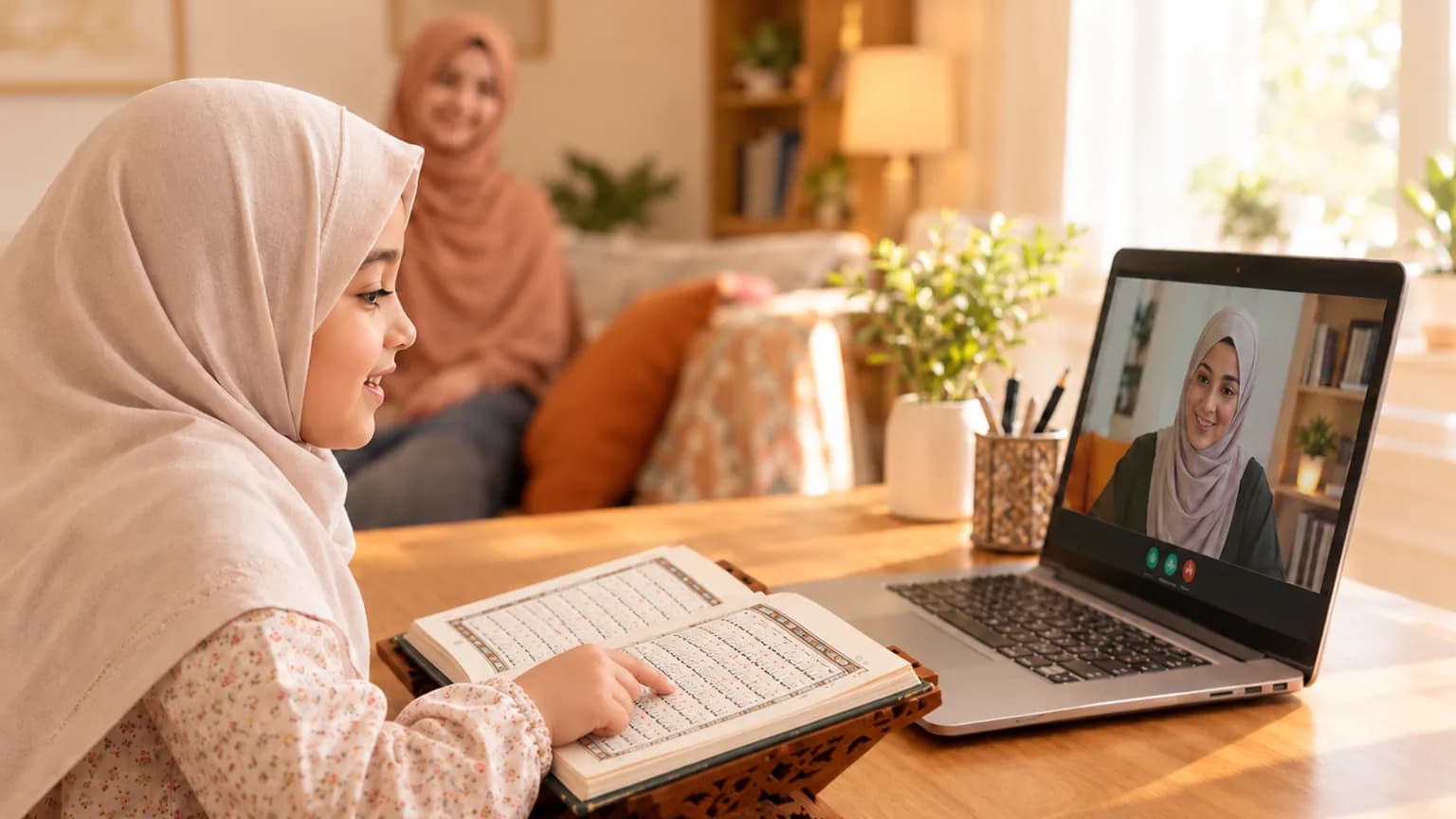
At Online Quran Lessons every class is live and one-to-one, so the teacher hears every letter your child says and corrects it on the spot. Classes are usually 30 minutes, with the same teacher each week, and you can choose a male or female teacher at the same fee. Children start with the letters inside our Noorani Qaida course, and our Arabic classes for kids build on them later.
Try it free
The first 3 classes are free and no card is needed. Sit beside your child, watch how the teacher introduces the first letters, and decide once you have seen it.