
The short answer: children with ADHD can and do learn the Quran. What usually needs to change is the setting and the pace, not the goal: short chunks of 5 to 10 minutes, movement between them, one teacher who knows the child, a predictable routine, and lots of quick praise. A one-to-one class is often a much better fit than a busy group.
Why Quran class can be hard for a child with ADHD
A traditional Quran class asks a child to sit still, wait their turn and repeat the same lines for a long time, often in a noisy room. For a child whose attention and energy work differently, that is close to the hardest setting there is. The child is not being lazy or disrespectful: their brain is asking for movement, novelty and quick feedback, and the class offers very little of any.
That is why many parents notice their child does well with the same material at home, and struggles in a group.
What helps in the lesson itself

- Short chunks. Split the lesson into parts of 5 to 10 minutes: new letters or lines, a quick game or recap, then revision. A 30-minute class can hold three or four of these.
- Movement between chunks. Stand up, stretch, fetch a glass of water, or trace a letter in the air. A short planned break is better than a child who has already drifted off.
- One clear target at a time. "Read these three lines without a mistake" works better than "finish the page".
- Instant, specific praise. "You held the madd for exactly two counts" lands far better than a general "good".
- Something for the hands. A pointer to follow the words, or a small fidget item held in the other hand, helps some children focus.
- Fewer distractions on screen. For online lessons, a full-screen video call with other tabs and toys out of reach.
Choose the right time of day
Most children with ADHD have a window when they are calmer and more focused: often after a snack and some outdoor play, and before they are tired. Book the class in that window and keep it at the same time each week. If your child takes medication, ask their doctor which part of the day it covers; many families find a class inside that window goes better.
One-to-one or group class?
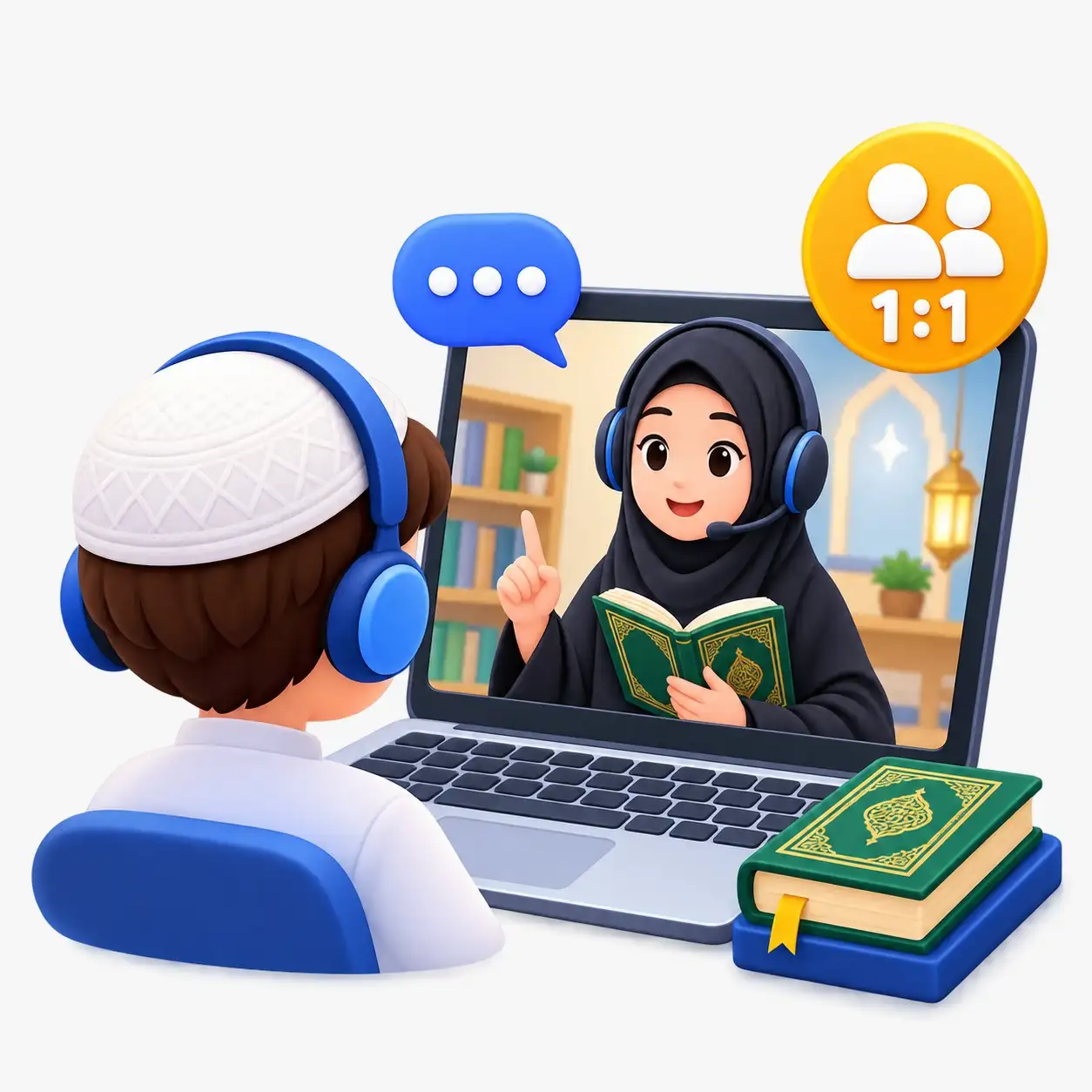
In a group class a child with ADHD waits most of the time, and waiting is where attention goes. In a one-to-one class the teacher can switch activities the moment the child starts to drift, use short targets, and move on as soon as a lesson is secure. Tell the teacher about your child before the first lesson, including what helps and what does not.
Reading and memorising with ADHD
- Reading (Noorani Qaida): the Qaida is already broken into very small steps, which suits children who need short, clear wins. See how long the Noorani Qaida takes.
- Memorising: use listening and repeating, often while moving. Many children memorise short surahs well by hearing them in the car or before bed. Start with the short surahs most children learn first.
- Revision: little and often. Five minutes a day beats one long session at the weekend.
At home between classes

- Keep practice short and at the same time each day, so it becomes routine rather than a negotiation.
- Use a simple chart where your child ticks off each day's practice.
- End on success: stop while it is going well, not after a struggle.
- If you cannot read Arabic yourself, you can still help: see how to help your child with Quran if you can't read Arabic.
Keep expectations realistic
Progress may come in bursts, with good weeks and difficult weeks. Compare your child with where they were a month ago, not with a cousin or classmate. Allah does not burden a soul beyond what it can bear (Al-Baqarah 2:286), and the reward of struggling with the Quran is double: the Prophet ﷺ said the one who reads it with difficulty, stammering, has two rewards (Bukhari and Muslim).
When to ask for more help
This guide is about Quran lessons, not diagnosis or treatment. If you think your child may have ADHD, or attention difficulties are affecting school and home as well, speak to your GP, paediatrician or your child's school.
Our Quran classes for children with additional needs are one-to-one, with the same teacher every week, and you can sit beside your child in every lesson. To see how your child responds, book 3 free trial classes. No card is needed.