The short answer: you can help a great deal without reading a word of Arabic. Your job is not to teach the letters; that is the teacher's job. Your job is to keep the routine, listen to your child practise, ask the teacher what to look for each week, and show that you value it. And if you would like to, you can learn alongside them in your own classes.
You are not alone, and it is not too late
Many parents grew up without learning to read the Quran, or learned as children and have forgotten. Others are converts, or grew up where classes were hard to find. If that is you, there is nothing to be embarrassed about. Some of the most dedicated Quran parents are the ones who never had the chance themselves.
What actually helps a child learn

When teachers think about which children make the most progress, it is rarely about whose parents read Arabic. It is about whose parents do these things:
| What helps | Do you need Arabic? |
|---|---|
| Making sure the child attends every class, on time | No |
| A quiet place with the right setup | No |
| A few minutes of home practice most days | No — you can listen |
| Knowing what the teacher wants practised this week | No — ask for notes |
| Noticing and praising effort | No |
| Correcting individual sounds | Yes — leave this to the teacher |
Only the last one needs Arabic, and it is the one a teacher is there to do.
Your role as the listener
Even if you cannot read the letters, you can be a very good listener.
- Listen for fluency. Is your child reading smoothly, or stopping on every letter? You can hear that without knowing Arabic.
- Listen for confidence. Do they sound sure, or are they guessing and looking at you?
- Follow along with a recording. For memorised surahs, play a clear recitation and listen to whether your child's version sounds the same in rhythm and length.
- Ask them to teach you. "Show me the letter you learned today" makes them the expert, and revises the lesson at the same time.
- Do not guess at corrections. If something sounds off, make a note and mention it to the teacher rather than correcting it yourself.
Keep the routine

The routine is the biggest thing you control. Same class time every week, a short practice slot most days, and the device charged and ready. Our guide to revising Quran at home between classes has simple routines that work for parents of any level, and why children forget Quran lessons explains why that short daily practice matters.
Ask the teacher for weekly notes
This is the single most useful step for a parent who cannot read Arabic. Ask the teacher to send, each week:
- What was covered in class, in plain English.
- Exactly what to practise at home, such as "page 7, lines 1–4".
- One thing to listen for, for example "make sure she holds the long vowels".
- Anything they are worried about.
A short WhatsApp message is enough. With it, your five minutes of home practice is focused on the right thing. You can also sit in on any class at any time, with no notice needed, which is a great way to hear what the teacher is listening for. Our guide on how to check your child's Quran progress has more questions to ask.
Tools that help a non-Arabic-reading parent
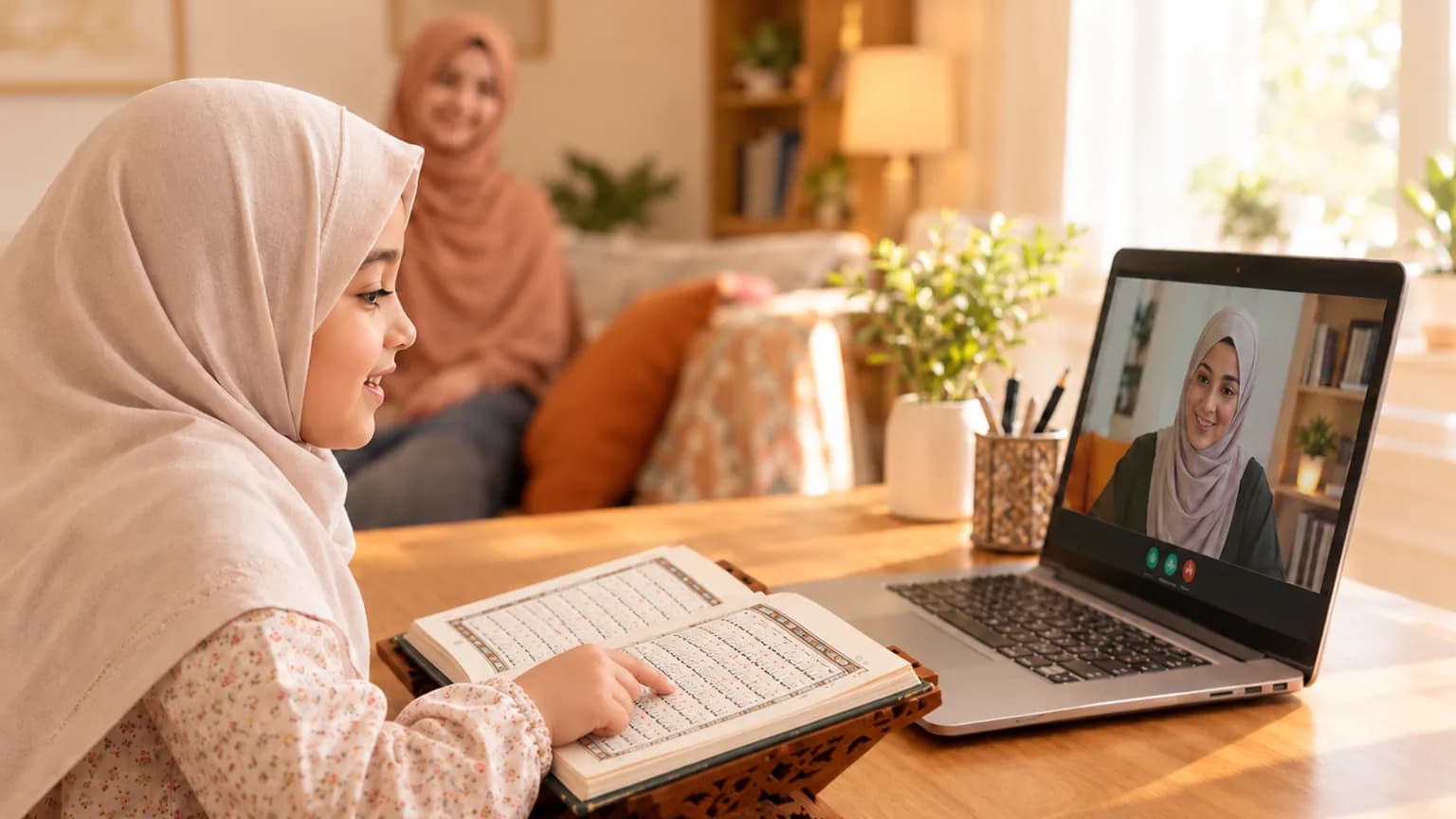
- Recitation recordings. Listening to a clear, slow reciter helps both of you learn how a surah should sound.
- Meaning in English or Urdu. A simple translation lets you talk about what your child is reading. See learn Quran with translation.
- Transliteration, carefully. It can help you remember the words of a dua, but it cannot show the real sounds. Our guide to learning with transliteration explains its limits.
- A Qaida for yourself. Having your own copy of the same book your child uses helps you follow along.
Learning alongside your child
Many parents find that the best way to support their child is to start learning too. Adults usually move faster than children, because they can practise on their own and understand the method. Within a few months you may be reading the same Qaida pages as your child.
- Book your own one-to-one classes. Adult classes are the same length as children's, and you can choose a male or female teacher at the same fee.
- Book back to back. Your child's class, then yours, with the same teacher if you like.
- Learn in private. Being one-to-one means no one else hears you begin, which many adults find a relief.
Our page on online Quran classes for adults and the guide to starting the Quran as an adult beginner explain how it works. Families with more than one learner get a 10% family discount from the second child; ask about adding yourself when you book.
What your child sees
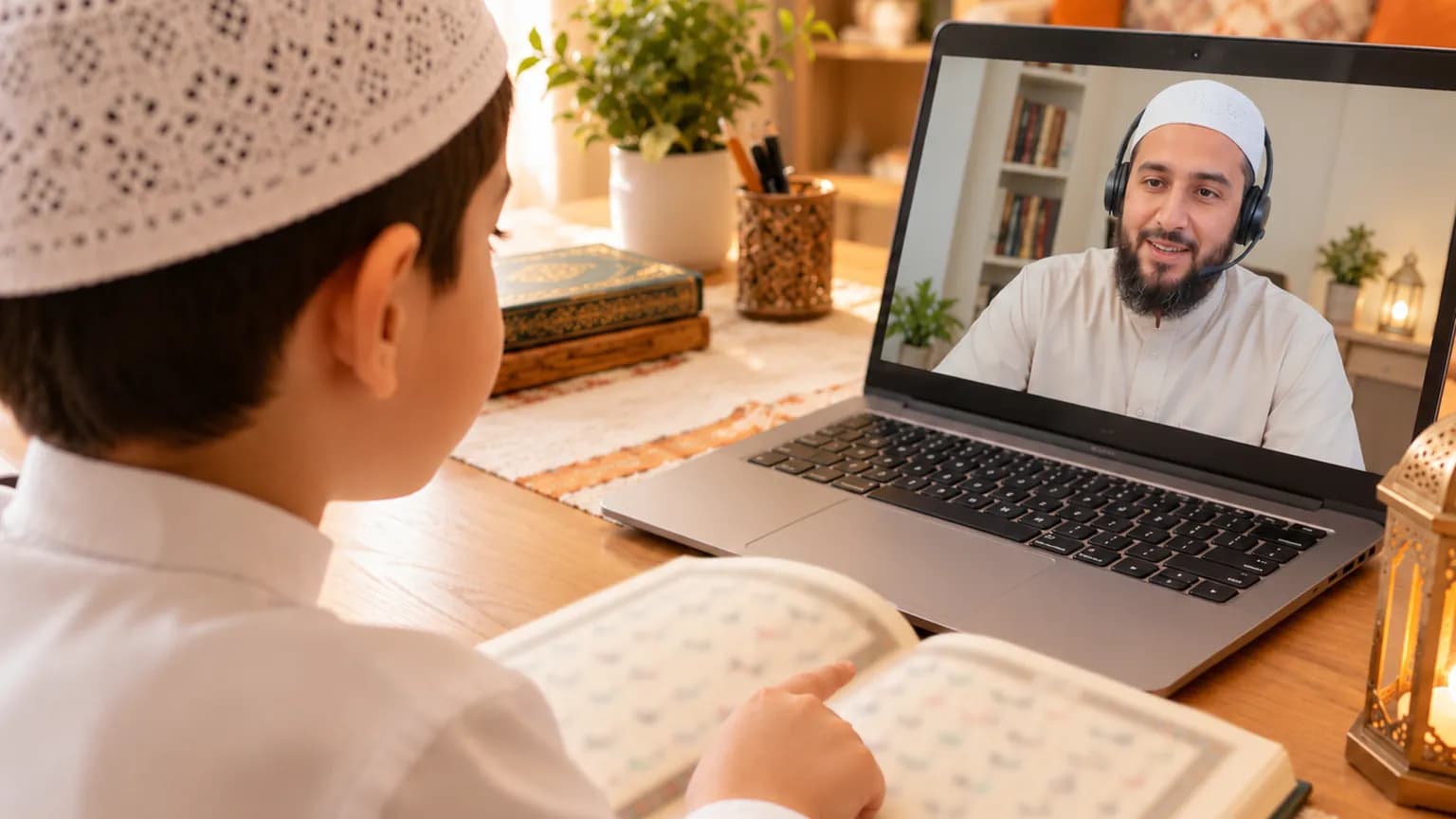
A child who watches their parent sit down with a Qaida at the age of 35 learns something no lesson can teach: that the Quran matters enough to start, whenever you start. Children do not need a parent who knows everything. They need one who keeps showing up.
Start together
Classes are taught in English or Urdu, 24 hours a day, 7 days a week. Book 3 free trial classes, no card needed, for your child, and ask about a trial for yourself as well. You can watch every class.