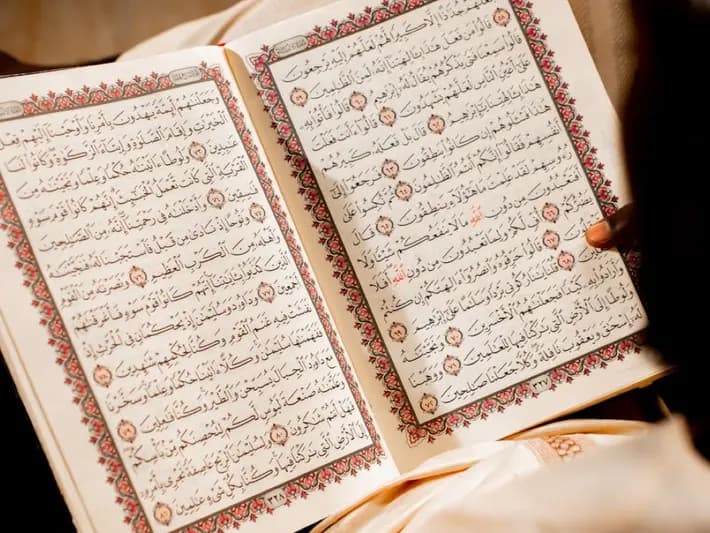
The short answer: *makharij al-huruf* means the points of articulation of the Arabic letters: the exact place each sound is made. Scholars of Tajweed describe 5 main areas (the mouth and throat space, the throat, the tongue, the lips and the nose) containing 17 points. Learning them is the first step in Tajweed, because a letter said from the wrong place can become a different letter and change the meaning of a word.
The five areas
| Area | Arabic name | Letters made there |
|---|---|---|
| The empty space of the mouth and throat | Al-Jawf | The long vowels: ا after a fathah, و after a dammah, ي after a kasrah |
| The throat | Al-Halq | ء ه · ع ح · غ خ |
| The tongue | Al-Lisan | 18 letters (see the chart below) |
| The lips | Ash-Shafatan | ف · ب م و |
| The nasal passage | Al-Khayshum | The ghunnah (nasal sound) of ن and م |
The throat letters

The throat has three points, from deepest to nearest the mouth:
- Deepest part: ء and ه
- Middle: ع and ح
- Nearest the mouth: غ and خ
These six letters are where English speakers struggle most, because English has no ع, ح, غ or خ. A common mistake is saying ح like an English h (which is the Arabic ه), or ع like a plain vowel.
The tongue letters
| Part of the tongue | Touches or comes near | Letters |
|---|---|---|
| Very back | The soft palate | ق |
| Back, a little further forward | The roof of the mouth | ك |
| Middle | The hard palate | ج ش ي (the consonant ي) |
| One or both sides | The upper molars | ض |
| Front edges | The gums of the front teeth | ل |
| Tip, just below the lam point | The gum above the front teeth | ن |
| Tip and a little of the top | Close to the nun point | ر |
| Tip | The roots of the upper front teeth | ط د ت |
| Tip | Near the lower front teeth, with a narrow gap | ص س ز (the whistling letters) |
| Tip | The edges of the upper front teeth | ظ ذ ث |
The lips and the nose

- ف: the inside of the lower lip touches the tips of the upper front teeth.
- ب and م: the two lips close together (more firmly for ب).
- و (the consonant): the lips round without fully closing.
- Ghunnah: the nasal hum heard in نّ and مّ, and in some rules of noon and meem saakin, comes from the nose. Pinch your nose while saying it and the sound stops.
Pairs that are easy to mix up
| Pair | The difference |
|---|---|
| ه and ح | ه is light from the deepest throat; ح is a breathy sound from the middle of the throat |
| ء and ع | ء is a short catch; ع is a squeezed sound from the middle of the throat |
| ك and ق | ق is further back and heavy; ك is lighter and further forward |
| س and ص | ص is heavy, with the back of the tongue raised; س is light |
| ت and ط | ط is heavy; ت is light |
| ذ and ز and ظ | ذ and ظ are said with the tongue touching the teeth; ز is a whistling letter |
A simple way to find a letter's makhraj
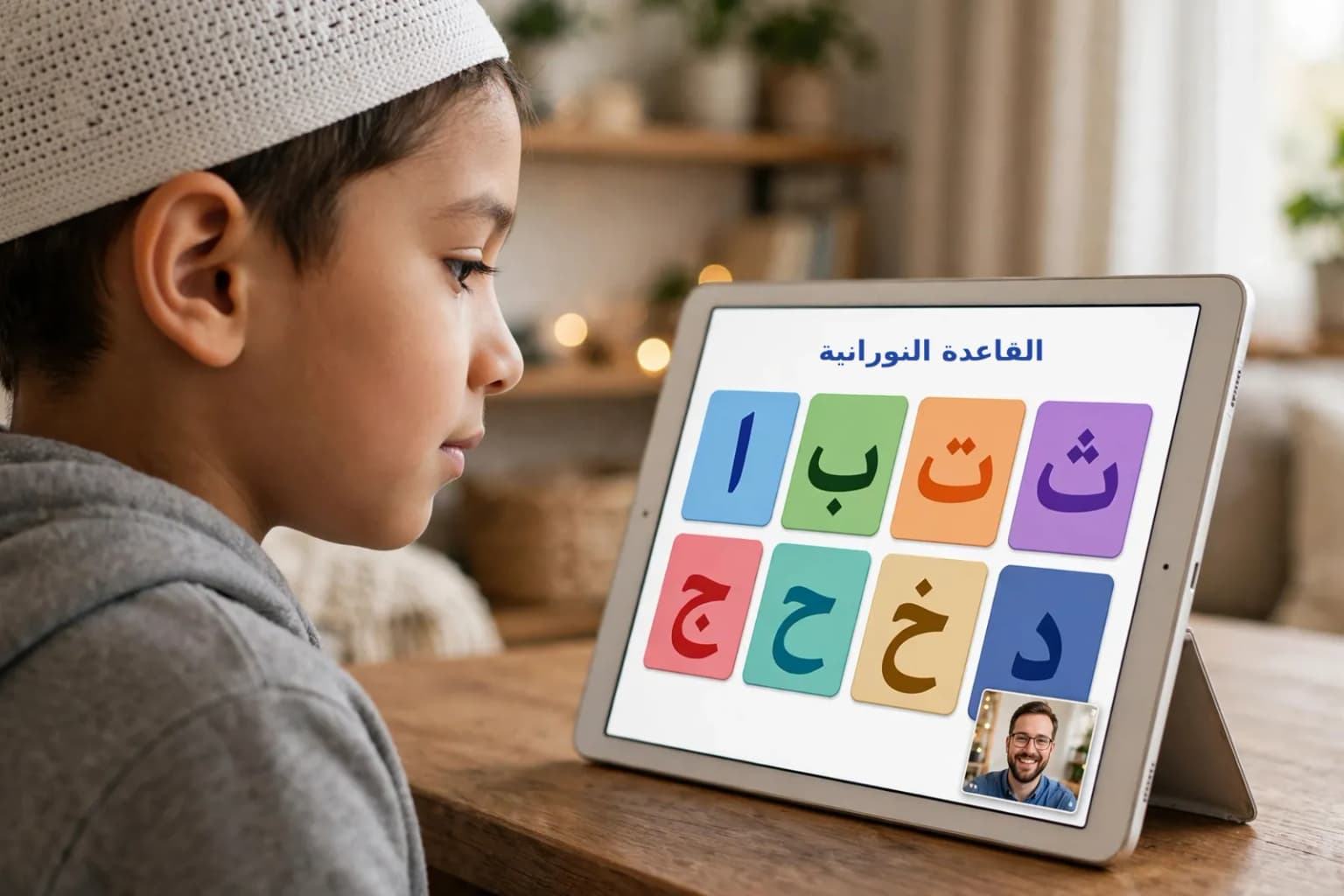
Put a sukun on the letter and a hamzah with a fathah before it, then say it slowly: أَبْ، أَتْ، أَقْ. The point where the sound stops is the letter's makhraj. Teachers use this in the first Noorani Qaida lessons.
How to practise
- Use a mirror for the lip and tooth letters (ف ب م و ث ذ ظ).
- Practise the pairs above side by side, slowly, before speeding up.
- Record yourself and compare with a well-known reciter.
- Most importantly, read to a teacher. Makharij are learned by ear, and a teacher can hear a slip that you cannot.
Related: Tajweed rules for kids, Arabic letters children mix up and what Tajweed is and why it matters. To have a teacher check your makharij one-to-one, book 3 free trial classes. See how our online Tajweed course works.