
The short answer: when a noon sakin (نْ) or tanween (ـً ـٍ ـٌ) is followed by another letter, there are four ways to read it, depending on that next letter: Izhar (say it clearly) before the 6 throat letters, Idgham (merge it) before the 6 letters of يَرْمَلُونَ, Iqlab (change it to a meem) before ب, and Ikhfa (hide it with a nasal sound) before the remaining 15 letters.
Tanween is simply a noon sound at the end of a word, written as a double vowel, so the same four rules apply to it.
The chart
| Rule | Meaning | Letters | How it sounds |
|---|---|---|---|
| Izhar | Clear | ء ه ع ح غ خ | The noon is said clearly, with no extra nasal hold |
| Idgham with ghunnah | Merge, with nasal sound | ي ن م و | The noon merges into the next letter, held in the nose for 2 counts |
| Idgham without ghunnah | Merge, no nasal sound | ل ر | The noon disappears completely into the ل or ر |
| Iqlab | Change | ب | The noon becomes a hidden meem, with 2 counts of ghunnah |
| Ikhfa | Hide | ت ث ج د ذ ز س ش ص ض ط ظ ف ق ك | The noon is half-hidden: the tongue prepares for the next letter while a 2-count ghunnah is held |
1. Izhar (clear)

Before the six throat letters, the noon or tanween is pronounced clearly. Because these letters are made deep in the throat, far from the noon's place at the tip of the tongue, there is nothing to merge with.
- مَنْ آمَنَ (noon before ء)
- مِنْ حَكِيمٍ (noon before ح)
- عَذَابٌ أَلِيمٌ (tanween before ء)
2. Idgham (merging)
The six letters are collected in the word يَرْمَلُونَ. Idgham only happens between two words. When the noon and the letter are in the same word, the noon is read clearly.
With ghunnah (ي ن م و): the noon merges into the next letter, and a nasal sound is held for about two counts.
- مَنْ يَقُولُ
- مِنْ نِعْمَةٍ
- مِنْ مَالٍ
- مِنْ وَالٍ
Without ghunnah (ل ر): the noon disappears completely, and the ل or ر is doubled.
- مِنْ لَدُنْهُ
- مِنْ رَبِّهِمْ
Exception: in four words the noon and the و or ي are in the same word, so the noon is read clearly: دُنْيَا، بُنْيَانٌ، صِنْوَانٌ، قِنْوَانٌ.
3. Iqlab (changing)
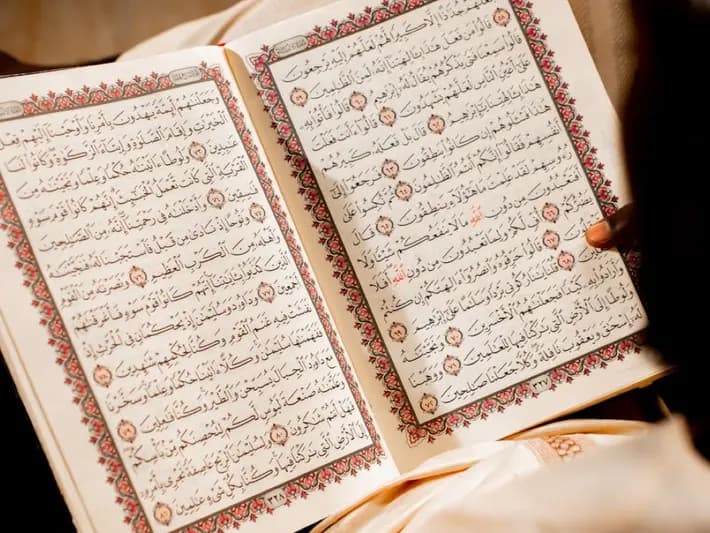
Before ب, the noon sound turns into a meem, held with a light nasal sound and the lips gently closed. Most mushafs print a small meem (ـۢ) above the noon or tanween as a reminder.
- مِنْ بَعْدِ
- أَنْبِئْهُمْ
- سَمِيعٌ بَصِيرٌ
4. Ikhfa (hiding)
Before the remaining 15 letters, the noon is neither fully clear nor fully merged. The tongue does not touch the noon's point; instead it moves towards the next letter while a two-count ghunnah comes from the nose. The ghunnah is fuller before the heavy letters (ص ض ط ظ ق) and lighter before the others.
- مِنْ قَبْلُ
- أَنْتُمْ
- عَنْكَ
Common mistakes

- Adding ghunnah in Izhar: before the throat letters the noon should be clean, without a nasal hold.
- Pressing the tongue in Ikhfa: if the tongue touches the gum, the noon becomes clear instead of hidden.
- Closing the lips hard in Iqlab: the lips meet gently; pressing them makes a full ب or م.
- Forgetting tanween: the same rules apply when a word ends in tanween and the next word begins with one of these letters.
Next, read the rules of meem sakin, which work in a similar but simpler way, and the makharij chart. To practise these rules with a teacher, book 3 free trial classes. See how our online Tajweed course works.