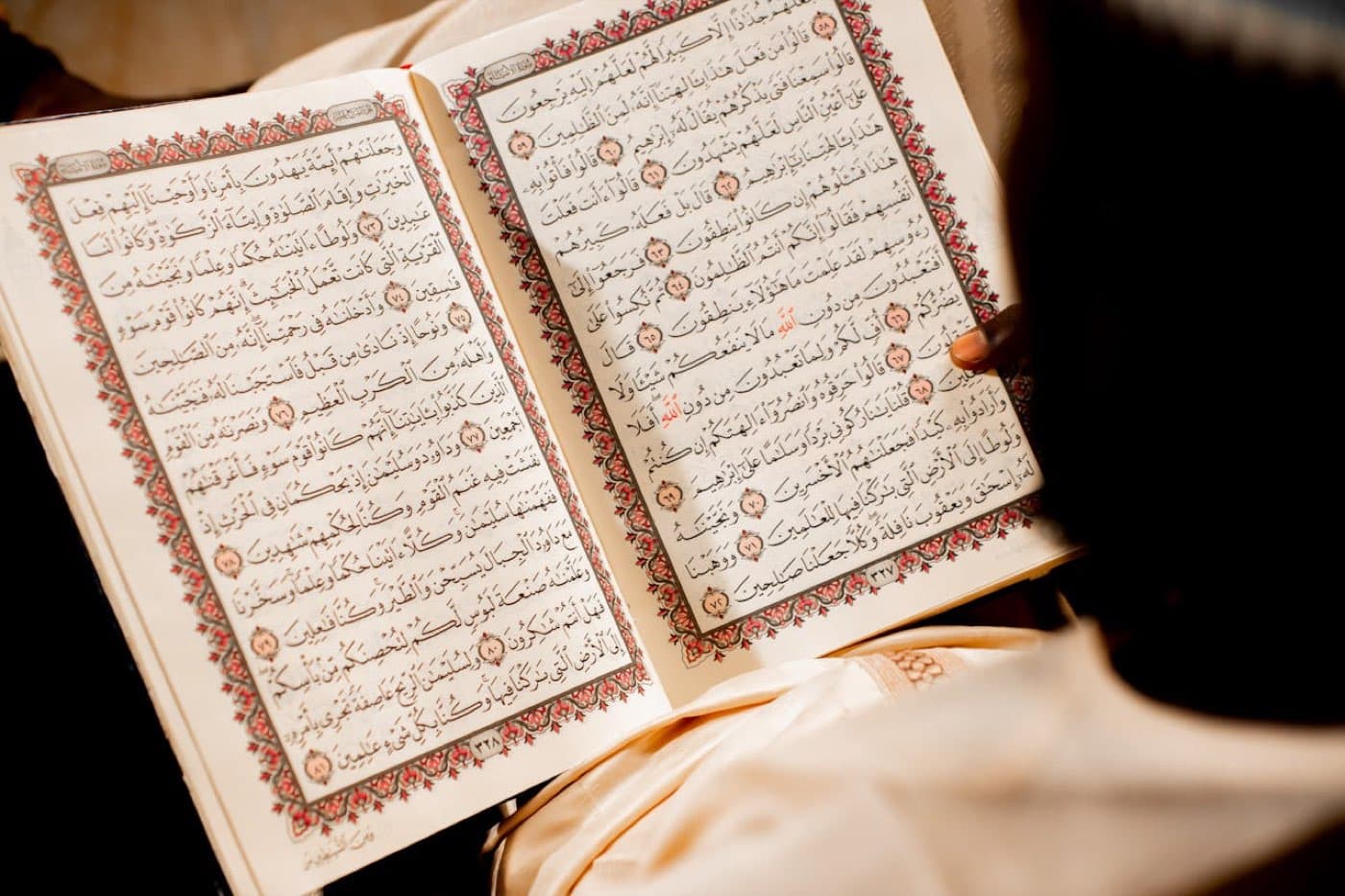
Tajweed is the set of rules governing correct pronunciation of the Quran: giving every letter its proper sound, length, and quality, exactly as the Prophet Muhammad, peace be upon him, recited and taught. The word itself comes from an Arabic root meaning to make excellent. Tajweed is not decoration added to recitation; it is the preserved sound of the revelation, passed teacher to student for over fourteen centuries.
Why Tajweed matters more than it might seem
In Arabic, small sounds carry heavy loads. Swapping two similar letters can turn one word into a completely different word, and stretching or clipping a vowel can shift grammar and meaning. Tajweed protects the Quran's meaning at the level of sound. It also protects its beauty: recitation that observes the rules has the measured, moving quality people recognize instantly, even without understanding a word. Scholars classify major errors, those that change letters or meanings, as something every reciter must work to eliminate, while subtler refinements are the polish of dedicated students.
What the rules actually cover

Tajweed sounds intimidating until you see that its rules cluster into a few families.
- Makharij: the articulation points, where in the mouth, throat, and lips each letter is produced
- Sifaat: the characteristics of letters, such as heaviness, softness, and whispering
- Rules of noon sakinah and tanween: when an n sound is pronounced clearly, merged, converted, or hidden
- Rules of meem sakinah: parallel rules for the m sound
- Madd: the measured lengths of elongated vowels, from two counts up to six
- Qalqalah: the slight bounce on five specific letters when they carry no vowel
- Stopping and starting: how to pause, where to pause, and how word endings change when you do
Each family is small. Learned one at a time with practice, none of them is difficult; it is only the pile viewed from the bottom that looks steep.
You already use rules like these
Every language has its own tajweed of sorts. English speakers unconsciously lengthen vowels, soften t sounds between vowels, and blend words in speech. You mastered those patterns by listening and copying, not by reading charts. Quranic Tajweed works the same way: the rules are formal descriptions of what correct reciters do, and you absorb them best by reciting to someone who corrects you, with the theory explaining what your tongue is learning.
How a beginner should actually start

The wrong way to learn Tajweed is memorizing terminology before you can read comfortably. The effective sequence is simpler.
- Get letter pronunciation right first, ideally during your Qaida stage, since makharij underlie everything
- Learn to read fluently, then layer in one rule family at a time
- Listen daily to a clear, unhurried reciter and imitate short passages
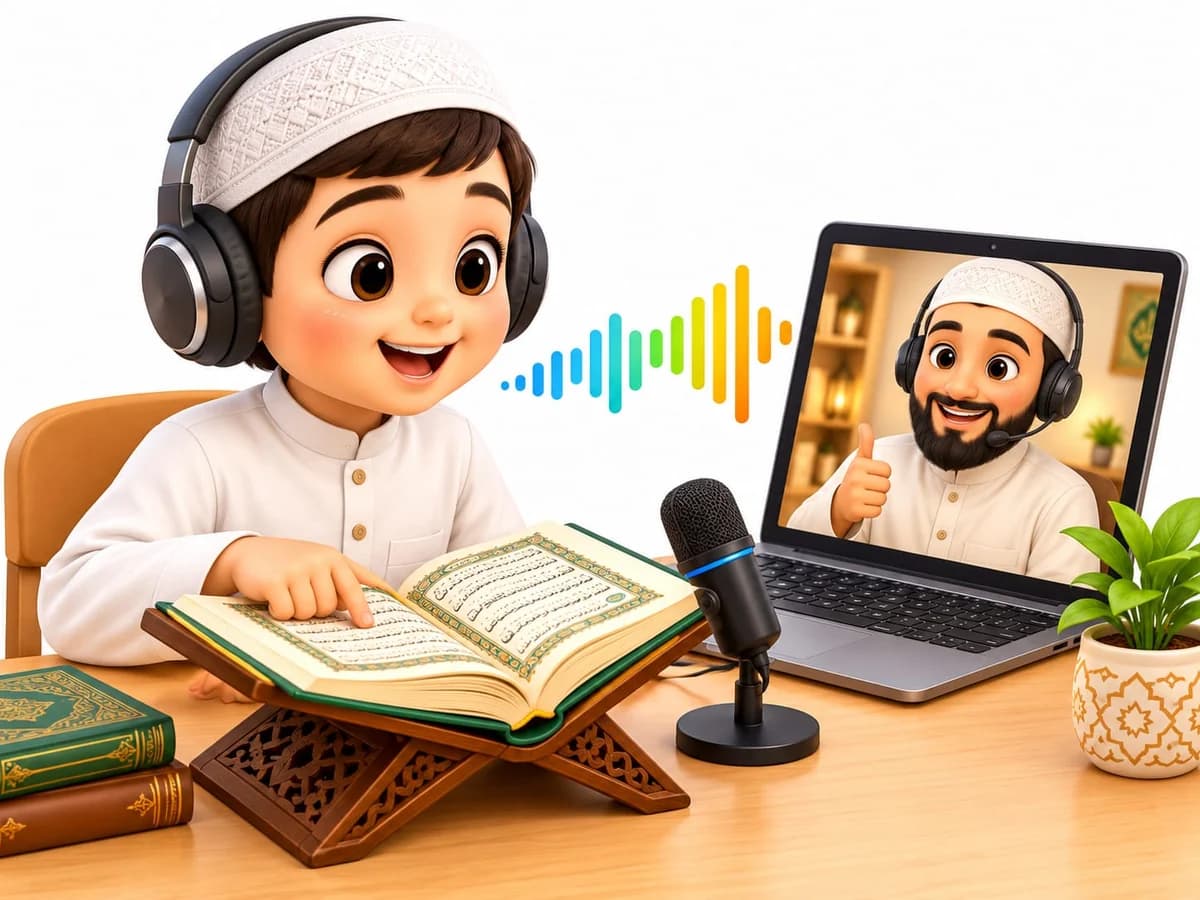
- Recite regularly to a qualified teacher; live correction is where rules become reflexes
Expect the process to take months, and expect it to be satisfying: students hear their own recitation transform, which is one of the most motivating experiences in Quran study.
Next steps: see how to learn Quran online easily for a simple study routine, and how much online Quran classes cost if you are comparing Tajweed courses.
Every accomplished reciter you admire started with clumsy first attempts and a patient teacher. Online Quran Lessons offers Tajweed courses for all levels, and a free trial class will give you an honest assessment of your recitation and a clear starting point.