The short answer: lesson 1 of Noorani Qaida is the single letters of the Arabic alphabet, called huroof mufradat. Your child learns each letter on its own: what it looks like and how it sounds, read from right to left. The teacher says the letter, your child repeats it, and the teacher corrects the sound until it is right. Most children spend a few weeks on this page, and that time is well spent, because every later lesson is built on it.
What is on the first page
The first lesson shows the letters of the Arabic alphabet standing alone, one in each box, in their standard order: ا ب ت ث ج ح خ د ذ ر ز س ش ص ض ط ظ ع غ ف ق ك ل م ن و ه ء ي. That is 28 letters, and most editions also show the hamza (ء) and the joined pair lam-alif (لا) in this lesson. Some editions place ه before و; the letters are the same.
Arabic is read from right to left, so the first box is in the top right-hand corner of the page. Showing your child where to start, and running a finger from right to left, is a small thing that prevents a lot of confusion.
At this stage the letters have no vowel marks. Your child learns the name of each letter, such as alif, baa, taa, and the sound it makes. Vowels such as ba, bi and bu come later in the Qaida.
How the first class usually goes

In a live one-to-one class the Qaida page is shared on screen. A typical first 30-minute lesson for a young child looks like this:
- A few minutes to settle in. The teacher says salaam, learns your child's name and asks something easy, so the child is talking before any reading starts.
- Showing the direction. The teacher points to the top right-hand box and explains that we read this way.
- Three to six letters, not the whole page. The teacher says each letter clearly, your child repeats it, and the teacher listens closely to the sound. For a four- or five-year-old, three letters in a first class is a good result.
- Back to the beginning. Before adding a new letter, the teacher goes back over the ones already learned. Repetition is the method, not a sign of slow progress.
- Pointing and finding. The teacher may say a letter and ask your child to point to it, which shows whether the shape is really known.
- A small goal for home. For example: read the first row to a parent every day until next class.
The letters in families of shape
Many Arabic letters share a basic shape and differ only by their dots. Teachers often point this out early, because seeing the families makes the page feel much smaller. The table below groups the letters by shape.
| Shape family | Letters | What tells them apart |
|---|---|---|
| Bowl | ب ت ث | One dot below (baa), two dots above (taa), three dots above (thaa) |
| Hook | ج ح خ | One dot below (jeem), no dot (haa), one dot above (khaa) |
| Corner | د ذ | No dot (daal), one dot above (dhaal) |
| Slope | ر ز | No dot (raa), one dot above (zaay) |
| Teeth | س ش | No dots (seen), three dots above (sheen) |
| Loop | ص ض | No dot (saad), one dot above (daad) |
| Tall loop | ط ظ | No dot (taa), one dot above (zaa) |
| Open eye | ع غ | No dot (ayn), one dot above (ghayn) |
| Round head | ف ق | One dot above (faa), two dots above (qaaf) |
| Letters of their own | ا ك ل م ن و ه ء ي | Each has its own shape; ن looks a little like the bowl family but is deeper, with one dot above |
Children should still learn the letters in the book's order, because that is how the teacher and the page work together. The families are a memory aid: when your child mixes up ب and ت, you can say "same bowl, where are the dots?"
The sounds that need the most care
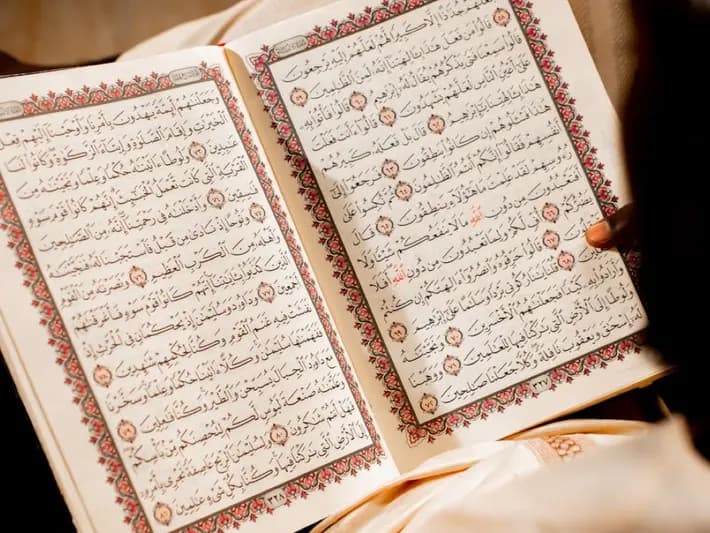
Some letters have no English equivalent, and lesson 1 is the best time to get them right:
- ح and ه: ح is a breathy sound from the middle of the throat; ه is the soft English h.
- ع: a real letter from the throat, not a silent pause.
- خ and غ: sounds from the top of the throat, a little like clearing it gently; not k or g.
- ق and ك: ق comes from the very back of the tongue, deeper than the English k.
- ص, ض, ط, ظ: heavy, full-mouth letters, said with the back of the tongue raised.
If your child mixes some of these up for weeks, that is normal. Our guide to the Arabic letters children mix up most has a fix for each pair, and the Arabic alphabet for kids lists every letter with its sound.
Home practice in the first week
Five to ten minutes a day is plenty. You do not need to read Arabic yourself to help.
- Day 1–2: your child reads you the letters from class, pointing to each one. You just listen and praise.
- Day 3–4: play point-and-find. Ask for a letter by its name and see if they can find it on the page.
- Day 5–6: look for shape families together: "Can you find all the bowl letters?"
- Day 7: your child reads the letters to you once more before the next class, so they arrive confident.
If you cannot check the sounds yourself, that is fine. Your job is the habit; the teacher's job is the sound. Our guide to helping your child with Quran if you cannot read Arabic has more ideas.
How long should lesson 1 take?

Usually a few weeks, depending on age and classes a week. The goal is not to finish the page but to read every letter, in any order, with the right sound. A teacher will often test this by pointing to letters at random. When your child can do that, they are ready for the joined letters in lesson 2. For what comes after, see our Noorani Qaida lesson plan for kids and how long Noorani Qaida takes.
Start with lesson 1, live
Our teachers prefer Noorani Qaida for beginners and start every new child from their real level, usually the first page. Classes are live, one-to-one and 30 minutes long, with a male or female teacher you choose, and all materials are included. Book 3 free trial classes — no card needed — and you can sit beside your child for their very first letters.