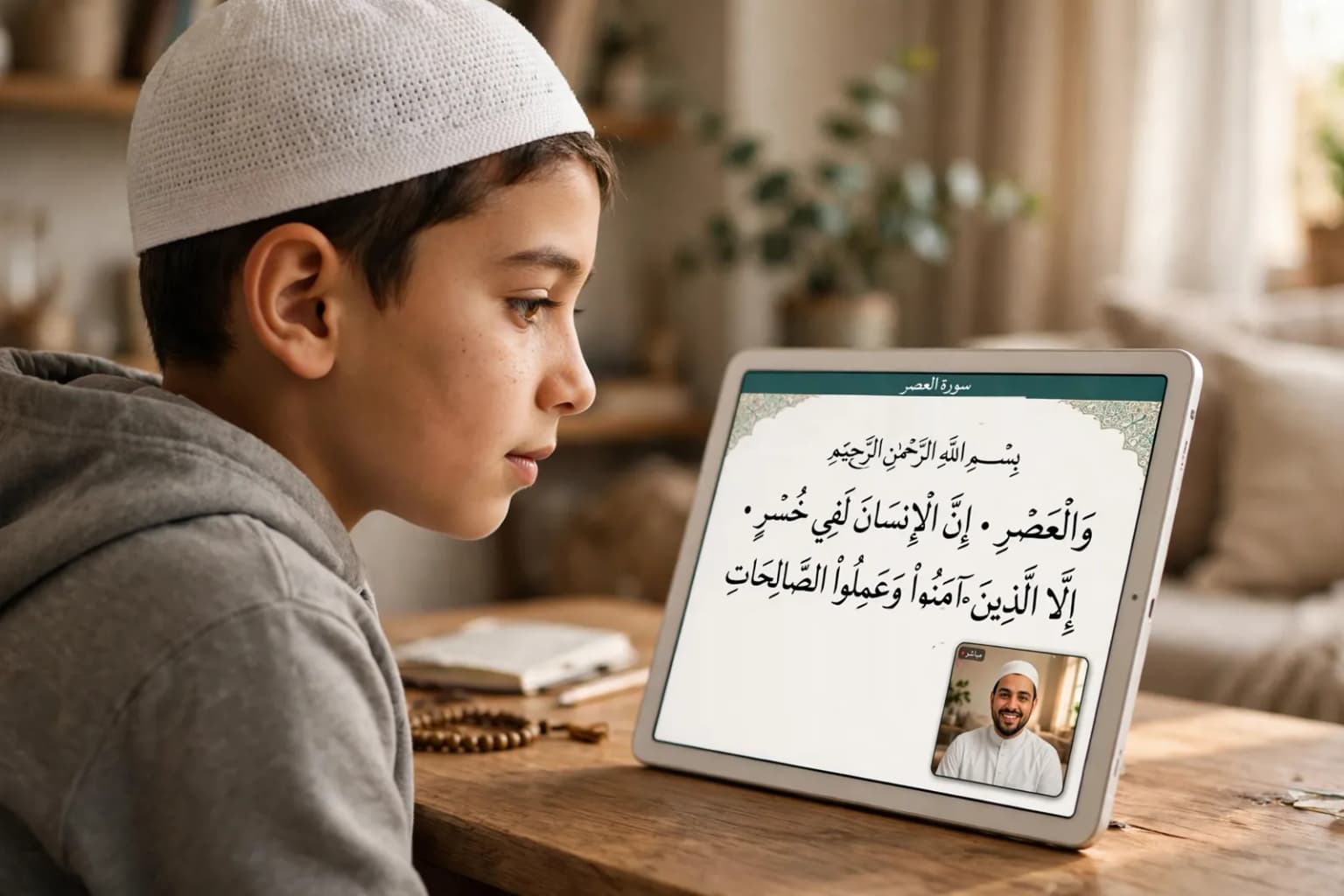
The short answer: teach Al-Fatiha one or two verses a day, for about a week, by saying each verse slowly and letting your child repeat it after you. Explain the meaning in simple words as you go. Then have a teacher listen to the whole surah, because a few sounds in it (ح, ع, ض and the long vowels) are easy to say wrongly, and habits formed now last a lifetime.
Why Al-Fatiha comes first
Al-Fatiha, "The Opening", is the first surah of the Quran and is recited in every unit of every prayer. A child who prays five times a day will say it at least seventeen times a day for the rest of their life. That makes it the most important surah to learn early, and the most important one to learn correctly.
It is also short: seven verses that a young child can usually memorise within a week or two with a few minutes of practice a day.
Al-Fatiha with a simple meaning for children

The meanings below are written in simple words for children. The transliteration is only a guide for parents who cannot yet read Arabic; your child should learn the sounds from a teacher or a careful recording, not from English letters alone.
| Verse | Transliteration | Simple meaning |
|---|---|---|
| 1 | Bismillāhir-raḥmānir-raḥīm | In the name of Allah, the Most Kind, the Most Merciful |
| 2 | Al-ḥamdu lillāhi rabbil-ʿālamīn | All praise and thanks belong to Allah, the Lord of everything that exists |
| 3 | Ar-raḥmānir-raḥīm | The Most Kind, the Most Merciful |
| 4 | Māliki yawmid-dīn | The King of the Day of Judgement |
| 5 | Iyyāka naʿbudu wa iyyāka nastaʿīn | Only You do we worship, and only You do we ask for help |
| 6 | Ihdinaṣ-ṣirāṭal-mustaqīm | Guide us to the straight path |
| 7 | Ṣirāṭalladhīna anʿamta ʿalayhim ghayril-maghḍūbi ʿalayhim wa laḍ-ḍāllīn | The path of the people You blessed, not of those who earned Your anger, nor of those who went astray |
A simple way to explain the whole surah to a young child: the first half praises Allah and tells us who He is, and the second half is our own du'a, asking Him to guide us. When your child says verse 5, they are speaking to Allah directly.
A 7-day plan to memorise Al-Fatiha
Five to ten minutes a day is enough. Pick one time, such as straight after school or before bed, and keep it the same every day.
- Day 1: verses 1 and 2. Say each one slowly, three times, and let your child repeat after you.
- Day 2: revise verses 1–2, then add verse 3. It is short and repeats words from verse 1, which makes it easy.
- Day 3: revise 1–3, then add verse 4.
- Day 4: revise 1–4, then add verse 5. Spend extra time here; it has the ع sound twice.
- Day 5: revise 1–5, then add verse 6.
- Day 6: verse 7 is the longest. Split it into two halves and teach one half at a time.
- Day 7: your child recites the whole surah to you, then to their teacher, and starts saying it in their prayer.
Younger children (age 4–5) may need two weeks instead of one. That is completely normal. Go at the pace where your child still enjoys it.
The mistakes children make most, and how to fix them
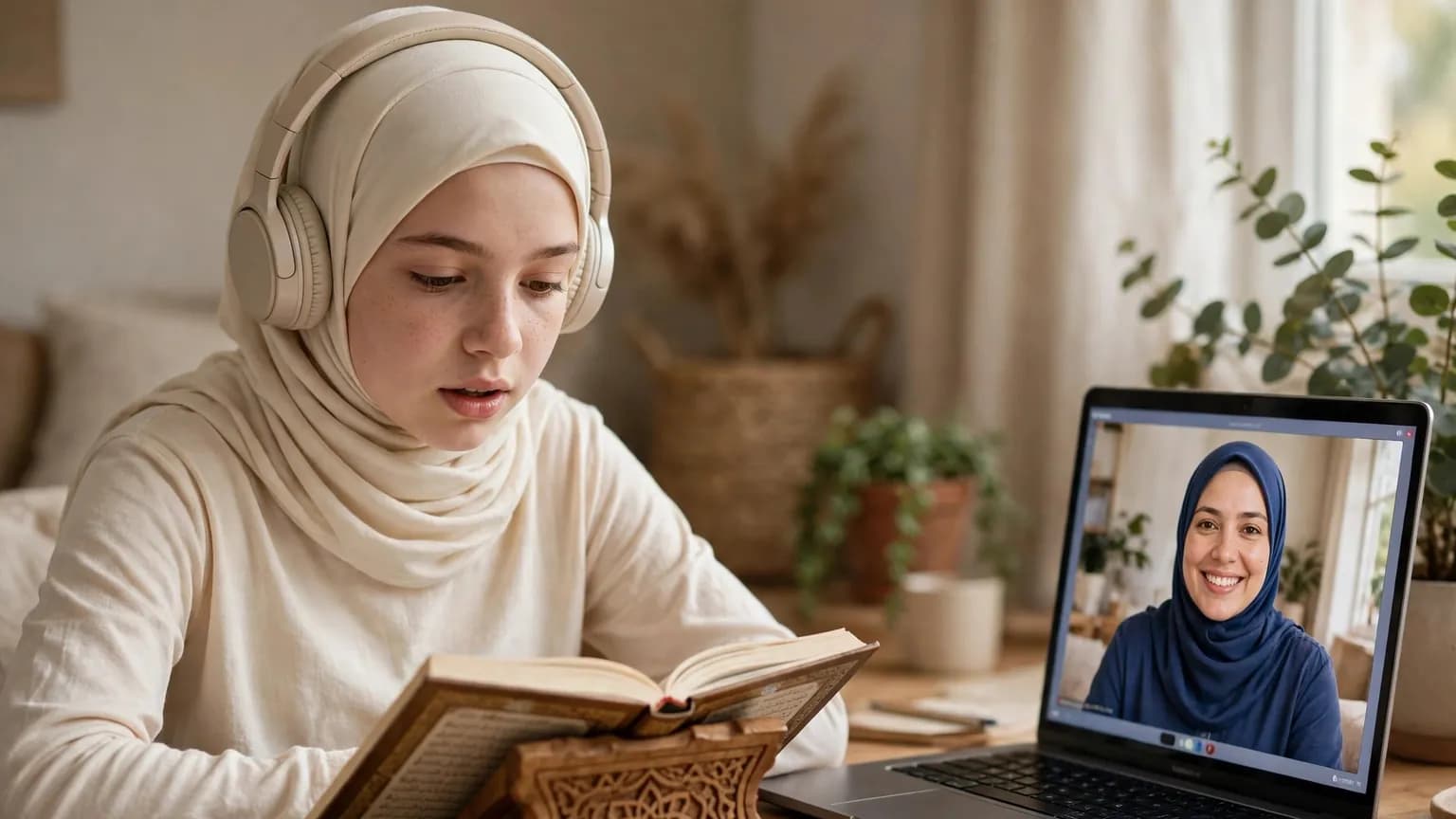
These are the sounds a teacher will listen for. Many adults carry the same mistakes from childhood, so it is worth fixing them early.
- ح said as a soft h. In raḥmān, raḥīm and al-ḥamdu the ح is a breathy sound from the middle of the throat, stronger than the English h. Saying it as ه changes the word.
- Dropping the ع. In ʿālamīn, naʿbudu and nastaʿīn the ع is a real letter. Children often skip it and say "aalameen" or "nabudu".
- Iyyāka without the double y. The ي in iyyāka has a shadda, so it is held: iy-yāka. Said lightly as "iyaka", the meaning changes. Listen for it every time.
- ض said as a d or z. In maghḍūbi and ḍāllīn the ض is a heavy, full-mouth sound. It has no English equivalent and almost always needs a teacher's ear.
- Long vowels cut short. Māliki, ʿālamīn and ḍāllīn all have long vowels. In ḍāllīn the stretch is especially long. Rushing shortens them.
- ق said as k. In mustaqīm the ق comes from the back of the throat, deeper than k.
If these sound like a lot, they are exactly what Tajweed for kids covers, one sound at a time. For a complete beginner, Noorani Qaida teaches each of these letters properly before your child reads whole surahs.
What to learn after Al-Fatiha
Once Al-Fatiha is solid, move on to the short surahs at the end of the Quran: Al-Ikhlas, Al-Falaq and An-Nas first. Our guide to which short surahs kids should memorise first has a full order. If your child is learning to pray, teaching kids Salah step by step shows where Al-Fatiha fits in.
Getting a teacher to listen
You can teach the words at home. What is hard to do at home is hear and correct the sounds. In our live one-to-one classes, a qualified male or female teacher listens to your child recite and corrects each letter gently, 30 minutes a class, at a time that suits you. Book 3 free trial classes and ask the teacher to start with Al-Fatiha; no card is needed, and you can sit in on every class.