
Online Quran classes usually win on teacher choice, one-on-one attention, and scheduling, while in-person classes win on community, physical presence, and freedom from screens. Which matters more depends on your circumstances: where you live, your schedule, your child's temperament, and what you are trying to achieve. Having taught both ways, here is the comparison we wish more families saw before deciding.
Where online classes genuinely excel
The strongest argument for online learning is access to teachers. If your local options are limited, the internet puts qualified, certified instructors within reach regardless of geography.
- One-on-one lessons are the norm online, whereas local classes are often groups of ten or more
- You choose from a wide pool of teachers and can switch if the fit is wrong
- No commute means lessons fit into weekday evenings without wrecking the schedule
- Missed lessons are usually easy to reschedule rather than simply lost
For Tajweed in particular, individual attention matters enormously, because correction is personal: the teacher needs to hear you, specifically, recite.
Where in-person classes genuinely excel
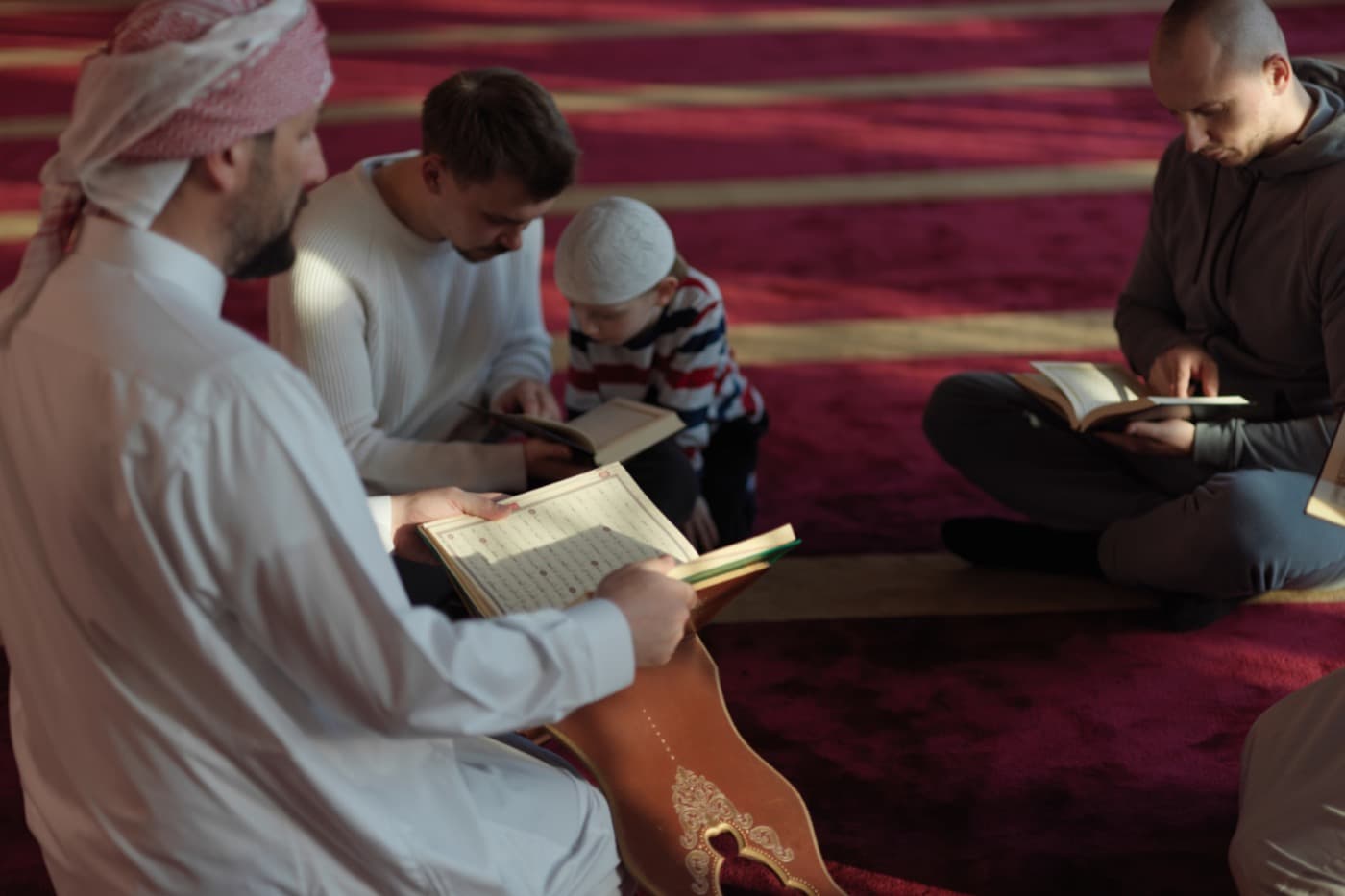
Physical classes offer things a video call cannot fully replicate. Sitting with a teacher makes it easier to observe mouth positions closely for articulation points. A masjid or community class embeds Quran learning in friendships and belonging, which carries children through motivation dips. There is also no dependence on connection quality, and for kids who already spend hours on screens, an off-screen lesson can be a relief. If you have an excellent local teacher with small class sizes, that is a blessing worth keeping.
The attention question is the decisive one
Strip away logistics and one variable predicts progress better than format: minutes of individual attention per week. A thirty-minute online lesson that is entirely one-on-one typically delivers more actual reciting and correction than an hour in a group of twelve, where each child might recite for four minutes. Ask this question of any option, online or local: how many minutes per lesson will my child actually spend reciting to the teacher? The honest answer often settles the debate by itself.
Cost and practicalities

Prices vary widely in both formats, so generalizations mislead. Group masjid classes are often inexpensive or donation-based. Private in-person tutors are usually the most expensive option. Online one-on-one lessons typically sit in between, and eliminating commute time is a hidden saving that busy families feel immediately. Whatever you choose, consistency is the real cost driver: the cheapest class you keep skipping is more expensive than the moderately priced one you attend for years.
A practical way to decide
Match the format to the learner rather than to an ideology.
- Choose online if local options are weak, schedules are tight, or your learner needs individual correction
- Choose in-person if you have a strong local teacher and your child thrives on group energy
- Combining both works well: a weekly masjid class for community plus online lessons for focused progress
- Whichever you pick, judge it after two months by one measure: is the recitation actually improving?
Leaning towards online? Our guides on how to learn Quran online easily and how much online Quran classes cost cover the practical side. Online classes are especially useful where local madrasas are far away, for example for families in Germany, France and across Europe.
The format is a vehicle; the destination is a confident, correct, loving relationship with the Quran. If you want to test the online side of the comparison with no commitment, Online Quran Lessons offers a free trial class so you can judge the experience firsthand.