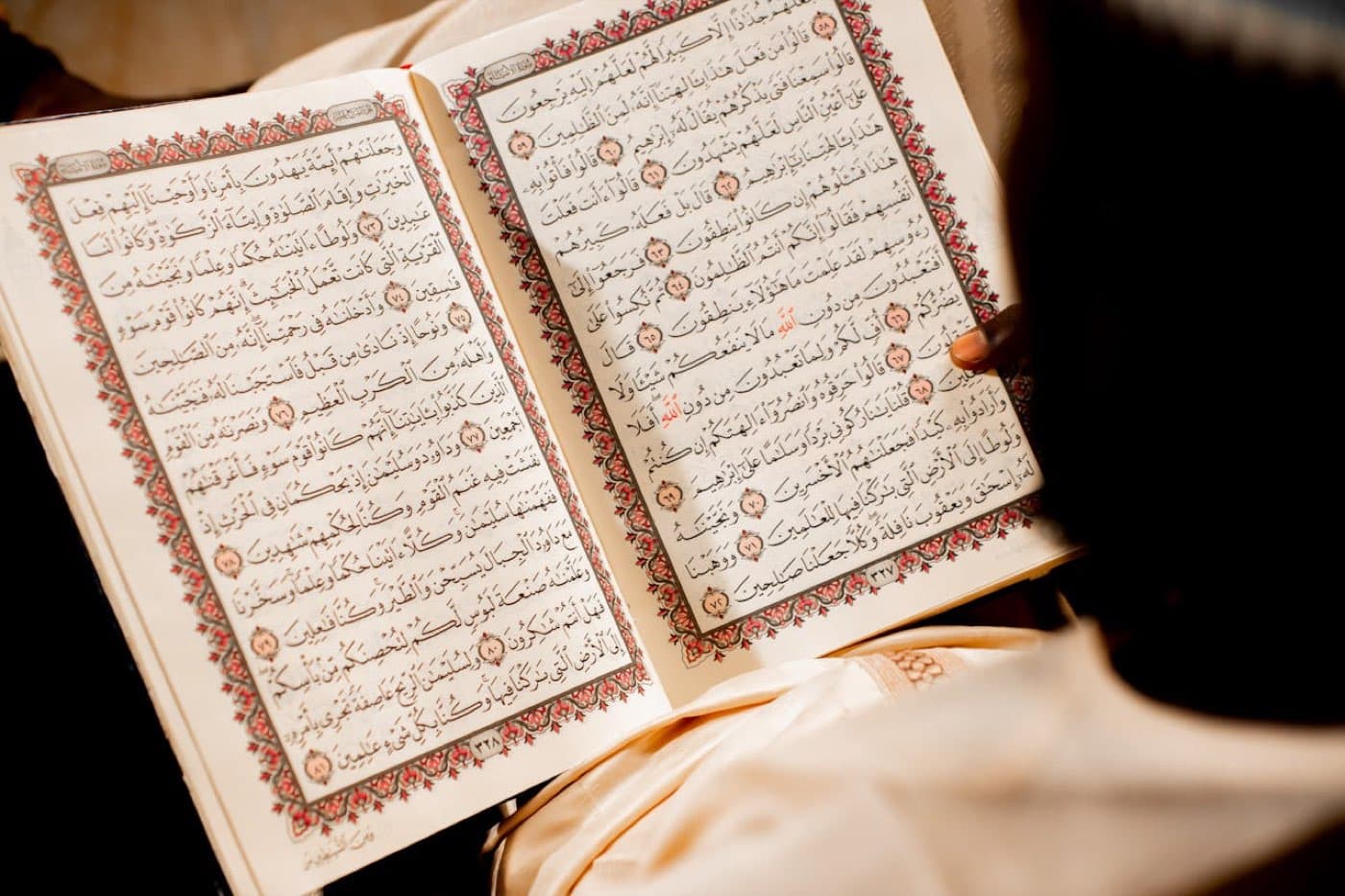
The most common Quran recitation mistakes are confusing similar-sounding letters, cutting elongations short, skipping the nasal sound called ghunnah, and reading so fast that rules collapse. The good news is that every one of these is fixable with targeted practice and a teacher who catches errors you cannot hear yourself. Here are the seven mistakes we correct most often, and how to work on each.
Mistake 1: Mixing up similar letters
Arabic has pairs of letters that sound close to an untrained ear but come from different points of articulation: seen and saad, taa and Taa, haa and Haa, dhal and zaa. Substituting one for another can change the meaning of a word, which is why teachers treat this as a priority.
- Fix: drill the pairs side by side, exaggerating the difference at first
- Feel where the sound is made in your mouth and throat, not just how it sounds
- Record yourself and compare against a careful reciter, one pair at a time
Mistake 2: Cutting madd (elongation) short
Elongated vowels in the Quran have measured lengths, counted in beats. The natural madd is two beats, while certain obligatory elongations stretch to four or five. Rushing them is probably the single most common mistake among self-taught readers. Fix it by tapping a steady count with your finger while you practice, and by listening to slow, teaching-style recitations where the lengths are easy to hear.
Mistake 3: Dropping the ghunnah
Ghunnah is the nasal resonance held on noon and meem in specific situations, such as when they carry a shaddah or in certain merging rules. Readers who skip it produce recitation that sounds flat and clipped. The fix is simple to describe and takes practice to master: hold the sound in the nose for roughly two beats. Pinch your nose lightly while practicing; if the sound stops, you were making it correctly.
Mistake 4: Ignoring qalqalah

Five letters, qaf, taa, baa, jeem, and dal, get a subtle bounce or echo when they carry a sukoon. Missing it is minor; overdoing it into a full extra vowel is worse. Aim for a light rebound, clearest when the letter ends a verse.
Mistake 5: Stopping and starting in the wrong places
Where you pause can change how a verse reads. Stopping mid-phrase, or joining verses that should be separated, muddles meaning even when every letter is correct. Learn the common pause symbols printed in the mushaf, and when in doubt, stop at the end of a verse and take a breath rather than gasping mid-sentence.
Mistake 6: Reciting too fast

Speed hides errors. When you rush, elongations shrink, ghunnah disappears, and letters blur together. Deliberately slow practice, at a pace that feels almost uncomfortably careful, is how every rule gets locked in. Speed returns naturally once accuracy is automatic.
Mistake 7: Practicing without feedback
This is the mistake that keeps all the others alive. You cannot fix an error you cannot hear, and our own ears are famously forgiving. Even one session a week with a qualified teacher transforms progress, because correction happens in the moment, before a mistake hardens into habit.
None of these problems means you are a poor student; they are simply the normal terrain of learning. If you would like a teacher to listen to your recitation, Online Quran Lessons offers a free trial class where a teacher will assess your reading and show you exactly what to work on first.