
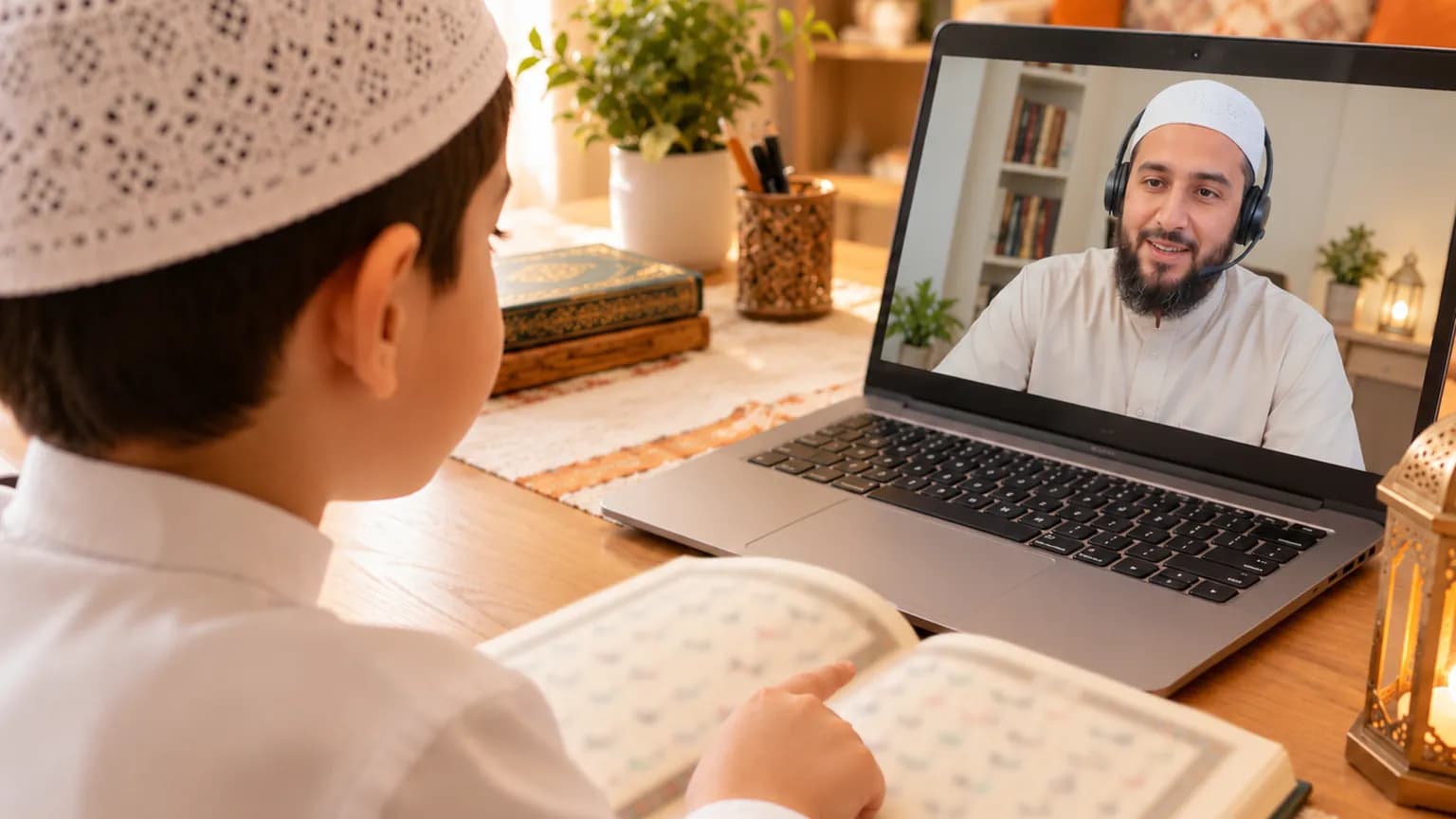
The short answer: to learn Arabic, first decide which Arabic you need: Quranic (Classical) Arabic to understand the Quran and prayers, Modern Standard Arabic for news, books and formal speech, or a spoken dialect such as Egyptian or Gulf Arabic for conversation. Then follow five steps in order: learn to read the alphabet with vowel marks, build the most common vocabulary, learn the basic grammar patterns, read real text every day with a teacher who corrects you, and listen and speak as much as you can. Short, regular lessons work far better than long, rare ones.
This guide walks through each step, how long it usually takes, the mistakes that slow most learners down, and how to start a child.
Step 0: Decide which Arabic you want
Arabic is one language with several forms, and the right course depends on your goal.
| Form of Arabic | What it is for | Good choice if… |
|---|---|---|
| Quranic (Classical) Arabic | The Quran, hadith, prayers and classical Islamic books | You want to understand what you recite in salah and the Quran |
| Modern Standard Arabic (MSA, fusha) | News, books, formal speeches, most textbooks | You want to read modern Arabic or study it at school or university |
| Spoken dialects (Egyptian, Levantine, Gulf, Maghrebi) | Everyday conversation in a particular region | You will live, work or have family in an Arab country |
Quranic Arabic and Modern Standard Arabic share the same script, the same grammar at their core and much of the same vocabulary, so progress in one carries over to the other. Dialects differ more, especially in everyday words and pronunciation. For most Muslim families outside the Arab world, Quranic Arabic is the natural place to start. Our guide to Quranic Arabic for kids and beginners explains what it covers.
Step 1: Learn to read the Arabic alphabet
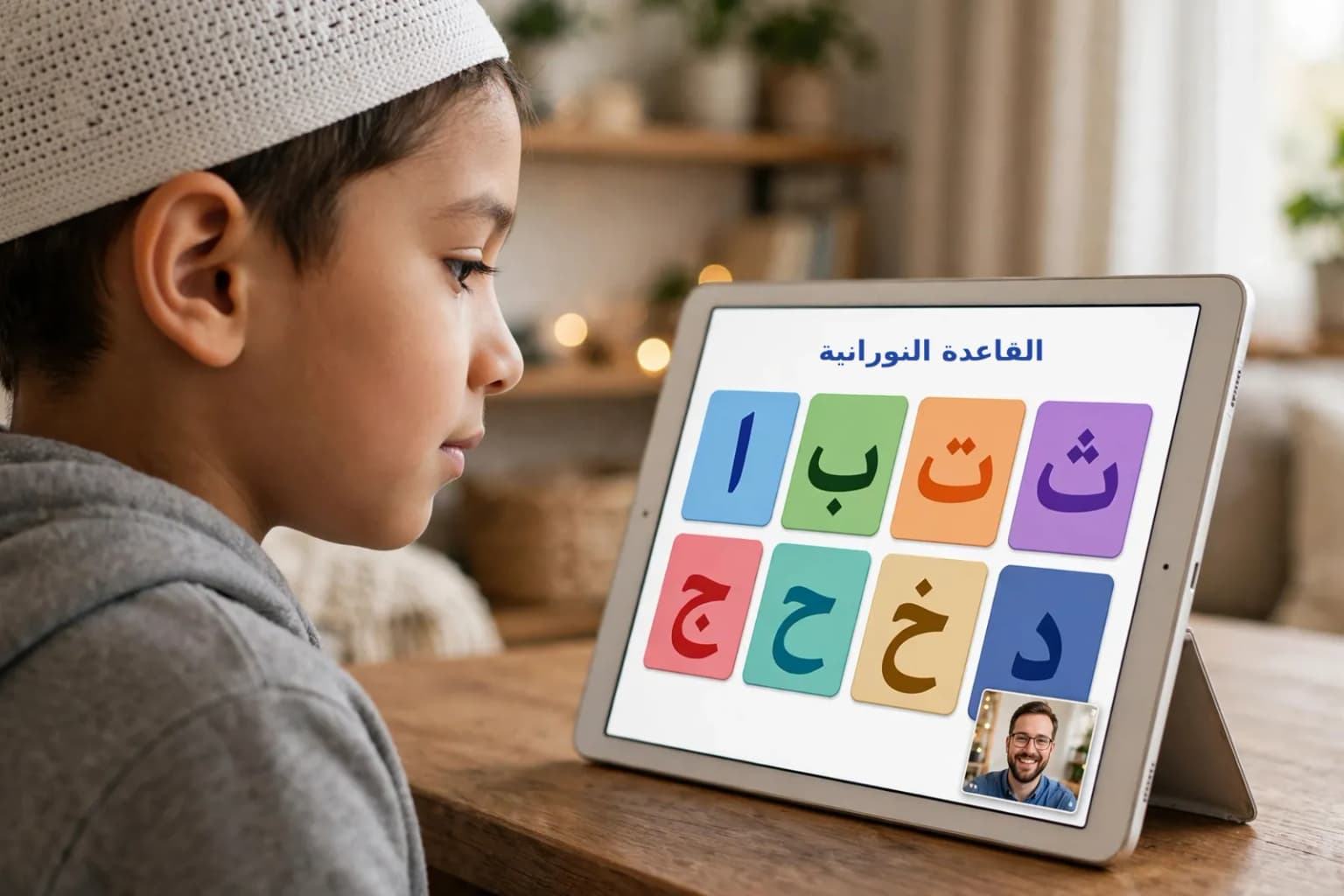
Arabic has 28 letters, written from right to left. Most letters change shape depending on whether they sit at the start, middle or end of a word, and short vowels are shown by small marks above and below the letters (fatha, kasra and damma).
Start with the letters and their sounds, then the vowel marks, then joining letters into words. Pay special attention to the sounds English does not have, such as ع, ح, خ, غ and ق: these are much easier to learn correctly at the start than to fix later. Children usually learn this stage from a primer such as the Noorani Qaida; see our Arabic alphabet for kids guide.
If you can already read the Quran, you have done most of this step. You can read the words; now you need to learn what they mean.
Step 2: Build your core vocabulary
A relatively small set of words makes up a large share of any Arabic text, so learn the most frequent words first rather than long themed lists. For Quranic Arabic, that means words you meet constantly: Allah, Rabb (Lord), qala (he said), kana (he was), the common prepositions and pronouns, and the phrases of salah.
Arabic words are built from roots, usually of three letters. Once you know that ك ت ب carries the idea of writing, you can recognise kataba (he wrote), kitab (book), maktab (office or desk) and katib (writer). Learning roots this way multiplies every new word you learn.
Step 3: Learn the basic grammar patterns
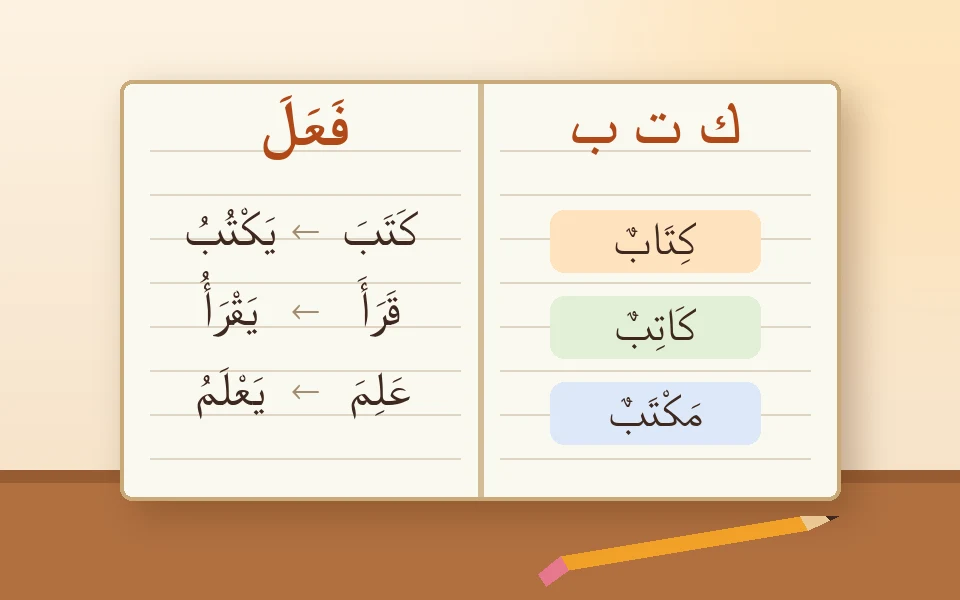
You do not need advanced grammar to start understanding. The patterns that unlock the most are:
- Pronouns and possessive endings, such as -na (our) in Rabbana, "our Lord".
- The past and present verb, and how a verb changes for he, she, they and we.
- Noun and adjective agreement, including masculine and feminine.
- The definite article al- and how it joins the next word.
- Common sentence patterns, such as the nominal sentence (al-Hamdu lillah, "praise is for Allah").
Traditional Arabic grammar is taught in two subjects: nahw (how words fit into sentences) and sarf (how words change form). Our Arabic grammar course covers both for students who want to go deeper.
Step 4: Read real text every day, with correction
Grammar lists only stick when you meet them in real sentences. Read a little every day: for Quranic Arabic, short surahs from Juz Amma with a word-by-word translation are ideal, because the verses are short and you already know many of them by heart. A teacher who hears you read and explains each word is the fastest way through this stage.
Step 5: Listen and speak
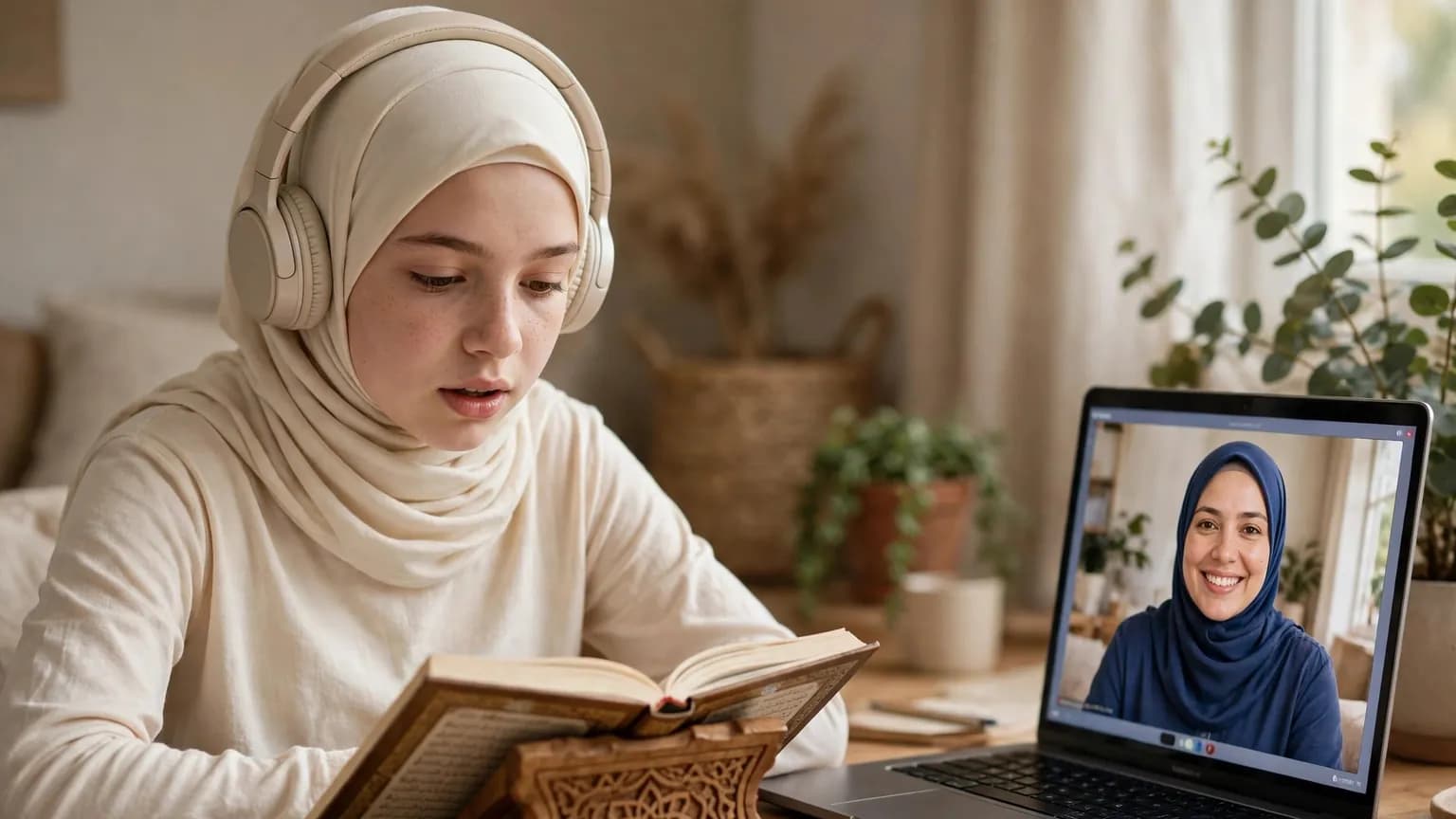
Listen to recitation, lectures or Arabic audio regularly, and try to say short sentences aloud. Even if your goal is understanding the Quran rather than conversation, speaking and listening fix vocabulary in memory much faster than reading alone.
How long does it take to learn Arabic?
It depends on your goal, your starting point and how regularly you study. As a rough guide for someone with short lessons a few times a week:
| Stage | Typical time |
|---|---|
| Reading the alphabet with vowel marks | A few weeks for adults; a few months for young children |
| Understanding common words and phrases in salah and short surahs | Several months |
| Following the meaning of much of a page with help | A year or more |
| Understanding most text without a translation | Several years of steady study |
Regular practice matters more than total hours. Thirty minutes three times a week, every week, beats a three-hour session once a month.
How children should start learning Arabic

- Age 4 to 7: focus on the letters, their sounds and reading with vowel marks, through a primer like the Noorani Qaida. Add a few meaningful words, such as the words of Al-Fatihah.
- Age 8 to 12: keep reading the Quran, and add word meanings for the surahs they already know, plus very simple grammar such as pronouns.
- Teenagers: can follow a structured Quranic Arabic or grammar course alongside their reading.
Keep lessons short. For children, 30 minutes is plenty; longer sessions usually lose their attention.
Common mistakes that slow learners down
- Learning from transliteration. English letters cannot show many Arabic sounds. Learn the script from day one.
- Memorising grammar tables with no reading. Rules stick when you see them in real sentences.
- Stopping and starting. A month off undoes a lot. A small daily habit is better than bursts.
- Learning alone with no correction. Pronunciation mistakes become habits quickly. A teacher catches them the first time.
Learning Arabic with us

Our Quranic Arabic classes are live and one-to-one, with a teacher who works at your pace: vocabulary, simple grammar and reading, towards understanding the Quran without a translation. Children who cannot yet read Arabic start with the Noorani Qaida. Classes are 30 minutes, at a time that suits your time zone, with a male or female teacher. You can book 3 free trial classes, no card needed.