
Learning Arabic transforms your understanding of the Quran because translation, however skilled, can only carry the meaning of the words, not their sound, structure, and layered senses. When you understand even basic Quranic Arabic, prayer stops being recitation of memorized sounds and becomes conversation you follow in real time. You do not need fluency for this shift to begin; it starts with your first hundred words.
What translations necessarily leave behind
Every translator of the Quran faces choices with no perfect answer. Arabic words often carry several simultaneous meanings where English forces a single pick. The root system links words in ways no translation can show: a reader of Arabic sees that words for mercy and womb share a root, and that connection colors both. Word order in the Quran is deliberately expressive, with emphasis created by placing phrases in unexpected positions, which flattens out in translation. None of this makes translations bad. It makes them maps rather than the territory.
The difference you feel in prayer

For most learners, the first dramatic change arrives in salah. Reciting Surah Al-Fatihah while understanding each phrase as you say it is a different experience from reciting sounds and recalling the general meaning afterward.
- Concentration improves because your mind has content to hold onto
- Long taraweeh prayers in Ramadan become engaging instead of endurance
- Verses you have heard for years suddenly land with their full weight
Students consistently describe this as the point where their effort started paying for itself.
You need less Arabic than you think
The Quran's vocabulary is famously concentrated. A relatively small set of high-frequency words accounts for the large majority of the text, because key terms recur across many surahs. This is why a focused learner can start recognizing meaning within months, not years.
- Begin with the vocabulary of the prayers and short surahs you already know by heart
- Learn the most frequent Quranic words first, not general conversational Arabic
- Add basic grammar gradually: past and present verbs, pronouns, and common particles
- Read along with a word-for-word translation to connect what you learn to real verses
Grammar is where depth opens up
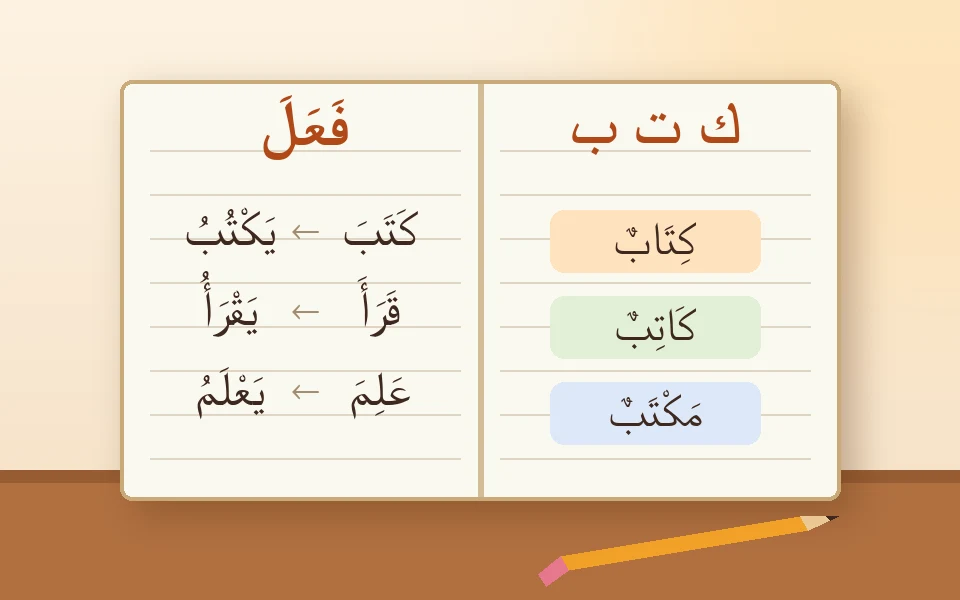
Vocabulary lets you recognize; grammar lets you understand. Arabic morphology packs meaning into word patterns, so a single form tells you who acted, when, and how intensively. Learning even elementary grammar reveals why two seemingly similar verses use different verb forms, and what that choice emphasizes. This is the level at which tafsir literature starts to make sense in a new way, because so much classical commentary turns on points of language.
A realistic path for a busy adult
You do not need to enroll in a university program. Twenty to thirty minutes a day, structured well, moves you further than most people expect within a year. A sensible sequence is: solid reading fluency first, then high-frequency Quranic vocabulary, then basic grammar applied directly to verses you love. The key is that every step should touch the Quran itself, because motivation lives there.
Understanding the Quran in its own language is a lifelong gift, and the entry cost is smaller than most people assume. Online Quran Lessons teaches Quranic Arabic from absolute beginner level, and you can try a free trial class to see whether the approach suits you.