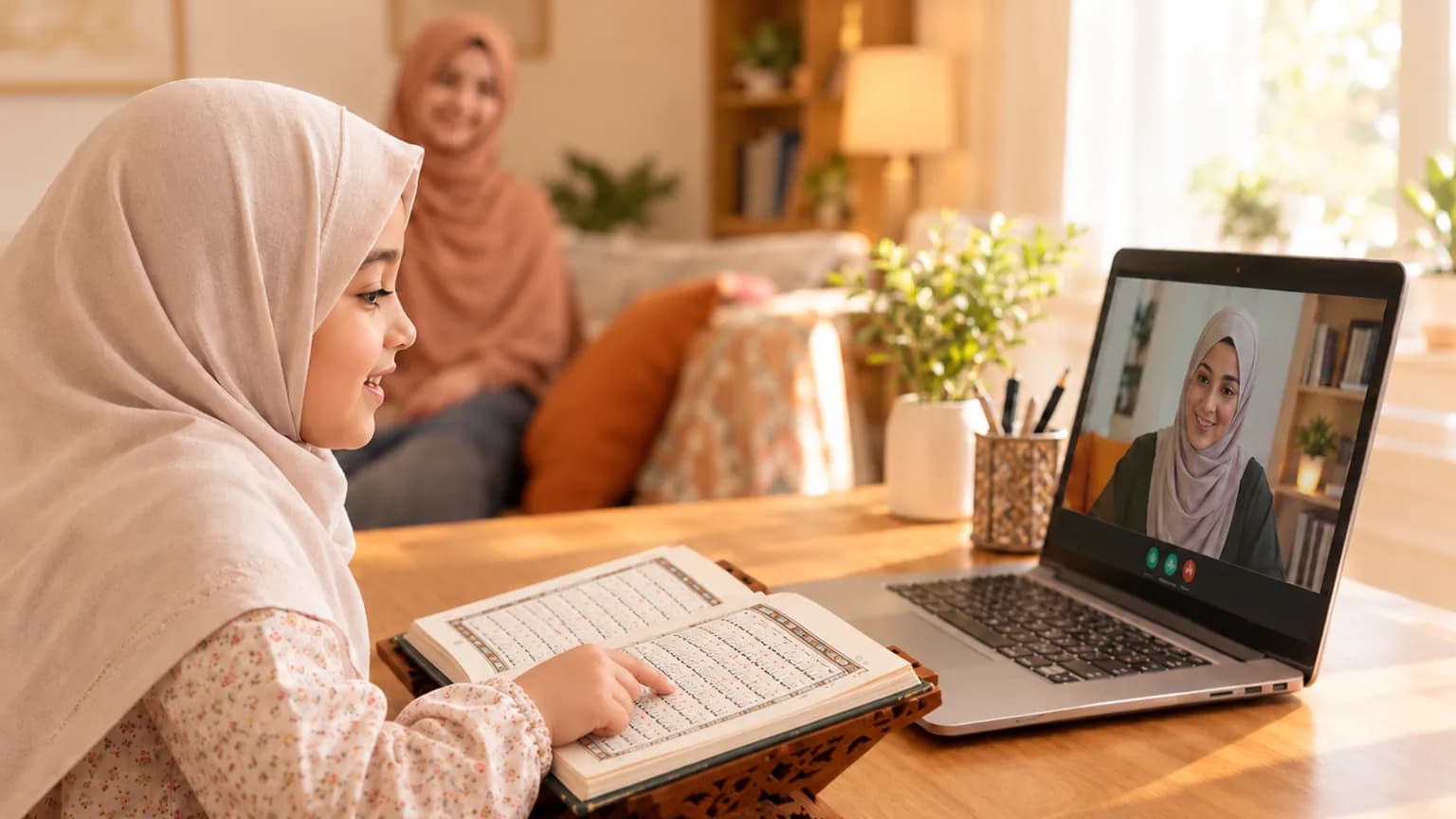
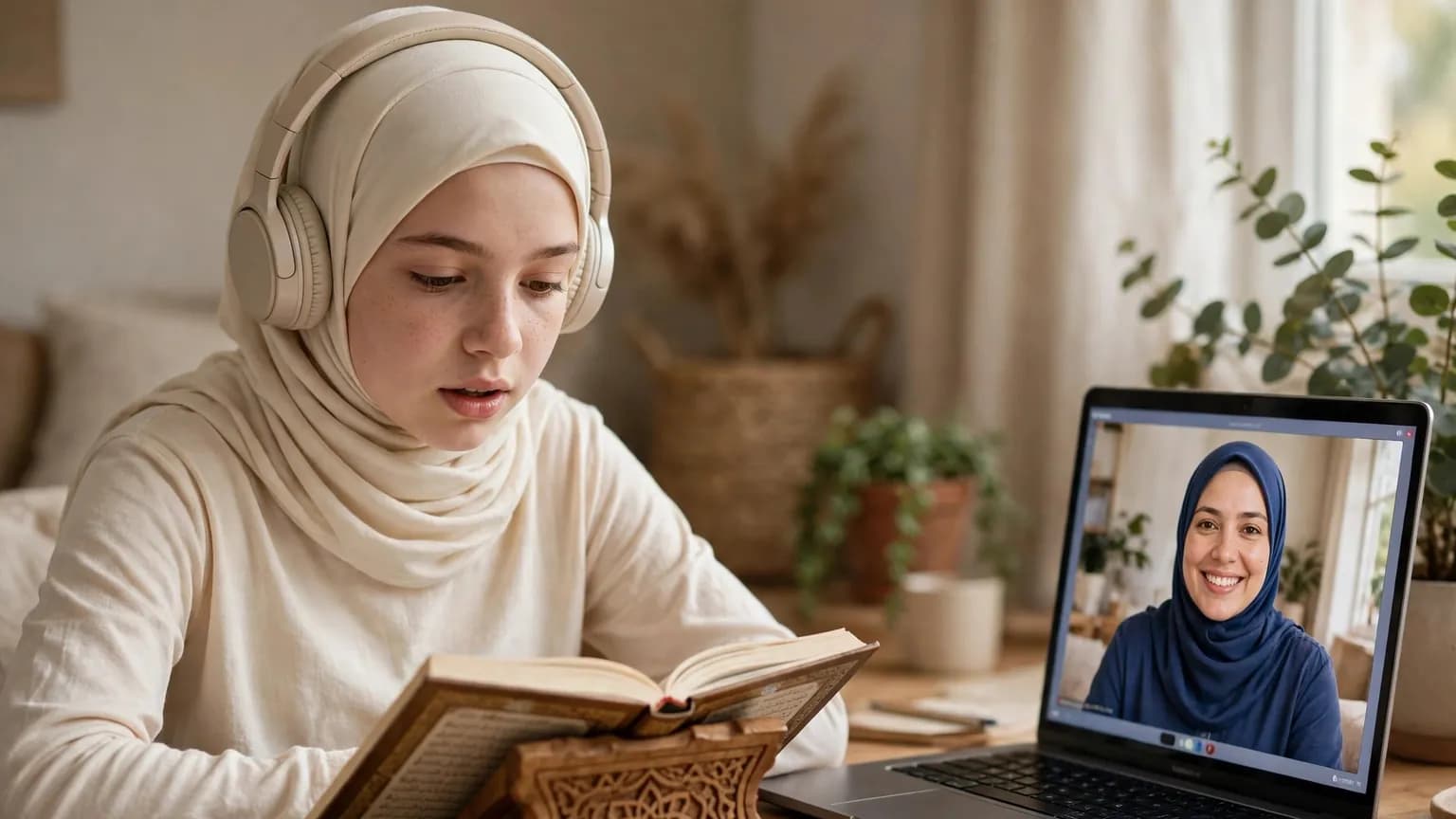
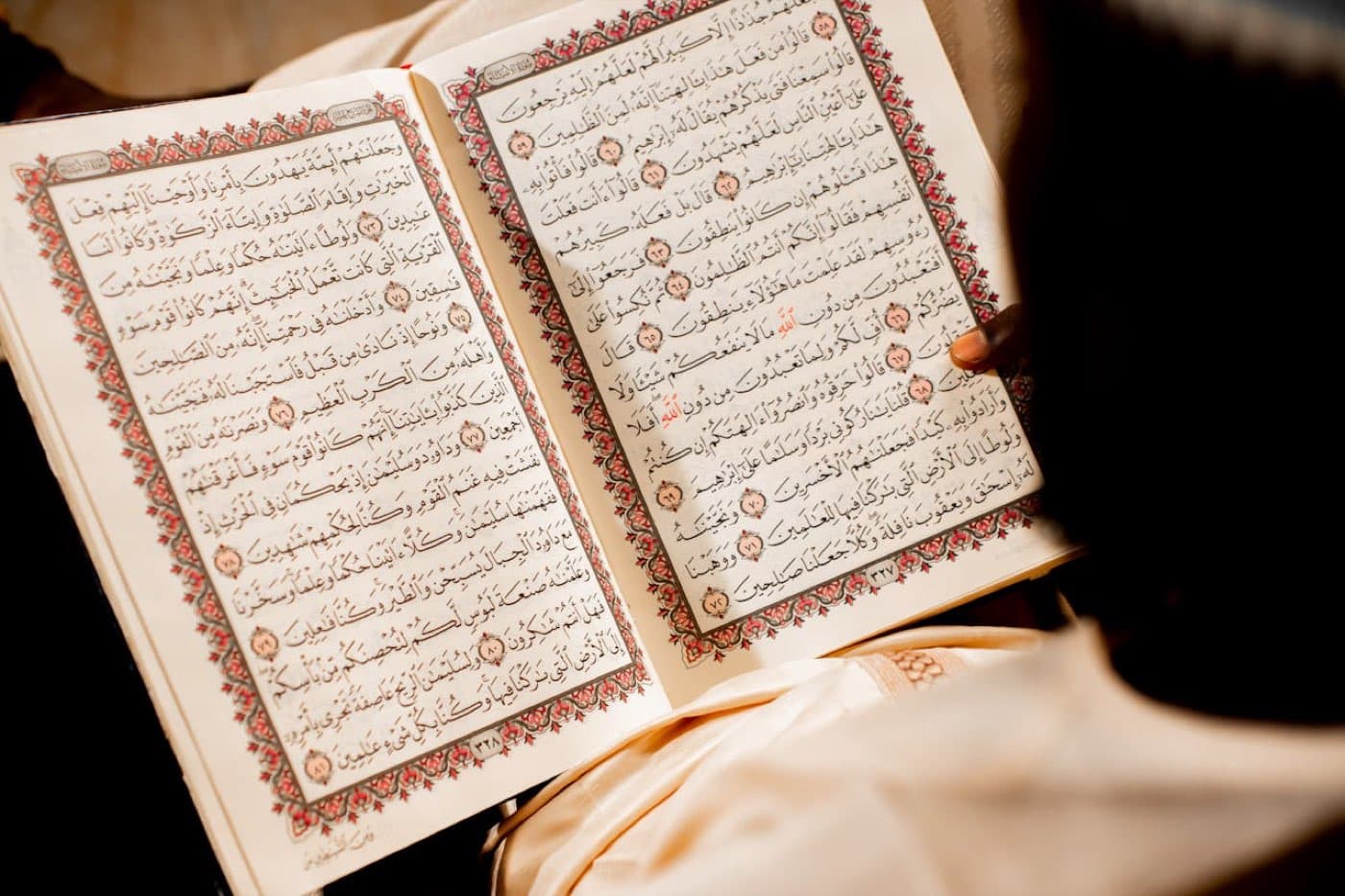
The Noorani Qaida course is a beginner reading program that teaches the Arabic alphabet, vowel marks, and letter joining so students can begin reading the Quran. It is the standard first step for children and adults who have never read Arabic before. Lessons are one-on-one with a trained teacher who models each sound clearly, listens to the student repeat it, and corrects gently until the pronunciation settles.
The course follows the classical Qaida sequence: isolated letters, letters in their joined forms, short vowels (harakat), tanween, long vowels (huroof maddah), sukoon, shaddah, and finally full words and short phrases. Each stage builds directly on the last, so students never face a page they have not been prepared for. Regular short drills keep earlier lessons fresh while new material is introduced.
By the end of the program, students can sound out any Arabic word slowly and accurately, which makes the transition to reading the mushaf natural rather than intimidating. Parents receive simple progress notes after each class, and adults appreciate that lessons move at the pace they set, not a fixed classroom schedule.
Our teachers prefer the Noorani Qaida for beginners because it builds one skill at a time and every page is fully vowelled, so a child is never asked to read something they have not been taught. Your child is taught by one of our named teachers: Usman (Aalim, Hafiz-e-Quran), Rahat (Hafiza, Aalima, BSc Islamic Studies, University of the Punjab) or Sadia (Hafiza, Aalima, MPhil Islamic Studies, University of the Punjab). You choose a male or female teacher, and the fee is the same.
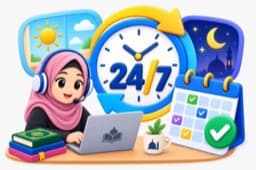
One parent who enrolled three children on the Qaidah with us wrote that classes were arranged around the family's availability and that the teachers were caring and connected well with her kids. Siblings each get their own one-to-one class, scheduled back to back, with a 10% family discount from the second child.
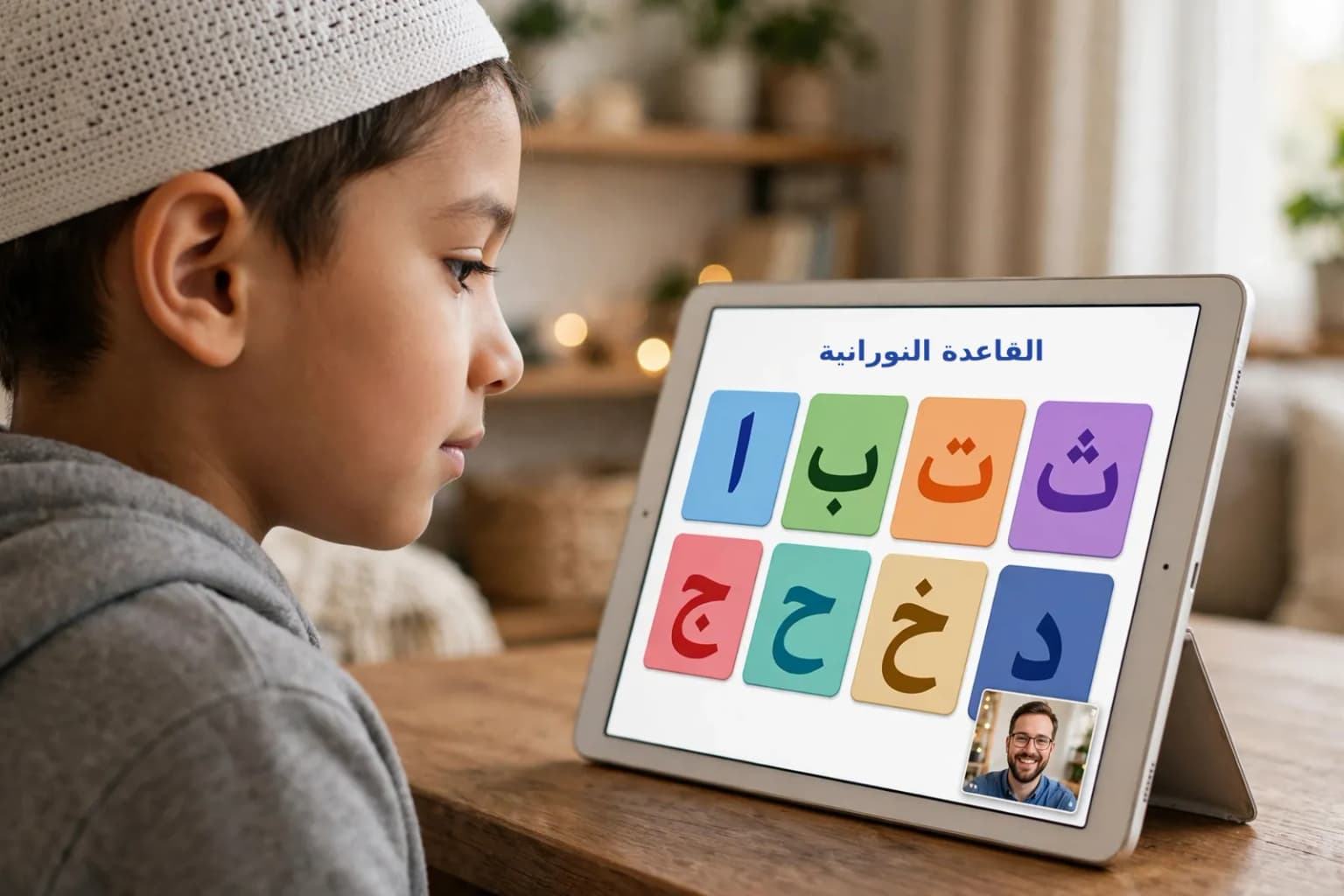
Children are taught with the Noorani Qaida that many UK and US madrasahs use, so a child who moves between home classes and a local madrasah meets the same pages. Each lesson is 30 minutes, one-to-one, with the Qaida page shared on screen; the teacher points to each letter while your child reads it aloud, and corrects the sound straight away.
Most children find the same few things hard: telling apart letters that look alike (ب ت ث), the throat letters that do not exist in English (ع ح خ غ), and the heavy letters (ص ض ط ظ ق). A one-to-one teacher hears these slips immediately and fixes them before they become habits — which is far harder to do once a child is reading whole pages.
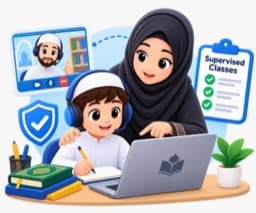
You choose a male or female teacher for the same fee, a female supervisor checks every class, and you can sit in whenever you like. Lessons are taught in English, or in Urdu on request.





 Ages 4–14